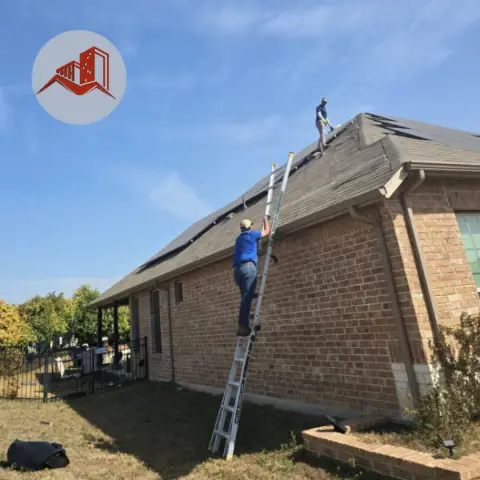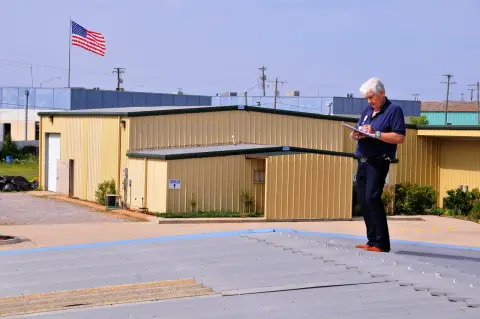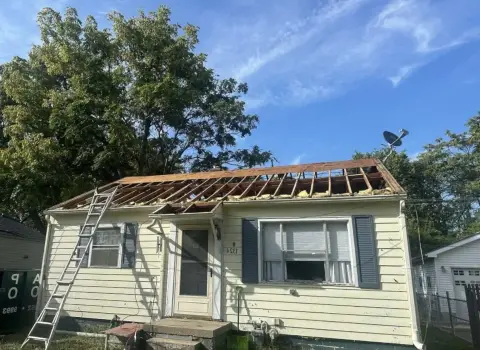

A roof inspection from us ends with two things in your hands: photographs of what we found, and a written account of what is wrong, what is fine, and roughly how many years the roof has left. Both are yours whether or not you hire us. The inspection is free, there is no obligation attached, and if the roof is sound we say so in writing and leave.
We are also the company that gets paid if your roof needs work, and that is worth knowing before anyone climbs your ladder. This page covers what a roofer’s inspection checks on an Eau Claire house, what it costs and why, how it differs from a home inspector’s look or an independent roof inspector’s, and when one is worth getting.
What a roof inspection checks on an Eau Claire house
A roof here fails from two directions: weather from above, and heat and household moisture from the attic below. An inspection that stays on the shingles misses half of it. The order we work in:
The shingle field
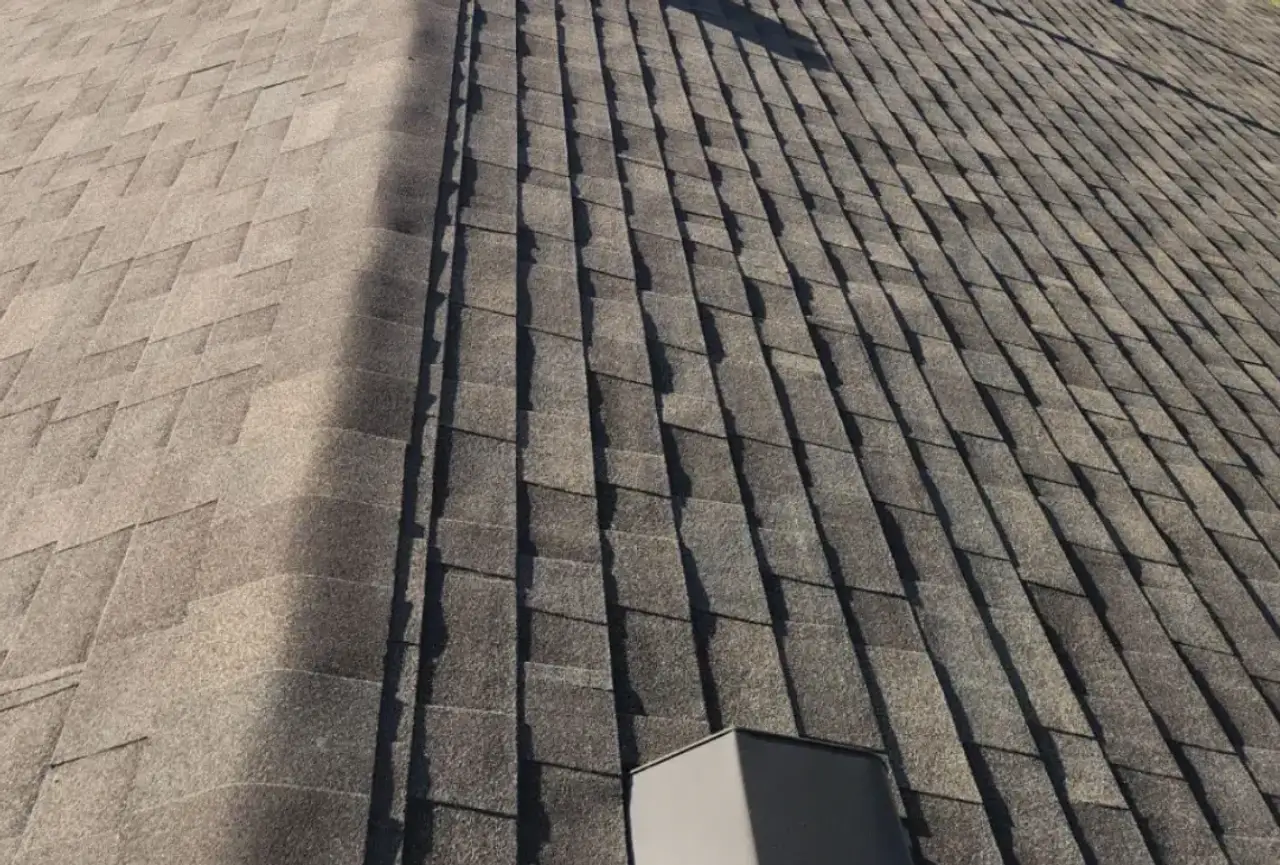
Granule loss, cracked or curled tabs, bald spots, and wind-creased shingles that laid back down flat and look fine from the driveway. Nail pops get counted, because freeze and thaw backs fasteners up through the shingle face, and a cluster of them usually points at the deck or the attic rather than the shingles. We note which slopes are worse; south and west slopes age first, and a roof that is worn on one side only reads differently from one worn everywhere.
Flashing, pipe boots, and roof penetrations
Flashing usually fails before the shingles do on a Wisconsin roof, so every place something goes through the roof gets a close look: plumbing vent boots, box vents and ridge vent, exhaust caps, step and counter flashing where the roof meets a wall or chimney, and drip edge. The rubber collar on a plumbing vent boot lasts about five to ten years by one boot maker’s count, which means a 15-year-old roof is often on its second set of boot failures. Sealant smeared over flashing gets noted for what it is: a past leak somebody patched instead of fixed.
Valleys and eaves
Valleys carry more water than any other part of the roof, so we look for worn shingles, debris dams, and any sign of the membrane underneath giving out. The eaves get the same attention for a local reason: that is where Eau Claire’s ice dams push water back under the lower courses, and stained or rotted sheathing at the edge is the evidence they leave behind.
The attic from below: ventilation, frost, and condensation
This is the part a quick roof walk skips. From inside the attic we look at the underside of the roof boards for water trails and dark staining, check whether the soffit intake is open or buried under insulation, and look for the signs of damp house air getting up there: rusty nail tips, mold on the sheathing, and frost on the boards in cold weather. Frost that melts on a sunny February day drips through the ceiling with no rain at all, and the fix for it is in the attic, not on the roof. The attic ventilation guide covers the vent math when the attic turns out to be short of it.
The deck underfoot
Walking the roof tells you things a photograph cannot. A deck that gives or feels spongy between rafters, or a dip you can see along a slope, means water or age has reached the wood under the shingles. It does not always mean a new roof, but it changes the conversation, and the decking replacement guide explains what comes next when it does.
Gutters and drainage
Gutters show what the roof is shedding. A heavy load of granules after ordinary rain is a shingle running out of life; dents in gutters and downspouts are the soft-metal evidence of hail. Overflowing gutters and downspouts emptying onto a lower roof get noted too, because water tracking back under the eaves rots fascia and soffit and looks like a roof leak from inside.
What you get after a roof inspection
Photos first. Each problem gets photographed where it is, close enough to see and with enough of the roof around it to find it again. A finding without a photo is an opinion, and you should not have to take our word for anything.
Then the written findings: what we checked, what we could not see and why, what is wrong, and what we would do about it, from nothing to a repair to planning a new roof. The last part is the remaining-life call. Asphalt roofs around Eau Claire usually last 18 to 25 years, and the inspection puts yours somewhere in that range with reasons attached. If something needs fixing, the price comes as a separate written quote that stays good for a month, so there is no pressure to decide on the driveway.
When to get a roof inspection
- Buying a house. Before the inspection contingency runs out, especially if the home inspector’s report says the roof was observed from the ground. The real estate section below covers why.
- Selling a house. Before listing, so a roof problem is something you priced and planned for rather than something the buyer’s inspector found for you.
- An asphalt roof past 15 to 20 years. Three-tab roofs here often come due at 15 to 20 years, architectural at 18 to 25. Inspected in that window, a roof can usually be kept going with small fixes and the replacement planned instead of forced by a leak. The roof age guide covers the signs and how to find out how old yours is.
- Before winter. A cracked pipe boot or a lifted shingle in October is a small fix in shingle weather. The same problem under four months of snow becomes a stained ceiling in March, and cold-weather work costs more effort for the same result.
- After any water inside. Even once, even if it dried up. The stain shows where the water landed, not where it got in.
- Insurance questions. Wisconsin insurers may decline to renew a policy over a worn-out roof, with at least 60 days’ notice, and some give six to twelve months to make repairs. If your carrier has asked about the roof, written findings with photos are the thing to send back.
After a hailstorm or a strong wind, the inspection is about documenting damage for an insurance claim, and that has its own page: the storm damage page covers the free post-storm inspection and how the claim works, and the hail damage roof repair page covers what gets checked and fixed after hail like the May 15, 2025 storm that dropped stones up to four inches between Eau Claire and Altoona.
Roof inspection cost, and why ours is free
A roof inspection from us costs nothing, and you owe us nothing afterward. It is free because inspections are how a roofing company finds its work: some inspections turn into a repair or a new roof, and the ones that do not still cost us the time. That is the whole business model, and it is the same at every roofer offering free inspections.
It also creates an incentive you should keep in mind. A company that gets paid for repairs has a reason to find something to repair. Our protection against that is the photos: every problem we report is one you can see, and our answer when a roof is fine is to say so. Your protection is to ask, for every recommended fix, where it is and what the photo shows. If the stakes are high, a repair in the $300 to $6,500 range versus an asphalt replacement at $9,000 to $16,000 on a typical Eau Claire home, a second opinion is cheap insurance.
Independent roof inspector vs. home inspector vs. roofer
Our inspection is not independent. We are honest about the roof, but we sell what the roof needs, and no amount of good intention changes that structure. If you want an opinion from someone with nothing to sell you, here are the options and what each one actually covers.
A Wisconsin home inspector. A home inspector works for a fee and does not do the repair, which is the point. Wisconsin’s standards of practice for home inspectors, Wis. Admin. Code SPS 131.32(4), require the inspector to observe and describe the roof covering and its type, roof drainage, flashings, skylights, chimneys, and roof penetrations, and any signs of leaks or abnormal condensation, and to describe the methods used to observe the roof. The same rule says the inspector is not required to walk on the roofing, or to look at attached accessories such as solar panels, antennas, and lightning arrestors. The general standards add that a home inspection need not be technically exhaustive, and the inspector need not move snow or ice or predict future failure. So a home inspector is independent but may describe the roof from the ground or a ladder, and will not tell you how many years it has left.
A second roofer. Another established local roofer walks the roof the way we do and has the same incentive we do, which is exactly what makes a second opinion useful: two companies with something to sell who agree on what is wrong are probably right. Two who disagree tells you where to look harder.
An independent roof inspector. Some areas have inspectors or consultants who look only at roofs and sell no repairs. If you find one serving the Chippewa Valley, ask how they reach the roof and whether they go in the attic, since a no-incentive opinion is only as good as what it actually looked at.
A roofer, us included. What you get from us is a walk on the roof, a trip into the attic, a crew that tears roofs off for a living and knows what the hidden parts usually look like, and a remaining-life call a home inspector is not required to make. What you do not get is independence.
Roof inspections when buying or selling a home in Wisconsin
For buyers, start with the home inspection report. Because SPS 131.32(4) requires the inspector to describe how the roof was observed, the report will say whether the inspector walked it or looked from the ground or a ladder. If the roof was not walked and it is more than 15 years old, a roof inspection inside your contingency period fills that gap. A few more things worth checking in Eau Claire: the city’s online permit search takes an address and shows the date of a permitted re-roof, and a house in the path of the May 2025 hail may have had a claim paid; ask the seller whether it did and whether the roof was actually replaced afterward.
For sellers, the Wisconsin Real Estate Condition Report under Wis. Stat. 709.03 asks whether you are aware of defects in the roof, and leakage counts. A defect, in the statute’s terms, is a condition that would have a significant adverse effect on the value of the property, would significantly impair health or safety, or would significantly shorten the expected normal life of the premises if not repaired or replaced. You answer based on what you know. The honest admission here: a pre-listing inspection that finds a defect means you now know about it, and it belongs on the report. Most sellers are better off knowing, since a problem you found and priced costs less than one the buyer’s inspector finds mid-deal. Where the report is required, a buyer who does not receive it within 10 days after acceptance can rescind the contract, so it is not a form to leave until the end. None of this is legal advice; your agent or attorney handles the paperwork.
Roof leak inspection
When there is water inside, the inspection becomes a search for the entry point, which is rarely right above the stain. Water that gets past a flashing or a cracked pipe boot runs along the underlayment or a rafter before it drips. We follow the trail from the attic side, walk everything uphill of it on the roof, and photograph the source when we find it. How that trace works step by step, the water test used when neither side shows it, and what the timing of a drip tells you are on the roof leak repair page. If water is coming through the ceiling right now, skip the inspection and start with emergency roof repair.