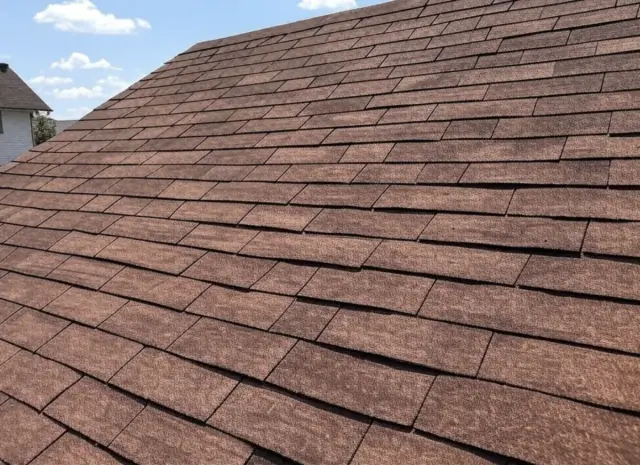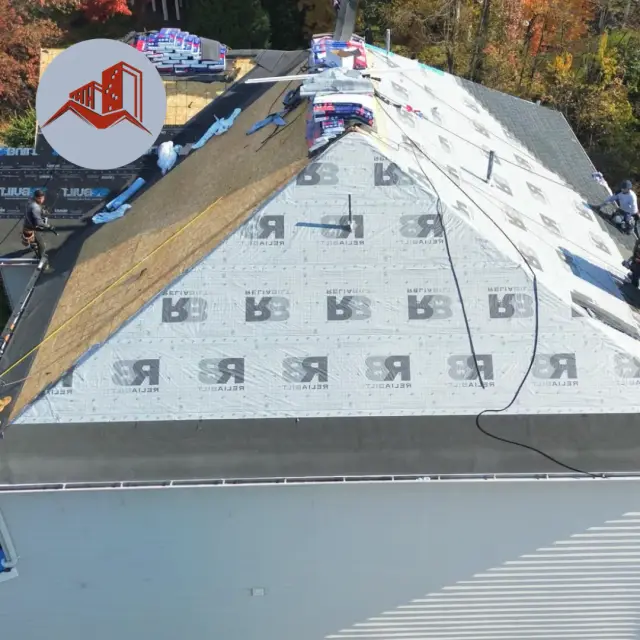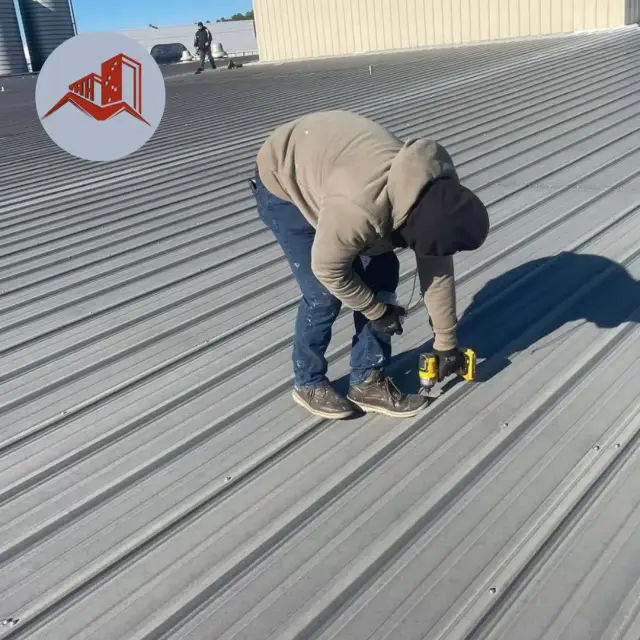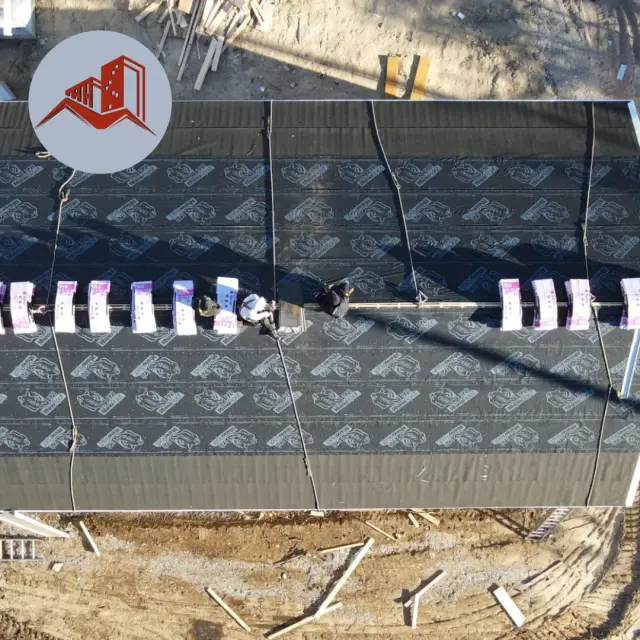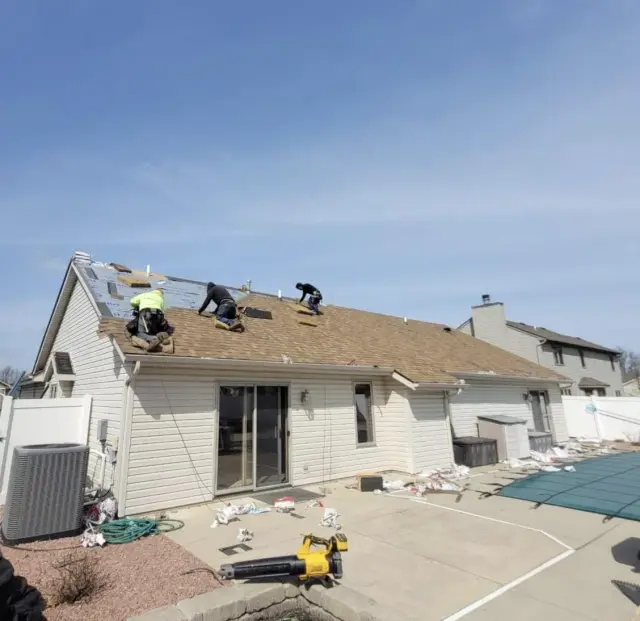

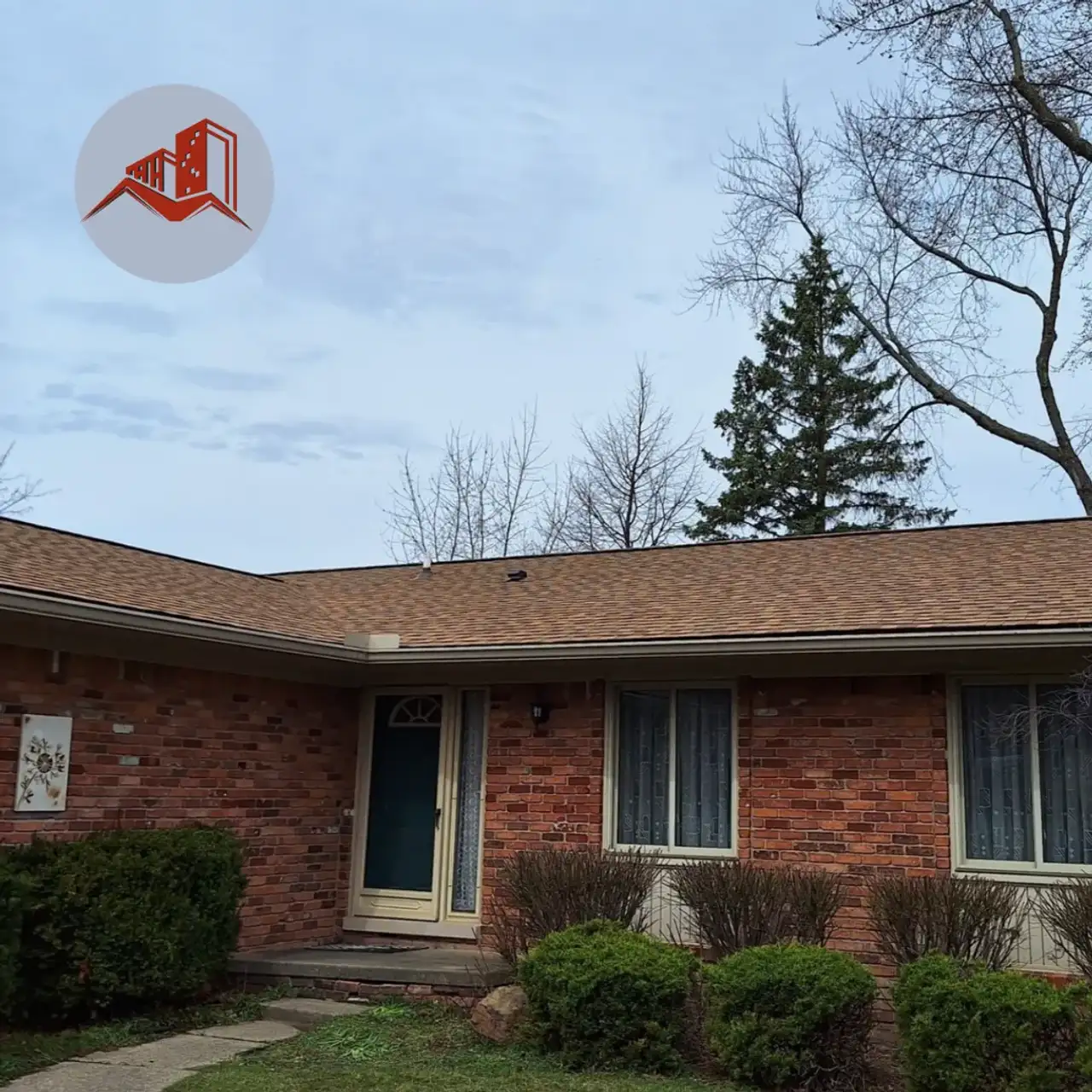
Altoona’s roofs are younger than Eau Claire’s, and that is exactly the problem right now. The first big wave of subdivision asphalt, laid in the early 2000s in Otter Creek Trails, Prairie View Estates, and Knollwood, is reaching the 20 to 25 year mark where architectural shingles run out, and the May 15, 2025 hail put four-inch stones on a lot of it. So the two calls we get most from Altoona are the same question from two directions: is this roof at the end of its life, or did the storm end it early? Either way the answer starts with a free inspection, and the work that follows runs from a targeted repair to a full replacement, on the same schedule as an Eau Claire address.
Early-2000s subdivision roofs reaching replacement age
Homes built since 2000 make up a meaningful share of Altoona, and they were built to a decent standard: code-compliant attic ventilation, plywood decking, architectural shingles installed during construction. That is good news for the roof’s life and bad news for the calendar, because a whole subdivision’s worth of shingles from 2001 to 2005 ages out together. On these roofs the replacement question is not whether the deck is sound (it almost always is, so the decking contingency older Eau Claire homes carry rarely applies here) but what goes back on: the same architectural shingle, a Class 4 impact-rated version of it, or standing seam metal for an owner planning to stay.
The builder shortcuts we find on inspection are specific and repeatable: ice and water membrane that stops short in the valleys, starter strips that were cut from field shingles, and wall flashing that passed inspection in 2003 but was never designed for 20 winters of freeze and thaw. None of those is a leak yet. All of them decide whether a roof gets its last five years.
Post-2010 homes in Hillcrest Greens and the newer streets east of Highway 53 have a different need: a baseline. Most owners do not know which shingle the builder used or how the flashing was detailed, and a free inspection gives them a photographed record of the roof’s condition, which is what makes a later storm claim clean.
| Part of Altoona | Housing stock | The usual job |
|---|---|---|
| Otter Creek Trails, Prairie View Estates, Knollwood | Late 1990s to 2000s single-family | First replacement of the builder’s architectural shingles |
| Hillcrest Greens and the streets east of Highway 53 | Post-2010 | Baseline inspection, storm repairs |
| River Prairie | 2015 mixed-use: townhomes, apartments, retail, a hotel | HOA-coordinated townhome re-roofs, membrane maintenance |
| Lake Altoona shoreline | Larger single-family on open water | Wind-rated replacements with the edge details done right |
| Older central Altoona | Mid-century and earlier | End-of-life asphalt, chimney flashing, the occasional ice dam |
| Highway 53 corridor | Strip retail, automotive, light industrial | TPO and EPDM maintenance plans |
The May 15, 2025 hail and what is left of it
The May 15, 2025 storm produced four-inch hail in Altoona, the largest hail report of that system, and we spent the rest of 2025 walking Altoona roofs that looked fine from the driveway. Hail that size bruises the shingle mat, and the granules let go over the following months, which is why a lot of owners only noticed the damage when their gutters filled with black grit that fall.
Most Wisconsin homeowner policies give you 12 months from the storm date to file, and that window closed in May 2026. The damage did not. A shingle bruised in 2025 keeps shedding in 2026, and a roof that was borderline before the storm is a replacement now, paid out of pocket or by the next claim. If you never had that roof inspected, do it before the next event so the record shows what was already there. The April 28, 2025 outbreak also put four confirmed tornadoes in Eau Claire County, and its calling card on Altoona roofs is subtler than hail: tabs that lifted in the wind and lay back down, sealant strips broken, waiting for the next gust. The storm damage page covers the claim process from the inspection through the adjuster’s scope.
Lake Altoona wind and the lakefront roofs
Lake Altoona is the impoundment of the Eau Claire River behind the Lake Altoona Dam, with several miles of shoreline south of the city, and open water changes what a roof sees. Wind comes off the lake surface without anything to slow it, so the lake-facing slopes on shoreline homes weather faster than the rest of the house, and the rakes and corners go first. On a replacement there we spec wind-rated shingles and pay attention to the edge details, drip edge, starter, and six-nail fastening, because the corners are where a lakefront roof fails. Lakefront homes also tend to be larger with more complex rooflines, so they land in the upper tiers of the replacement cost ranges.
River Prairie and the Highway 53 corridor: HOAs and flat roofs
River Prairie, the 40-acre mixed-use development started in 2015 west of Highway 53 along the river, is Altoona’s unusual roofing case. Its townhomes and apartments carry pitched residential roofs, its restaurants, retail, and hotel carry low-slope membranes, and all of it shares access roads and parking. Townhome and condo work there means HOA coordination on material and color, and we pull the HOA guidelines before the estimate so nobody picks a shingle that gets rejected. It also means scheduling: per-unit replacement runs $5,000 to $9,000 in asphalt, and the savings come from re-roofing a run of units in sequence instead of mobilizing for each one. Roofing next to an open restaurant takes more planning than a standalone job: dumpster placement that does not block deliveries, staging that keeps the sidewalk open at lunch, and debris control on a windy day.
The Highway 53 corridor’s strip retail, automotive, and light-industrial buildings run the standard commercial mix, TPO and EPDM membranes, exposed-fastener metal on smaller standalone buildings, modified bitumen where HVAC gets serviced. The mid-2000s membranes along the corridor are reaching 15 to 20 years and showing it: failed sealant at penetrations, edge metal lifting, ponding on settled sections. Most are maintenance-plan roofs, not replacements yet, and the commercial page covers the free asset assessment we start with.
Altoona roof permits, HOAs, and the older streets
The City of Altoona requires a building permit to re-roof a home or business; the city reminded residents of that in a notice on May 15, 2025, the day of the hail, because out-of-town crews were already knocking doors. Minor repairs valued under $5,000 are exempt, which covers most single-point repairs. Permits go through the Building Official at city hall on Lynn Avenue, with an online application, and we pull the permit as part of the job. Fascia, soffit, and gutter replacement do not need one.
Older central Altoona, the original residential grid near downtown, runs the same patterns as Eau Claire’s mid-century neighborhoods: asphalt replacements at end-of-life, flashing repairs at chimneys, and ice dams on the houses that never got balanced attic ventilation. Newer Altoona construction is mostly immune to chronic ice damming because the ventilation was built in; when a post-2000 house ices up, the cause is usually a bathroom fan venting into the attic or insulation someone moved, and we look for that before recommending anything on the roof.
What Altoona roofing costs
Four miles does not move a price. Altoona quotes come off the same rate sheet as Eau Claire with no mobilization factor, and because most of the housing stock has modern decking and ventilation, the contingency lines older homes carry are usually absent. The replacement page carries the asphalt and metal ranges by roof size and complexity, the repair page carries the repair ranges, and the free written estimate turns them into your number.
Every town we work in has a different permit rule, and they sit side by side on the roof permits page.