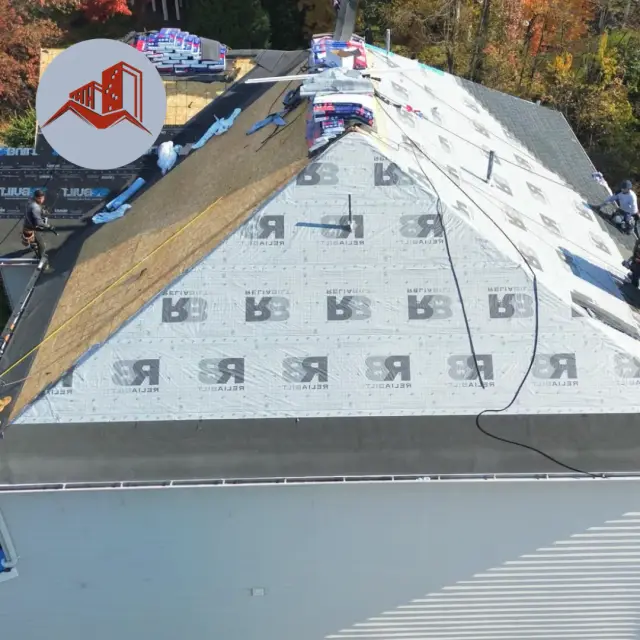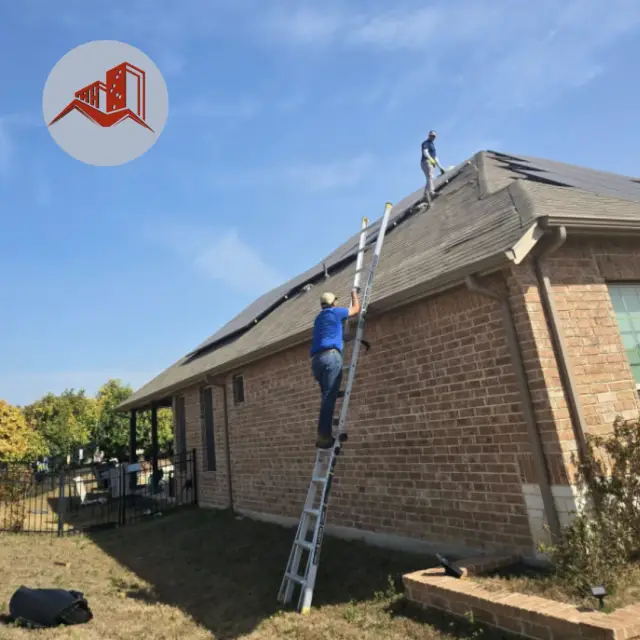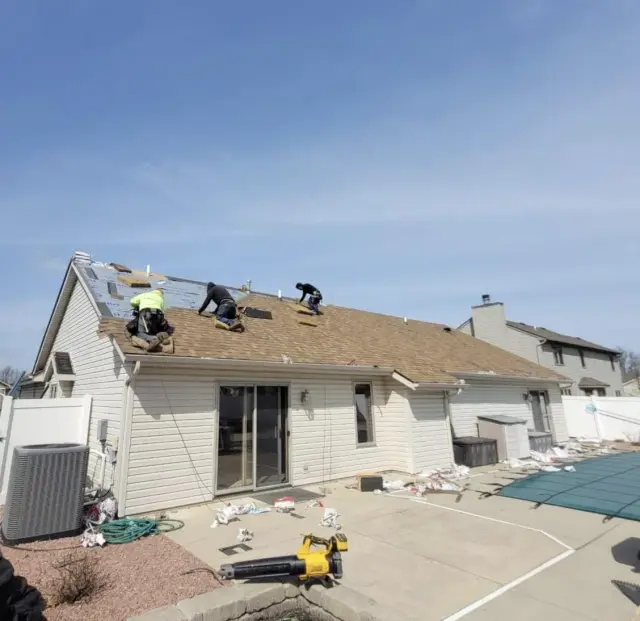

Many of Fall Creek’s older houses along Lincoln Avenue still breathe through a pair of gable vents, and every February some of them ice up at the eaves. That, plus an early-2000s re-roof wave coming due and the farm buildings on every road out of the village, is most of what we do here. The village is 12 miles east of our shop, a 20-minute run on US 12, which matters mainly for the calls that cannot wait: an ice dam pushing water into a kitchen ceiling or a June gust dropping a box elder limb through a porch roof gets the same emergency response an Eau Claire address gets.
Gable-vent attics and February ice dams on Lincoln Avenue
Lincoln Avenue and the streets ringing it carry Fall Creek’s older housing: compact frame homes and bungalows from the early and middle twentieth century, with a scattering of larger Victorians. A lot of those attics have no soffit intake at all, just a gable vent at each end, and that imbalance is the ice-dam machine: warm attic air melts the snow at the peak, the cold eave refreezes it, and the water backs up under the lower courses to stain the ceiling along the exterior wall. A repair after the fact handles the roof-side damage, but a re-roof on one of these houses almost always includes bringing intake and exhaust into balance, because new shingles over the same attic just schedule the next February.
The early-2000s re-roof wave coming due
The shingles installed across the village in the early 2000s are brushing against their service ceiling now, and owners are choosing between another architectural asphalt cycle and stepping up to standing seam. That decision is the same one the replacement page walks through, and on Fall Creek’s simple rooflines and small footprints the numbers land at the low end of its ranges. What does not land low is the surprise under the shingles on the oldest houses: plank decking and the odd rotted board at the eave, which the estimate carries as its own allowance with photos of whatever comes up.
Town of Lincoln farm buildings
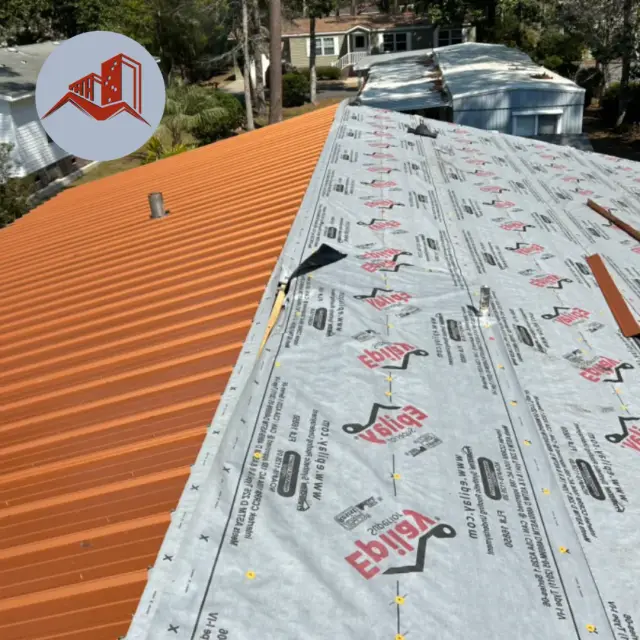
Out past the village signs, the Town of Lincoln is working farmland, and its barns, machine sheds, and pole buildings wear exposed-fastener ribbed steel. The maintenance rhythm there is the fastener gasket: the panels outlive the rubber seals under their screws, and a re-gasket visit beats chasing drips across stored equipment. A full re-skin is priced by the square foot on the metal roofing page, and doing the house and the outbuilding in one trip trims 10 to 20% off the outbuilding side, so mention every roof on the property when you call. Farm buildings used only for farming sit outside the state building code, which keeps the paperwork simple out there; the house does not.
Fall Creek’s $15 roofing permit and the five-day wait
The Village of Fall Creek lists roofing among the alterations that need a building permit, and the fee is $15 on the village schedule, doubled if the work starts before the permit is issued. Repairs that do not change the roof’s appearance count as minor repairs and need no permit. For a replacement, the sequence is fixed:
- You sign the written estimate.
- We file the roofing permit at the village administration office on East Lincoln Avenue, with the sketch of the project the village asks for.
- The village asks you to allow at least five business days for review.
- The crew is scheduled once the permit is in hand, never before, because the fee doubles for work started early.
- The village inspects the finished alteration, and the warranty paperwork follows. Rural Town of Lincoln addresses fall under Eau Claire County’s dwelling-code program instead, and the county says a like-for-like re-roof usually needs no permit there.
Storm response 20 minutes up US 12
Storm seasons play out faster here than anywhere else outside Eau Claire proper. After the May 15, 2025 hail swept Eau Claire County, Fall Creek inspections slotted between Eau Claire appointments instead of waiting for a dedicated trip, and the claim documentation got shot while the damage was fresh. Filing on that event is behind us now; the bruised shingles are not, and an inspection before the next storm is how a Fall Creek claim starts clean. Lead times track the Eau Claire calendar, four to eight weeks at peak and one to three in the shoulders, and the short run east means an emergency here never waits on a schedule slot.
Every town we work in has a different permit rule, and they sit side by side on the roof permits page.