

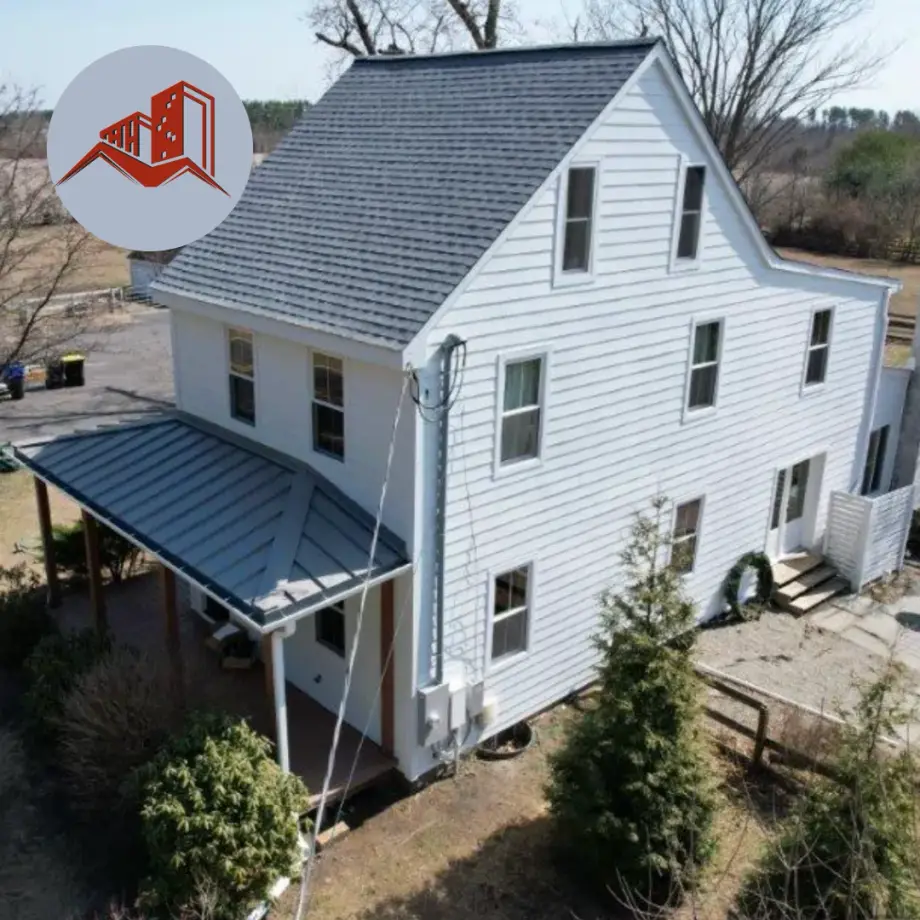
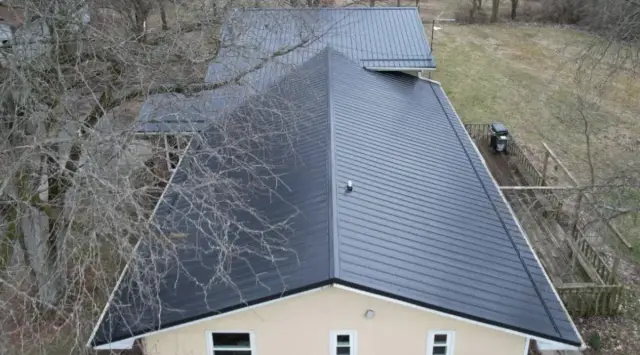
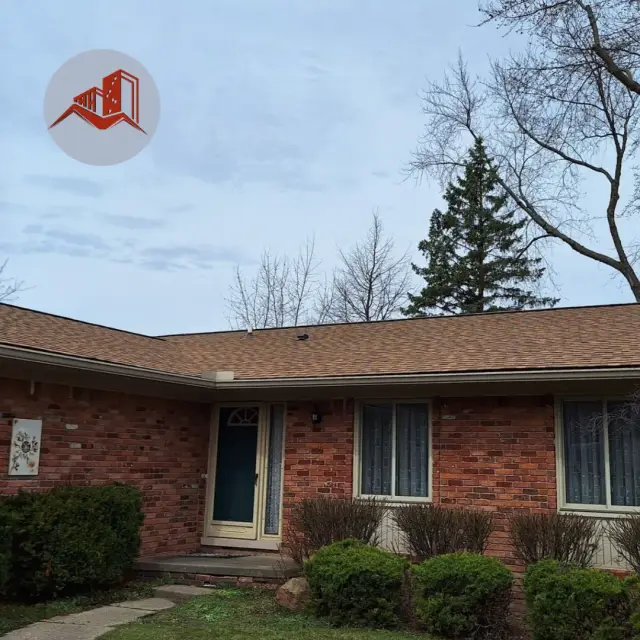
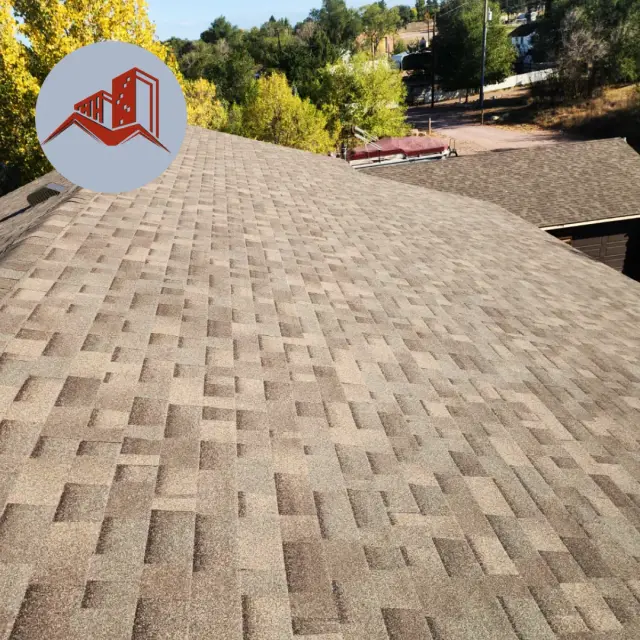
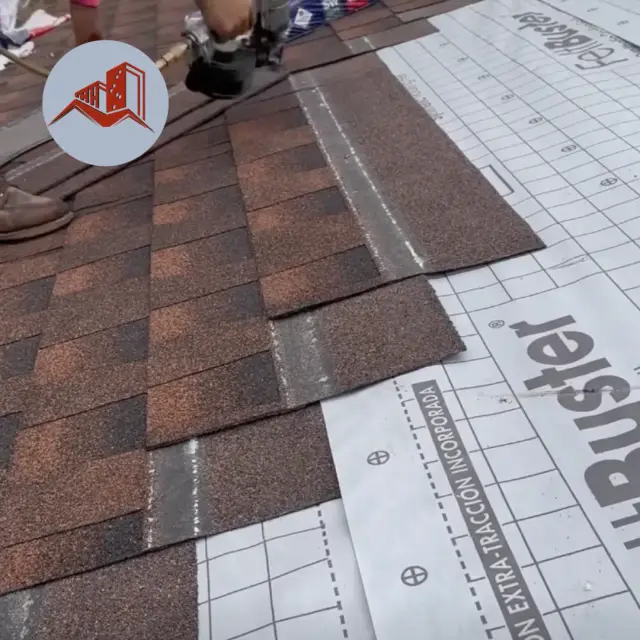
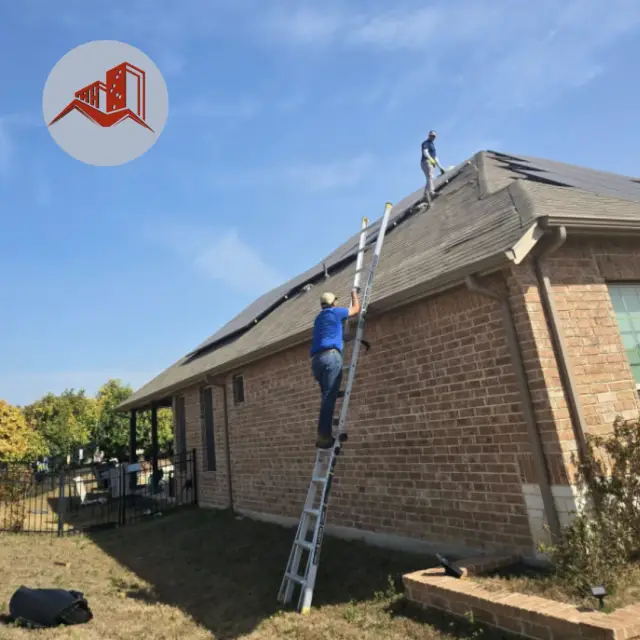
More of our Chippewa Falls work is full roof replacement than anywhere else we go, and the reason is under the shingles. Downtown was built starting in the 1860s, and the lumber-era homes ringing it carry plank decking, layered old roofs, and framing quirks that make a tear-off the only honest way to know what is up there. Meanwhile the subdivisions stretching east toward Lake Wissota are aging into their first replacements on schedule, with open-water wind working the lakeside slopes. We run Highway 53 to Chippewa Falls every week, close enough that it is a standing route, and the scope goes from asphalt tear-offs to standing seam metal, with repairs and storm documentation filling the weeks between.
Plank decking under the century homes downtown
The homes around the downtown historic district and up the hill streets above it date from the late 1800s through the 1940s, and many still carry their original rafter framing and plank decking instead of plywood sheathing. Individual boards gap and split under what looks like a sound shingle layer, so replacements on these homes routinely uncover decking that needs partial replacement, sometimes a structural detail that needs attention. We do not fold that into the price silently: the estimate carries a decking allowance, typically $1,500 to $4,000 on a lumber-era house depending on how many sheets go in, and the photos of what we found come with it so you see what was added and why.
The pitches are steep, built to shed snow before insulation was a serious thing, and the rooflines are cut up with dormers and gables that each need their own flashing detail. The streets are narrow, the trees are mature, and the parked cars are dense, so dumpster placement on a downtown job is sometimes the trickiest part of it. We plan the roll-off ahead of time and know which streets take a 20-yard box and which need a smaller one placed creatively.
| Where in Chippewa Falls | Built | Under the shingles | What the estimate carries |
|---|---|---|---|
| Downtown and the hill streets above it | 1860s to 1940s | Plank decking, original rafters, steep cut-up pitches | Decking allowance, dormer flashing, a smaller dumpster |
| Post-war ranches and split-levels | 1950s to 1970s | Plywood, thin attic insulation, unbalanced venting | Ventilation correction |
| East-side subdivisions toward Highway 29 | 1990s on | Plywood, code-compliant venting | A straight replacement at 20 to 25 years |
| Lake Wissota shore | Mixed eras, larger homes | Open-water wind on the lakeside slopes | Wind-rated shingles or metal, edge details |
Ice dams on the hill streets
Ice dams are the headline winter problem on the older Chippewa Falls homes, and the cause is attic air, not the roof. A century house with thin insulation and no soffit intake lets warm air reach the deck, melts the snow at the peak, and refreezes it at the colder eaves; the water then backs up under the lower courses and shows up inside as ceiling stains along the exterior walls, sometimes months later when summer humidity finishes the work. The fix is rarely a new roof. It is intake ventilation at the soffit and balanced exhaust at the ridge, which we do as a standalone repair and as part of every replacement on an older home. The post-war ranches and split-levels across the rest of the city have the same ventilation gap without the plank decking, and replacement is the right time to correct it.
Lake Wissota wind and the subdivisions aging into replacement
Lake Wissota is not large by Great Lakes standards, but it is open water, and the lakeside elevations of shore homes take wind nothing else in the county sees. Wind-lifted shingles are a recurring repair call there, usually the leeward sections of older 3-tab roofs whose sealant strips aged out. On a replacement, that exposure calls for wind-rated shingles or metal panels with the rakes, corners, and starter courses done right, because the edges are where a lakefront roof fails.
The newer subdivisions east of downtown toward Highway 29 and the lake, built from the 1990s on, are well-built, code-compliant homes with balanced ventilation already in place. The roofing question there is simply what goes back on when the original 25-year architectural shingle gives out, and a lot of that asphalt is at the 20 to 25 year mark right now. Anson and Lafayette townships on the city’s edges add outbuildings and pole barns to the mix, and we put the metal on those as part of the same job when it makes sense.
The Chippewa Falls permit: $4 per $1,000 of value, allow two weeks
Chippewa Falls requires a building permit for a re-roof unless the project value is under $2,000 or the area is under 200 square feet, which covers most single-point repairs and none of the replacements. The fee is $4 per $1,000 of project value with a $20 minimum, applications go to the Inspection and Zoning office at City Hall on West Central Street by mail or drop-off, and the city asks for up to two weeks to review a one- or two-family permit. That review time is the part that matters to your calendar: we file as soon as the estimate is signed so the permit is in hand when the crew is scheduled. We pull it as part of the job.
Bridge Street storefronts and the Highway 29 corridor
Bridge Street’s mix of restored 1800s commercial buildings and post-war infill is one of the more varied small-commercial roofing landscapes in the valley: older built-up roofs behind brick parapets that drain through internal scuppers, modified bitumen on second-story porches, and the occasional standing seam metal put on during a restoration. The Leinenkugel’s brewery district sits in the older industrial core, and roofing next to active operations there means coordinating truck traffic and access before a crew arrives. Smaller retail along Highway 53 toward Lake Hallie and the Highway 29 clusters runs the standard TPO and EPDM membranes, with maintenance and recover work getting more common as those systems pass 15 years. The commercial page covers the free asset assessment we start with.
Roof replacement cost in Chippewa Falls
Pricing tracks our Eau Claire ranges; eleven miles does not add a fuel or time premium. What moves a Chippewa Falls number is the house: the decking allowance on anything pre-1960, the steeper pitches and cut-up rooflines on the historic stock, and the larger, more complex rooflines on the Lake Wissota shore, which land in the upper tiers of the replacement cost ranges. Smaller historic-district homes with simple footprints sit at the low end of those tiers when the decking is sound. Chimney flashing is the most common repair call by volume in the city, and the repair page carries those ranges. The free written estimate gives you the actual number with the decking spelled out.
Every town we work in has a different permit rule, and they sit side by side on the roof permits page.