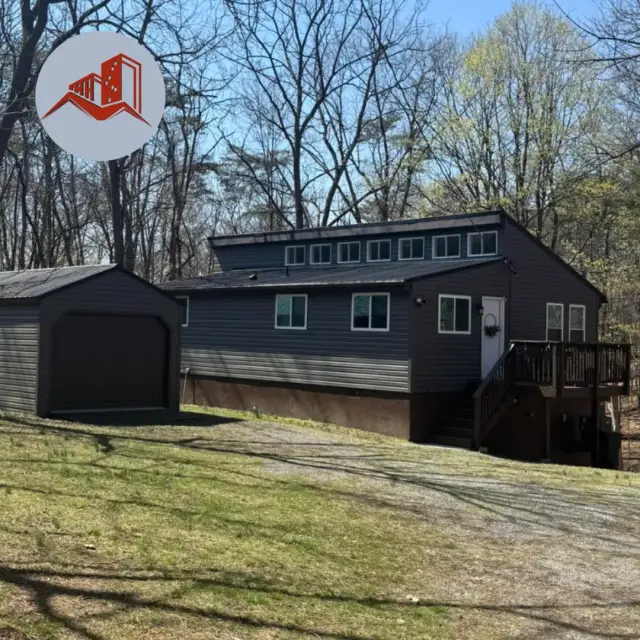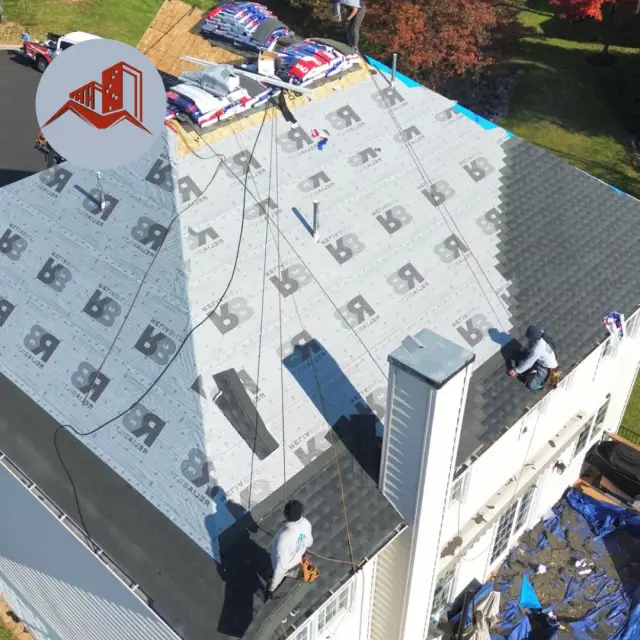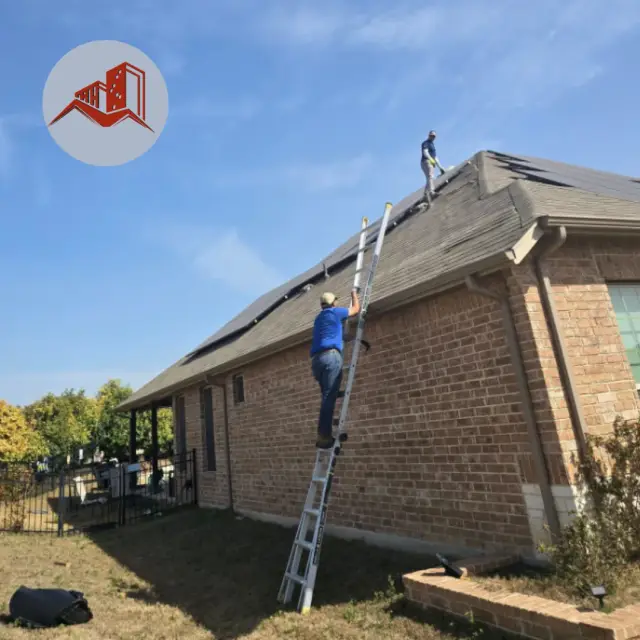

The roofs on the south shore of Lake Wissota are mostly on their second or third set of shingles: well over half the houses in the community were standing before 1980. Add attics vented to 1970s standards and a water-facing slope that takes open-water wind, and that is the work here. Two things separate a Lake Wissota re-roof from the same job in Chippewa Falls: the permit runs through Chippewa County, because the Town of Lafayette issues none, and most lake lots sit inside the county’s shoreland zone, where a setback rule governs what you can change up there.
The 1970s lake houses: what is on a Lake Wissota roof, decade by decade
Banks were hesitant to finance homes on this lake until the 1960s, which is why the biggest block on the shore is 1970s construction and the median build year is 1976. Here is how the housing breaks down, and what each era means when the shingles come off.
| Built | Share of the community’s homes | When the roof comes due |
|---|---|---|
| 1939 or earlier | Roughly one in ten | Plank decking likely, which is what the decking allowance on the estimate is for |
| 1940s to 1960s | Roughly one in four | Mid-century framing; we look at the deck from the attic first |
| 1970s | Roughly a quarter, the biggest block | Second or third shingle cycle, attic venting of its era |
| 1980s | A few percent | Straddles the county’s June 1, 1980 dwelling-code cutoff, so the rule turns on the completion date |
| 1990s | Roughly one in five | First replacement due now at 20 to 25 years, venting usually already balanced |
| 2000 and later | Roughly one in seven | Mostly on the first roof |
Put new shingles over an attic vented for 1970s heating bills and the ice dams come back, which is how you get a stain on the bedroom ceiling two winters later, so we correct the venting with the re-roof, intake down at the soffit and exhaust up high; the attic ventilation guide has the arithmetic.
Open water on the lake-facing slope: what Lake Wissota wind does to a roof
The community sits on the south shore, looking north across about 6,100 acres of open water, so the water-facing slope is also the north slope, carrying two loads at once. On the shore homes we have re-roofed, the wind-lifted shingles are usually on the water side, and the shaded slope is where the algae streaks show up.
That slope gets the wind spec the Chippewa Falls page describes, rakes, corners and starter course done to it, in the wind-rated architectural line the asphalt page covers, its algae-resistant version where that slope is also the shaded one, or standing seam if you want no sealant strip at all.
Prices run on the same Eau Claire ranges the roof replacement page carries, $9,000 to $16,000 in architectural asphalt and $14,000 to $24,000 in standing seam, before the lakefront spec, the decking allowance and the ventilation work. The free written estimate gives the number for your roof.
Who issues the roofing permit at Lake Wissota: the Chippewa County desk
The Town of Lafayette issues no building permits and has no building ordinance. It sends permits, zoning and inspections to Chippewa County Planning and Zoning, so a Lake Wissota roof answers to the county desk on North Bridge Street in Chippewa Falls.
Two separate county permits are in play on a lake lot: a dwelling-code one, which turns on the build date, and a shoreland one, which is the section below. The dwelling code can reach a house built after June 1, 1980; on an older one, which is most of this shore, it applies only at the owner’s request. Whether a like-for-like re-roof counts is left open, so we ask the desk about both before the job, and where one applies we pull it and the fee is a line in the estimate. The roof permits page sets the county rule beside the town rules around it.
Asking the desk does not add weeks. The longer wait is the schedule, 4 to 8 weeks in peak summer and fall, 1 to 3 weeks in the shoulder seasons.
My cottage sits inside the shoreland setback. Can I still replace the roof?
Yes. The rule behind that also sets what you cannot do up there, and the unsettled part is the paperwork, at the end of this section.
Chippewa County’s shoreland zoning reaches 1,000 feet back from the lake, taking in every house on the shore roads. Inside it, the county’s shoreland chapter says a structure lawfully placed when built but short of today’s setback may be maintained, repaired, replaced, restored, rebuilt or remodeled, if the activity does not expand its footprint. A re-roof expands no footprint. The setback governs the ground the house covers, not the roof over it. A pitch change or a second story is the other conversation: it runs into a 35-foot cap on vertical expansion.
The county’s guide and state law disagree on one point, and it is that shoreland permit. The guide for structures within 75 feet of the water says county permitting is required even for maintenance and repair of that kind of house, while Wis. Stat. 59.692 bars a county from requiring approval or a fee for the same work if the footprint does not grow. Which governs your lot is a question for the desk, asked before the job.
Roofing the acreage lots inland from Lake Wissota: 1990s re-roofs, pole barns, and the drainfield
Beyond the shore roads the township is lots of one to five acres, newer than the lakeshore stock: 1990s builds coming due for a first replacement, in wind no different from any Chippewa County field. The outbuildings that come with the acreage are screw-down steel; the pole barn roofs guide covers gaskets versus new panels, and bundling one with a house re-roof trims 10 to 20% off the outbuilding side.
What changes the work on every lot is under the lawn. The town has no municipal water or sewer, every home is on a private well and septic, and a roll-off or a boom truck does not belong over a drainfield. Tell us where the drainfield and the well head are when you book and the dumpster and the material delivery get placed around them. A roof leaking now or stripped by Saturday’s wind is a different call: (715) 245-5271, open 7 days, 8 AM to 6 PM, same-day callbacks, and a tarp on it first.