

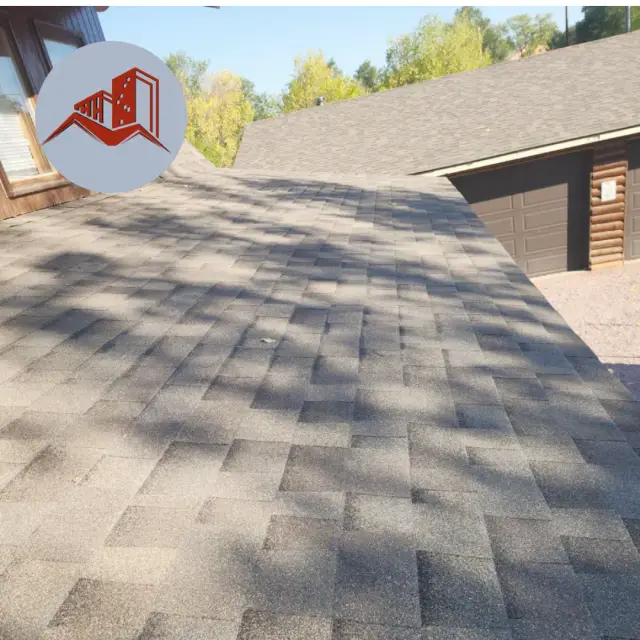
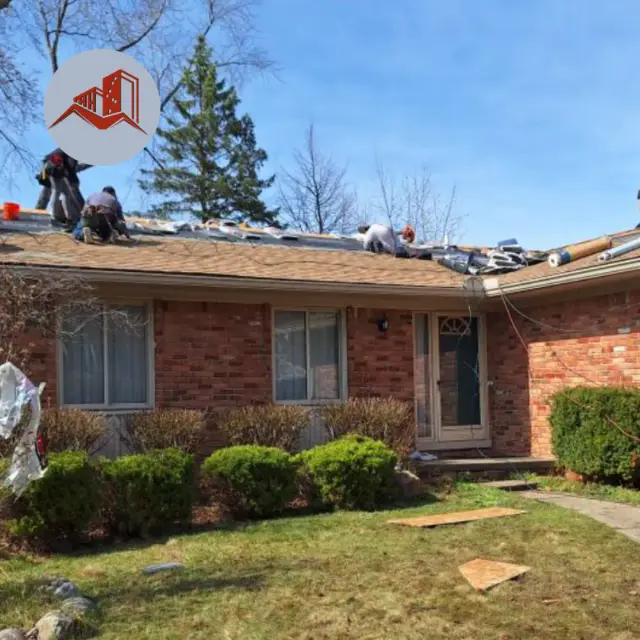
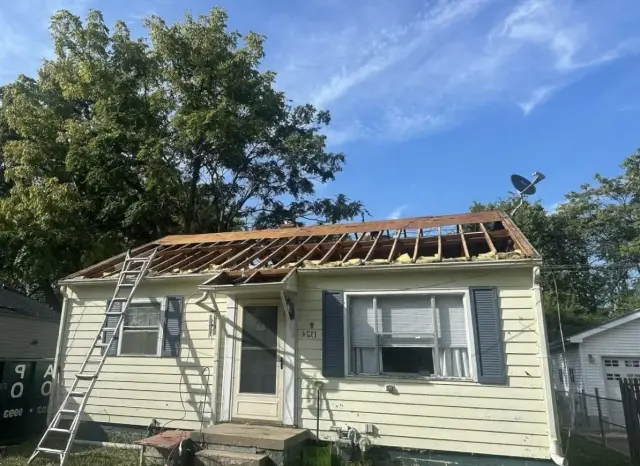
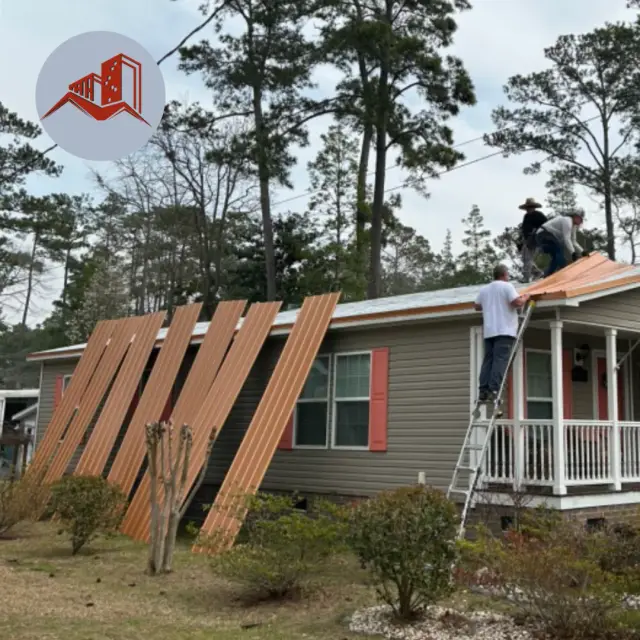
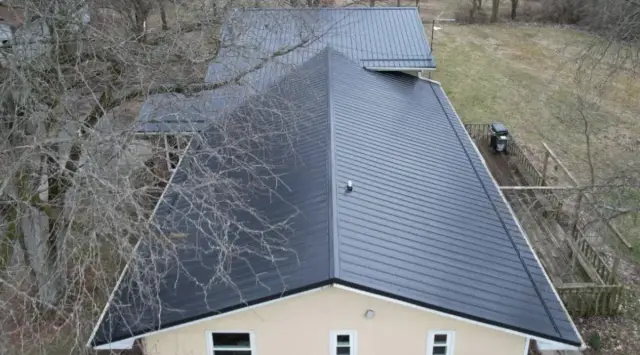
Bloomer is where our metal roofing work concentrates, and the reason is the landscape around the city rather than the city itself. The Town of Bloomer farm belt wraps it with dairy barns, machine sheds, and pole buildings that already run on ribbed steel, and the exposed rural home sites out there, with no windbreak between the house and the weather, are exactly where standing seam beats asphalt on the long math. In town it is a different calculation: the older streets west of downtown still get architectural asphalt on most blocks, and Bloomer asks for no permit either way.
Ribbed steel on the Town of Bloomer farm belt
The working buildings set the rhythm out here. Exposed-fastener ribbed panels cover barns, machine sheds, and equipment storage across the township, and their maintenance cycle is fastener-driven: the rubber gaskets under the screw heads bake out at 15 to 20 years while the panels themselves serve twice that. So the high-value visit on a Bloomer farm is usually a re-gasket pass across the screw lines, which stops the drips onto hay and equipment without re-skinning the building, and the storm-bent panel swap after a wind event. When a building is genuinely due, a full re-skin runs at the per-square-foot figure on the metal page, and a house re-roof in the same mobilization trims the outbuilding side by 10 to 20%, which is why farm jobs here usually run both at once.
| Age of an exposed-fastener steel roof | What is happening | The visit |
|---|---|---|
| Year 0 | Panels screwed to purlins, gaskets fresh | Install |
| Years 15 to 20 | Gaskets baked out, screw lines weeping onto hay and equipment | Re-gasket pass across the field |
| After a wind event, any year | Bent or lifted panels at the gable end | Panel swap, edge metal re-secured |
| Years 30 to 40 | Rust-through at the eaves, wind peel | Full re-skin, bundled with the house if it is due |
Standing seam on the exposed rural home sites
Farmhouses and newer rural builds around Bloomer sit on open ground, and open ground is standing seam’s argument. Concealed fasteners keep the screw-gasket problem off the house entirely, the panels shed a northern Wisconsin winter instead of carrying it through February, and a system that moves as one assembly holds up to wind that would pry at shingle edges. Snow guards go over every entry and fuel tank, because steel releases winter in slabs. The trade is upfront cost, roughly twice asphalt on the same footprint, which pencils for an owner planning to stay past the next shingle cycle and not for one selling in a few years. We quote both when the owner wants the comparison.
Asphalt on the older streets west of downtown
Bloomer’s older residential streets west of downtown and around the core carry mid-century and earlier homes, bungalows, modest single-family stock, the occasional Victorian, and on most of those blocks architectural asphalt remains the sensible replacement. The early-2000s shingle generation is aging out now, and the replacement conversation usually comes down to one more asphalt cycle or the last roof the owner will ever buy. The pre-1960 stock downtown adds the classic northern-Wisconsin problem underneath: under-insulated, under-vented attics that build February ice dams, and ventilation correction rides along with every re-roof on those houses because new shingles over an unbalanced attic just schedules the next stain.
Lake Bloomer, Duncan Creek, and the Highway 53 corridor
Lake Bloomer and Duncan Creek shape the center of town. Lake-adjacent homes carry modest extra wind exposure, nothing like the big-water effect on Lake Wissota but enough to justify six-nail fastening and proper edge metal on a replacement, and the low, damp lots along the creek grow the algae streaking that argues for the algae-resistant shingle lines on the asphalt page on any shaded slope. The Highway 53 and Highway 40 corridor at the north end runs Bloomer’s retail and service commercial on the usual membrane systems, TPO and EPDM on the flat sections and modified bitumen where HVAC gets serviced, maintained and replaced around business hours with the free asset assessment on the commercial page as the starting point.
No city permit for a re-roof in Bloomer
The City of Bloomer does not require a permit for roofing, siding, or window replacements, and its land-use application says so in as many words: shingling needs no construction review. Every one- and two-family roof still has to meet the state dwelling code, the ice-barrier rule on low-pitch roofs, the two-layer limit, the ventilation ratio, which is what our installs are built to whether or not anyone inspects them. Rural parcels in the Town of Bloomer follow the Chippewa County dwelling-code process instead, and where a county permit applies to a larger alteration we handle it. The run up Highway 53 through Lake Hallie and Chippewa Falls is a standing route, gravel drives and staging around livestock operations are ordinary conditions for the crew, and storm and active-leak calls jump the line.
Every town we work in has a different permit rule, and they sit side by side on the roof permits page.