

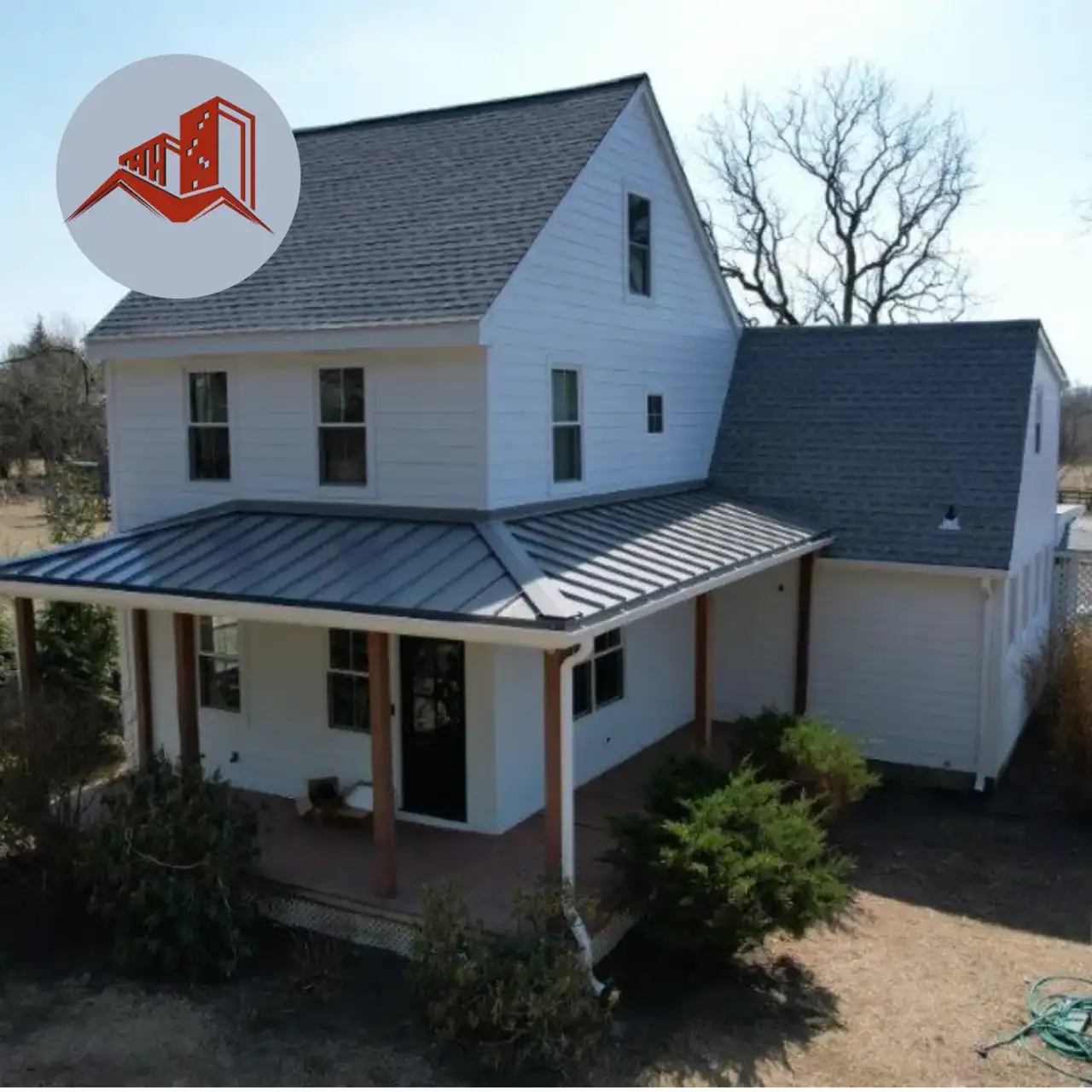
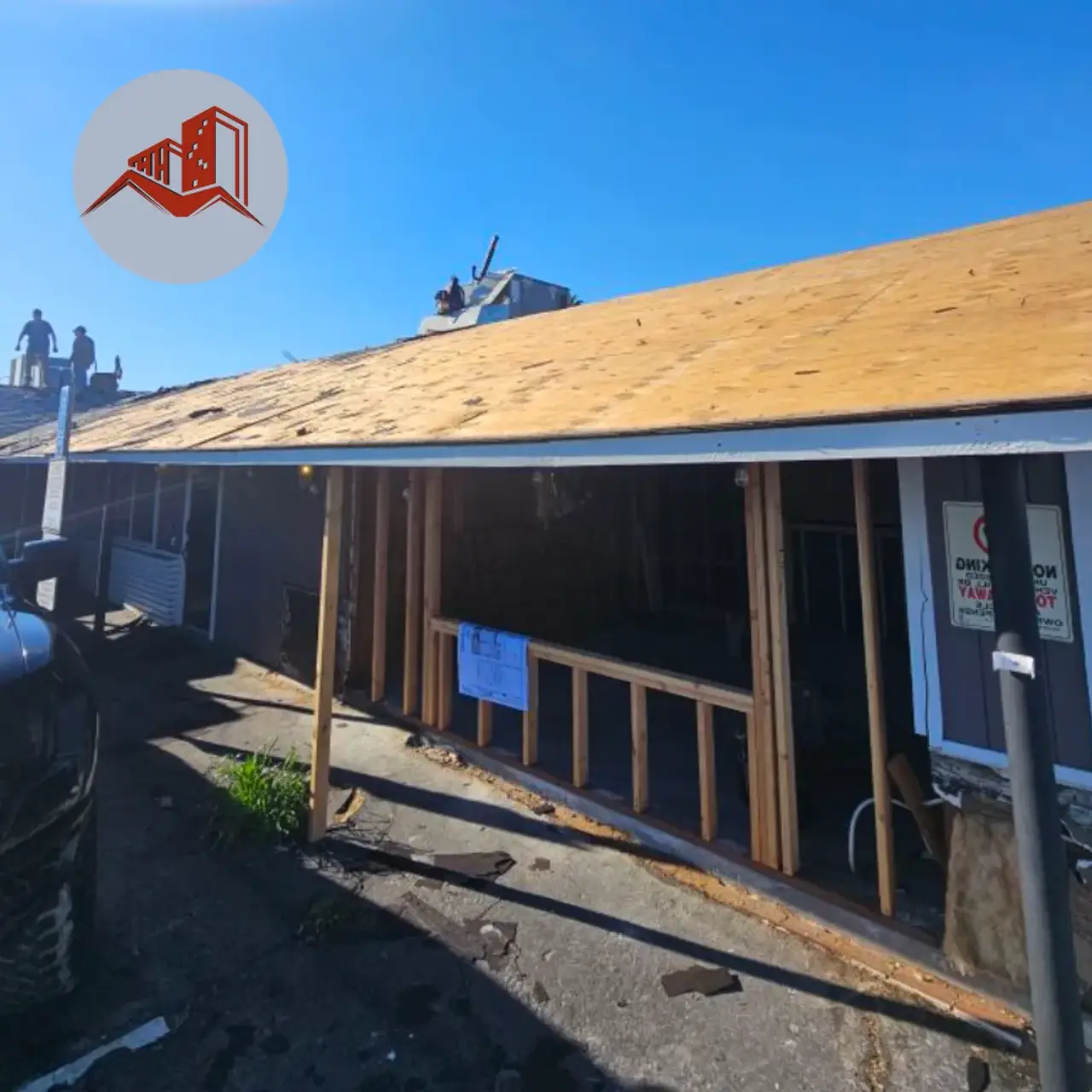
Menomonie hands us more repair calls than any other town we serve, and the reasons are built into the city. UW-Stout’s roughly 7,000 students support a rental-housing market whose owners run targeted repairs until replacement truly wins the math. Two reservoirs on the Red Cedar River, Lake Menomin in the middle of town and Tainter Lake three miles north, put wind on lake-facing shingles year-round. And a ten-block Main Street historic district keeps pre-1920 flashing and decking work in steady demand. When a roof is genuinely done we do the replacement, but the first visit is a diagnosis, not a pitch, and we tell you which year you are in.
Rental roofs near UW-Stout and the repair-until-it’s-done math
Roughly as many Menomonie homes exist as student rentals as for owner-occupancy, and the two run on different maintenance cycles. The rental stock ringing the campus, smaller older houses, mid-century stock, and Victorians cut into multi-unit rentals, tends to run its roofs closer to the end of useful life because the cost-per-leak math favors a targeted fix until failure forces the tear-off. That produces a specific repair profile: granule-bare 3-tab, failed chimney flashing, chronic ice dams on attics nobody has vented since the house was converted. We handle that work for property owners on a portfolio basis, scheduling tenant access in advance, documenting every repair for the owner’s records, and writing estimates detailed enough for capital planning. Coordinated re-roofs across several properties in one summer usually produce a per-property saving, because the mobilization is shared. A portfolio job runs in a fixed order:
- The owner sends the property list and the known problems.
- One roof walk per address, photographed, with the attic checked where a tenant can give access.
- A written estimate for each property and one schedule for the set.
- Tenant access arranged in advance for every visit.
- A documentation packet per address for the owner’s records and any insurance file.
Plank decking and flashing in the Main Street Historic District
The ten-block downtown historic district is anchored by the Mabel Tainter Center for the Arts, an 1889 Richardsonian Romanesque theater in sandstone from along the Red Cedar, and the residential streets ringing it carry a meaningful share of pre-1920 homes. Those roofs have plank decking instead of plywood, original dormers that each need their own flashing detail, and chimneys whose counter-flashing has been caulked over more times than it has been re-set in the mortar. Replacements there routinely involve partial decking replacement; the estimate carries a $1,500 to $3,500 decking allowance on anything pre-1940, and the photos of what came up under the shingles come with it. The commercial and mixed-use buildings along Main Street run parapet-walled flat roofs and low-slope upper floors, which is maintenance-plan, recover, and edge-metal territory covered on the commercial page.
Wind off Lake Menomin and Tainter Lake
Lake Menomin is small but it bisects the city, so the wind fetch over open water adds to the exposure on the south-end streets facing it. Tainter Lake, the 1,605-acre reservoir behind the Cedar Falls dam three miles north, is larger and rougher, and the cottages and second homes around it take wind on their lakeside elevations that nothing in town matches. Wind-lifted shingles are the recurring call from both, especially on older 3-tab roofs whose sealant strips aged out. On a replacement we spec wind-rated shingles or standing seam metal on the water-facing slopes, a spec that runs a few percent above standard asphalt and earns it back on the windward side, with standard architectural on the inland slopes. Some of the Tainter Lake properties sit on narrow lake-access roads better suited to a smaller truck, and we plan the roll-off and material delivery around that.
Ice dams and algae on the shaded older streets
Two slow problems live on the older residential streets north and east of campus. The first is ice damming: pre-1940 houses with thin insulation and unbalanced ventilation melt snow at the peak and refreeze it at the eaves, and the water backs up under the lower courses in February to show up as ceiling stains along the exterior walls weeks later. The fix is almost always intake at the soffit and balanced exhaust at the ridge rather than a new roof. The second is algae: those streets have mature canopy, and shade plus the humidity off Lake Menomin keeps north-facing slopes damp long enough for the dark streaking of Gloeocapsa magma to take hold. It is cosmetic for years and then it is not, and the algae-resistant shingle lines on the asphalt page are our default on any Menomonie street with heavy tree cover.
Menomonie permits: none for a like-for-like re-roof
The City of Menomonie does not require a building permit for new shingles when the roof pitch does not change, which is most replacements. A re-roof that changes the roof structure, an addition, or new siding does need one, through the Building Inspection office on Wilson Avenue, and the state dwelling code governs the work either way, so a Menomonie re-roof gets the same ice barrier, layer limit, and ventilation ratio as one that was inspected. Repairs never need one. Where a permit is required, we pull it as part of the job.
Commercial roofs along I-94 and Highway 25
Menomonie’s commercial corridor along I-94 and Highway 25 runs retail, restaurants, light industrial, medical, and the buildings that serve the campus, and its roofs run the standard commercial mix: TPO and EPDM membranes on the flat sections, modified bitumen where rooftop HVAC gets walked on, standing seam on newer construction. The 2025 storm season reached into Dunn County with both the April 28 outbreak and the May 15 hail, and bruised commercial membranes surface as slowly as bruised shingles do, so a post-storm walk on any flat roof in the city is worth the half hour. Free asset assessments for commercial owners, written report, no obligation.
The I-94 run from Eau Claire is about thirty minutes, which registers on the smallest repair jobs and disappears into a replacement; Menomonie is a standing weekly market and the calendar runs the same as Eau Claire’s, four to eight weeks out at the summer-fall peak and one to three weeks in the shoulders, with storm and active-leak calls moved to the front.
Every town we work in has a different permit rule, and they sit side by side on the roof permits page.