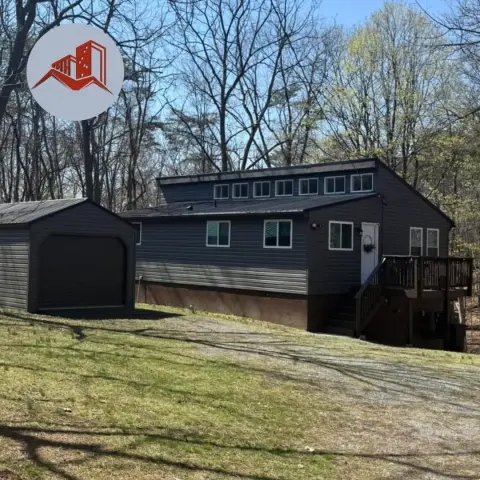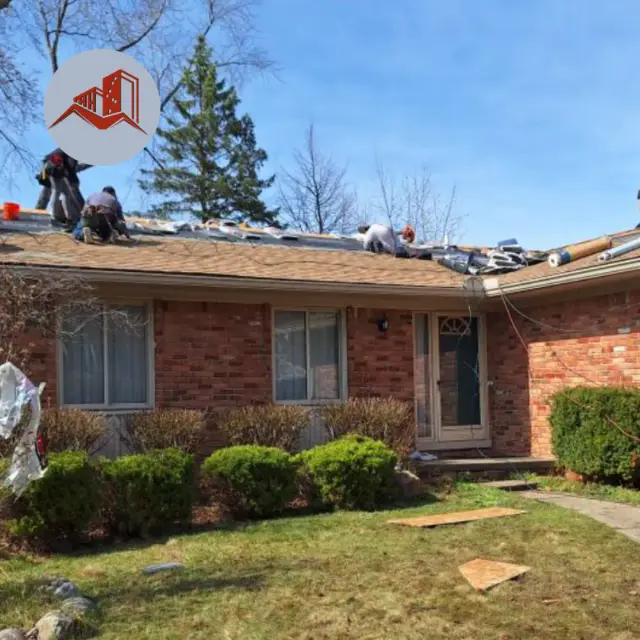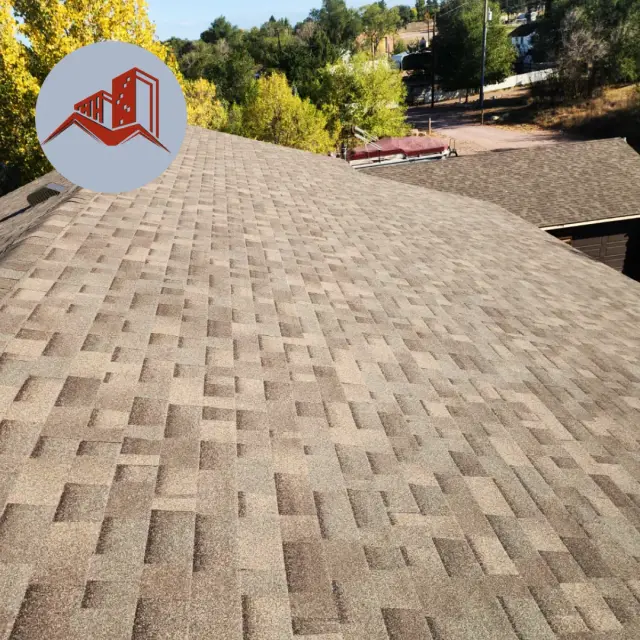

Augusta’s roofing is farm-first. The village holds about 1,600 people, but the Town of Bridge Creek around it holds the real square footage: dairy barns, machine sheds, pole buildings, and grain storage, mile after mile of working steel. That’s why our Augusta runs, 21 miles southeast on US 12, so often carry metal roofing panels in the trailer rather than shingle bundles. One crew handles the whole property: ribbed steel on the outbuildings, asphalt or standing seam on the house.
Barn and outbuilding roofs around Bridge Creek
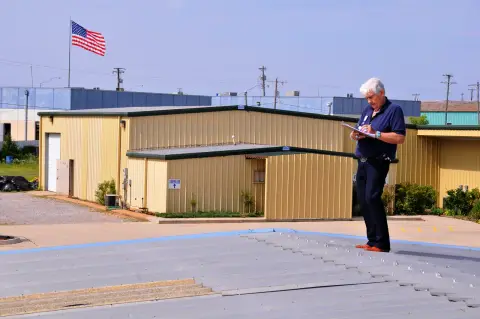
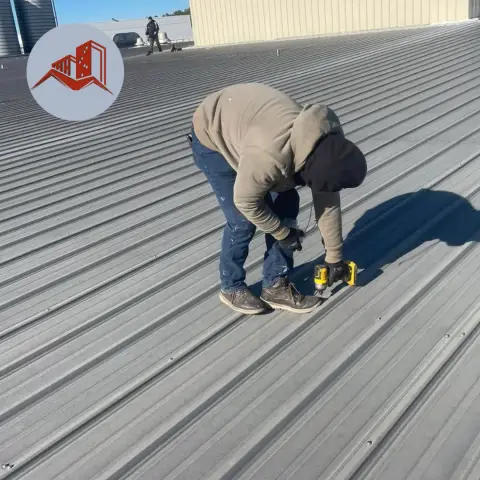
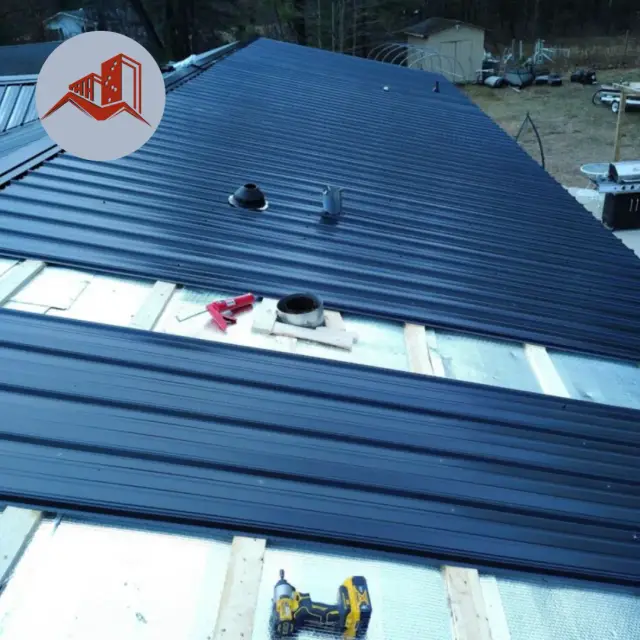
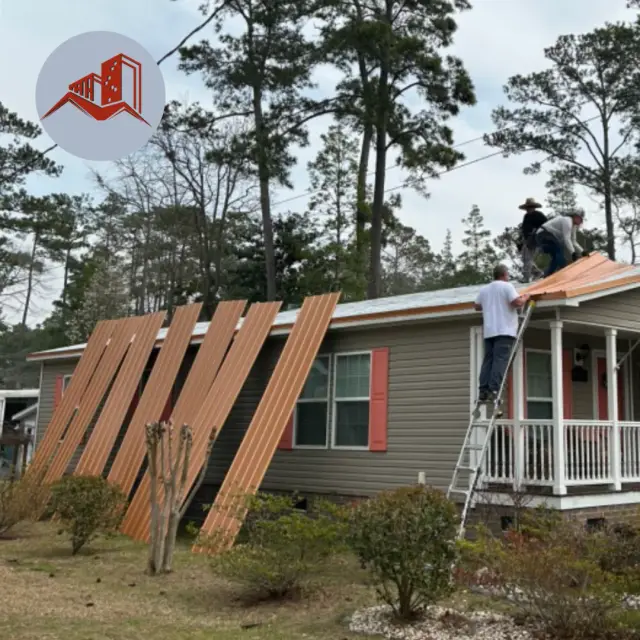
Agricultural steel has its own failure calendar, and it starts at the screws. Exposed-fastener panels shrug off decades of weather, but the neoprene gaskets under the fastener heads bake out in 15-20 years and turn every screw line into a drip line over hay, equipment, or livestock. The economical fix is a re-gasket pass across the field, not new panels. When panels do come due, from rust-through at the eaves or wind peel at an exposed gable, we run new ribbed steel at $3-$8 per square foot, with edge metal detailed for the wind that sweeps unbroken across open ground out here.
Exposure is the other constant. Farm sites east of Eau Claire lack the windbreaks town lots enjoy, so fastening schedules and edge details that are optional in a subdivision are mandatory on a Bridge Creek machine shed. Six-nail shingle fastening on farmhouse roofs and screw-pattern discipline on panels are the difference between riding out a derecho and chasing steel across a bean field.
The village stock
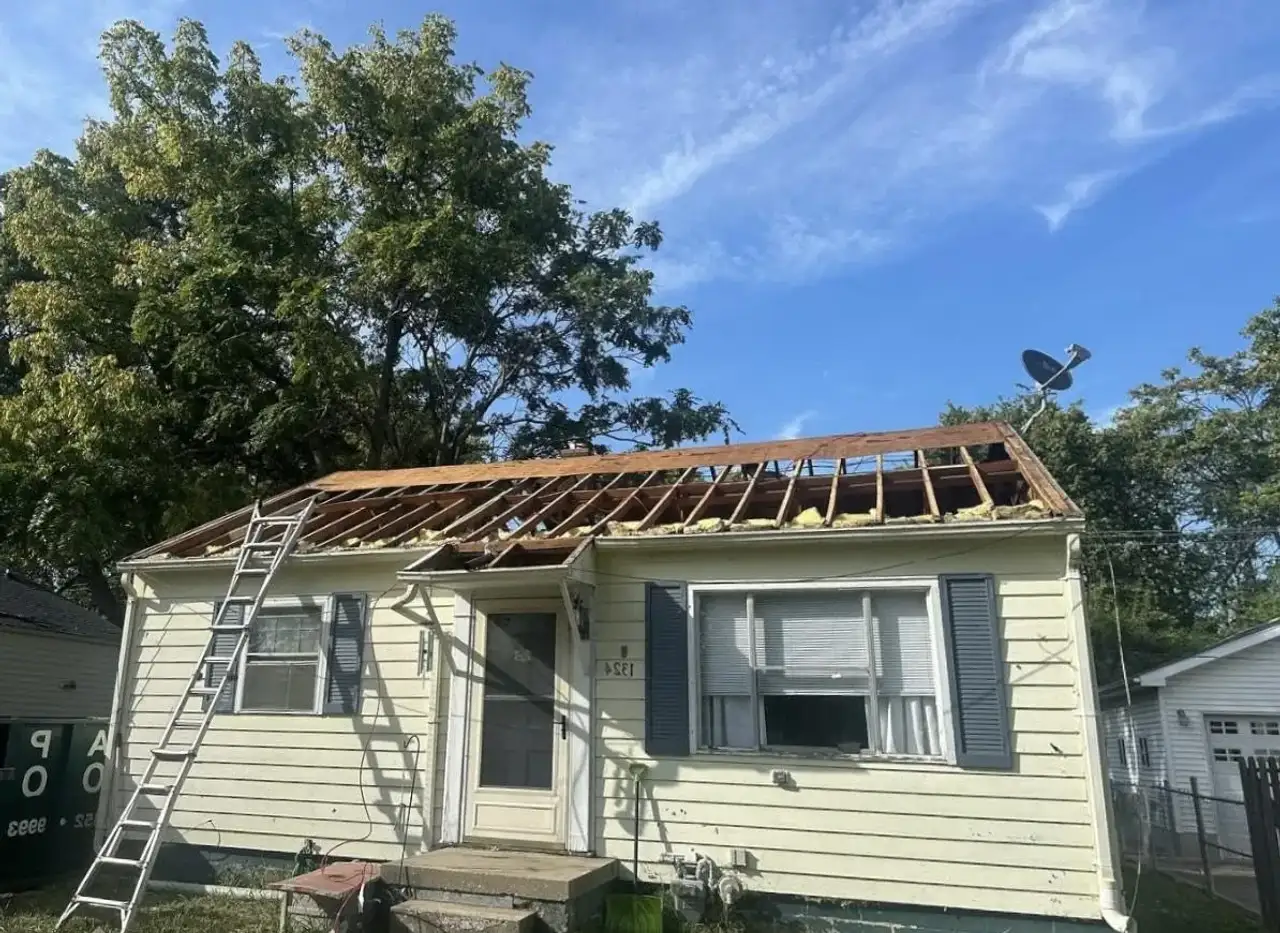
Inside Augusta proper, the streets around downtown carry compact frame homes from the early and mid twentieth century, with a few Victorian-era survivors. The local landmark history explains the pattern: Bridge Creek powered the Dells Mill from 1864 to 1968, and the village grew as mill-and-rail service town housing. Those modest footprints keep re-roof costs friendly, and the aging early-2000s shingle generation is now producing steady tear-off work. The surrounding countryside also holds a substantial Amish community, established in 1978, part of the area’s working-farm character.
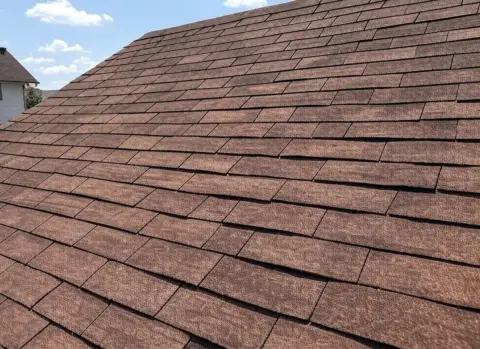
Bridge Creek itself shapes maintenance on adjacent lots: damp mornings and shade feed algae streaking on north-facing asphalt, so creek-side and tree-covered homes get algae-resistant shingles with copper granules in our specs.
Augusta pricing
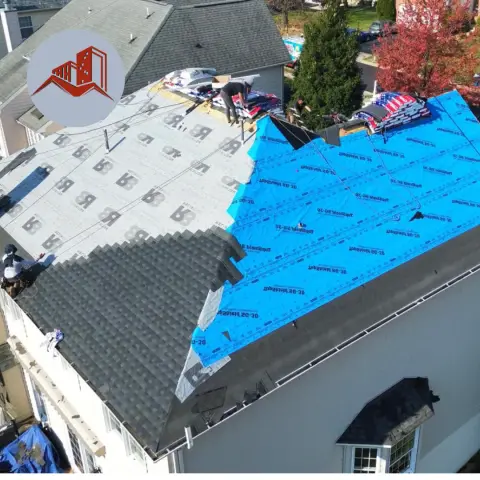
Compact village homes: $5,500-$10,000 in architectural asphalt. Standard 1,500-2,200 sq ft homes: $8,000-$15,000 asphalt, $13,000-$22,000 standing seam. Complicated farmhouse rooflines: $12,000-$22,000 asphalt. Outbuilding steel: $3-$8 per square foot, minus the 10-20% bundling discount when the house and outbuildings share a mobilization. Repairs start at $300 for wind-lifted shingles, $400 for flashing, $500-$1,500 for full fastener refreshes on panel roofs.
Getting crews to Augusta
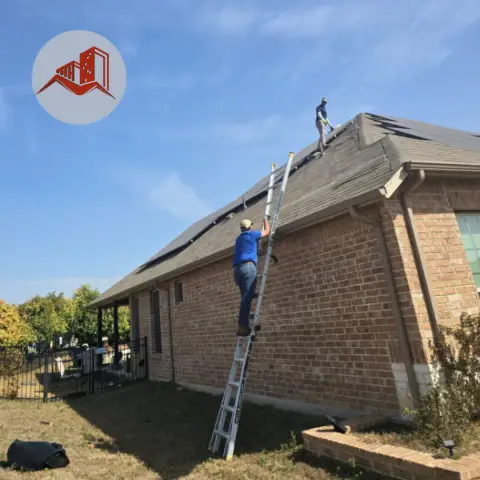
The run is about 30 minutes southeast on US 12, a standing route for us rather than a special trip. Village replacements take a Village of Augusta permit, which we pull; Town of Bridge Creek parcels follow township rules. Gravel drives, pasture access, and dumpster staging around farmyards are normal operating conditions. Lead times mirror the main calendar (4-8 weeks peak, 1-3 shoulder), and when weather hits, storm documentation visits get priority so the insurance clock starts on time.
Call (715) 245-5271 with the full roof inventory, house, barn, sheds, all of it, and we’ll quote the property as one project.