
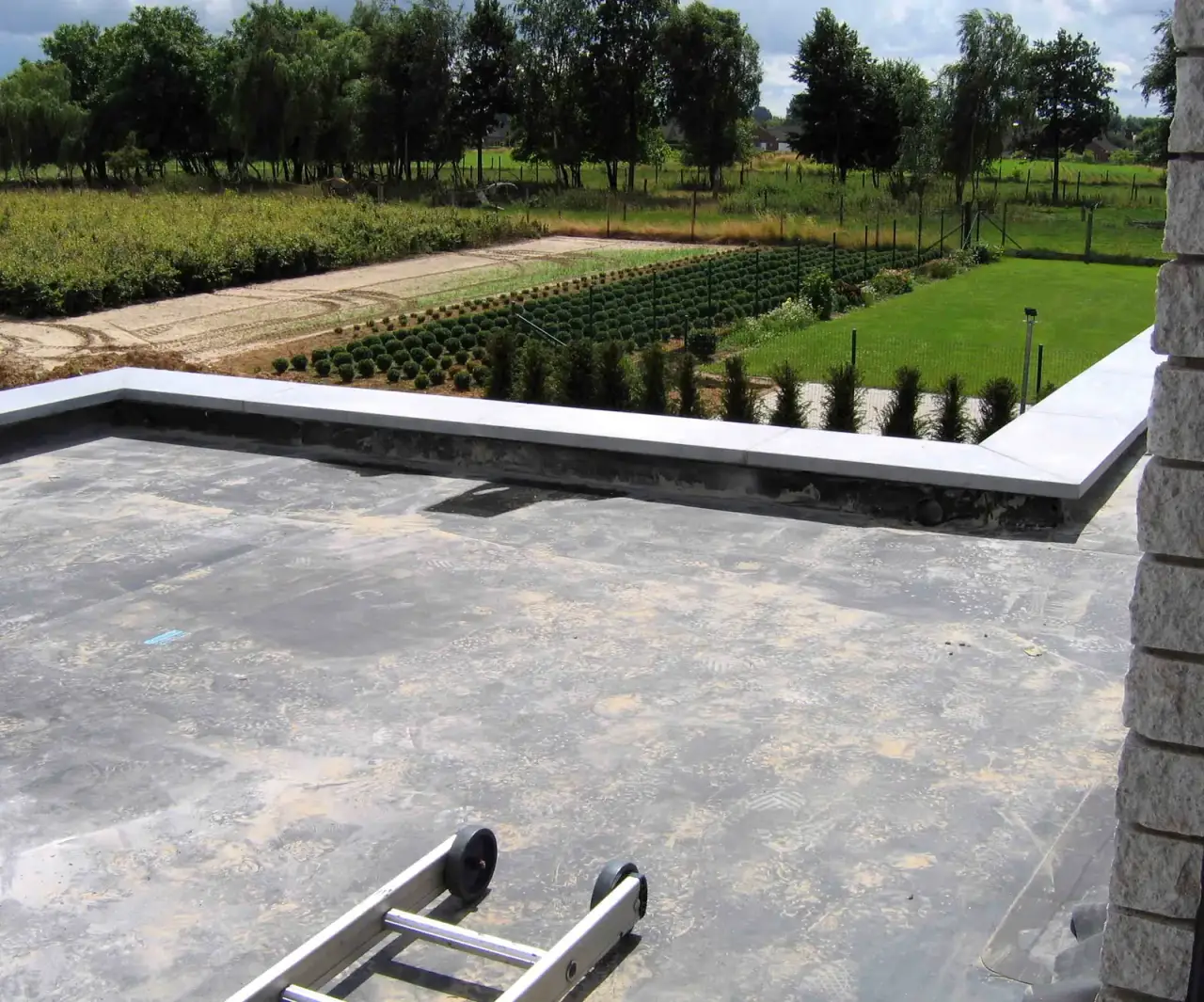
Flat roofing is its own discipline. Different materials, different details, different failure modes than pitched residential roofs. Most homes in Eau Claire don’t have a fully-flat roof, but plenty have flat or low-slope sections — a porch, a sunroom addition, a connecting wing between two pitched volumes — and those sections need a different system than the asphalt shingles on the rest of the home.
We install flat-roofing systems on residential porches and additions, modern-design homes that use flat roofs as a stylistic choice, and small commercial buildings up to 30,000 sq ft.
Where flat roofs apply
In our climate, “flat” usually means low-slope — anything pitched less than 2/12 (about 9.5°). True dead-flat roofs are uncommon (water doesn’t drain off them well, which is bad for any membrane), but anything below standard 4/12 residential pitch is flat-roof territory and needs a membrane system rather than shingles.
You’ll see low-slope sections on:
- Porches and porticos that extend off the main pitched roof.
- Sunroom additions with full-glass roofs aren’t usually flat-roofed, but their connecting sections often are.
- Modern home designs that use the flat roof as architectural language — boxy contemporary builds in the Chippewa Valley sometimes incorporate flat roof sections.
- Mid-century homes with flat or shed-like roof profiles.
- Commercial buildings of nearly any type — retail strip centers, light industrial, offices, churches, restaurants.
Types of flat roof systems
The main systems we work with:
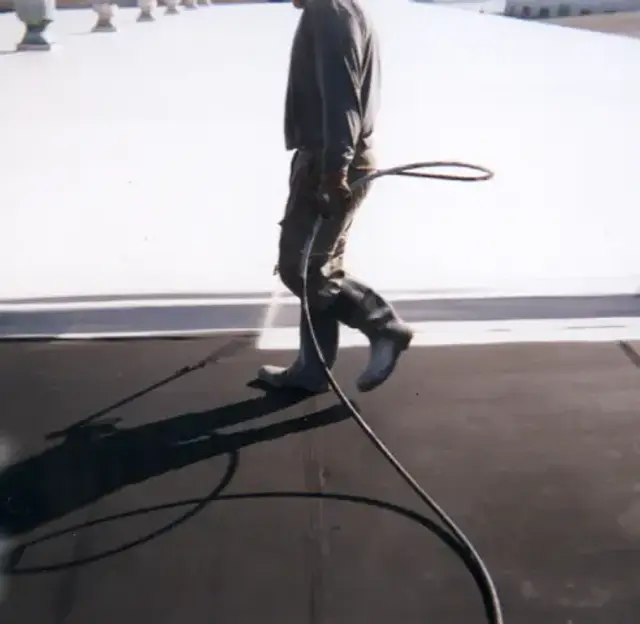
TPO (Thermoplastic Polyolefin) is the most-installed flat roof membrane today. White, reflective, energy-efficient in summer. Heat-welded seams that effectively become a single piece of membrane. Good chemical resistance. Lifespan 20-30 years on properly-installed systems. Cost: middle of the range. Our default residential and commercial spec.
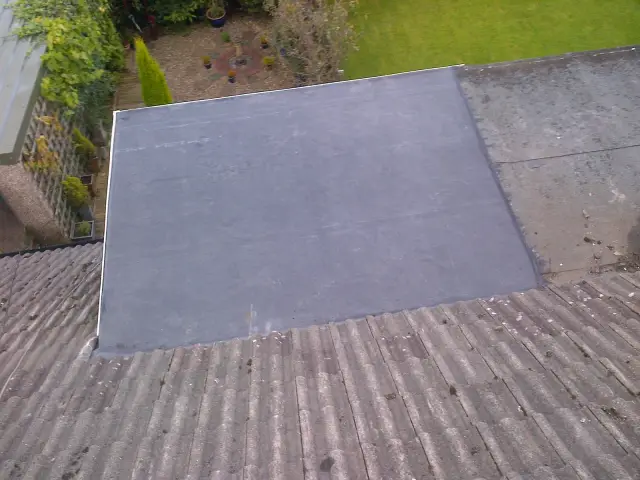
EPDM (Ethylene Propylene Diene Monomer) is rubber roofing — black sheet membrane with seams adhered with tape and adhesive. Proven track record going back to the 1970s. Excellent chemical resistance, handles UV well over decades, more flexible than TPO in cold weather (which matters in Wisconsin January). Lifespan 25-30+ years. Cost: similar to TPO. We install it where customers specifically prefer rubber, on residential porches where the architecture works with black, and on commercial work where chemical exposure is a factor.
Modified bitumen is asphalt-based membrane — the modern replacement for built-up tar roofs. Two- or three-layer systems with the surfaces fused via heat (torch-down) or self-adhered. Good for foot-traffic areas and roofs with rooftop equipment. Lifespan 15-25 years. Cost: comparable to TPO/EPDM. We use it on commercial roofs that see service traffic.
Built-up tar and gravel is the older system most people picture when they hear “flat roof.” We don’t install new built-up — modern membranes outlast and outperform it — but we do work on existing built-up roofs (repair, recover, eventually tear-off and replace).
When flat roofs leak
Flat roofs don’t fail in the field membrane very often. Where they fail:
- Penetrations — vent stacks, drains, skylights, HVAC curbs. The flashing detail at every penetration has to be done right and re-checked over time.
- Seams on older systems where the original adhesive or tape has aged. Modern heat-welded TPO seams don’t have this issue; older EPDM with tape seams can develop seam failures after 20+ years.
- Edge metal — the perimeter detail where the membrane terminates and meets the building’s wall or fascia. UV exposure and thermal cycling work this joint hard.
- Ponding water from poor drainage. Water sitting in low spots accelerates membrane degradation. Properly-designed flat roofs slope at least 1/4” per foot toward drains; older roofs sometimes don’t.
- Mechanical damage from foot traffic, fallen branches, or installation of solar equipment that wasn’t done with membrane protection.
If your flat roof is leaking, the diagnostic is figuring out which of these failure points is the cause — not assuming the whole system is bad.
Repair vs replacement
For flat roof issues, the repair-vs-replace decision is usually about scope:
- Localized damage (single failed penetration, a puncture, an isolated seam tear): repair. We patch with compatible membrane and proper sealant or welding.
- Widespread small issues (multiple penetrations failing, edge metal pulling away in several spots, alligatoring of the surface): the system is showing its age. Repair will keep it going for a while, but a replacement budget should be on the radar in 2-5 years.
- Failing field membrane (UV degradation across the whole surface, brittleness, multiple unrelated leak points): replacement.
- Old built-up roofs (>20 years): usually full tear-off and replacement with a modern membrane. Not always cost-effective to keep patching at that point.
For commercial flat roofs there’s also the recover option — installing a new membrane system over the existing one without tearing off. We discuss that under Commercial Roofing.
What we install
For a typical residential flat-roof porch or addition, our default spec is fully-adhered EPDM rubber with proper edge metal and a clean termination at the wall transition. EPDM is a good fit for residential because the black color complements most home aesthetics and the system is forgiving of varied substrate conditions.
For modern homes using flat roofs as a design language, TPO in standard or off-white delivers the energy benefits without the dirt-collecting issues of pure white over time.
For commercial, the spec depends on the building. White TPO mechanically attached over insulation board for most retail and office. Modified bitumen or EPDM for buildings with significant rooftop traffic or chemical exposure.
The pricing for flat-roofing work runs $7–$16 per square foot depending on system, complexity, and substrate conditions. A 200 sq ft residential porch reroof typically lands $1,500–$3,000. A 5,000 sq ft commercial reroof typically lands $35,000–$75,000. Free assessments to quote your specific project.
How to tell if your flat roof is failing
Flat roofs don’t usually go bad all at once. They give you signals — the trick is recognizing which signals are repairable maintenance and which mean the system is approaching end-of-life.
Ponding water that doesn’t drain within 48 hours after rain is the earliest warning. Some standing water during heavy rain is normal; water that’s still there two days later means a drain is clogged or the roof has settled. Water sitting on a membrane accelerates UV degradation and seam failure. Often a one-day cleanout fix; sometimes a sign the substrate is sagging.
Bubbles or blisters in the membrane mean trapped moisture or air. They tend to show up after a hot, sunny stretch following a wet period. A few small bubbles are repairable. Widespread bubbling across the field of the membrane usually means the system has reached end-of-life and is delaminating.
Cracking — particularly on older modified bitumen and older EPDM — is UV degradation telling you the polymer is breaking down. Once cracking starts, replacement is on the radar within 1-3 years.
Seam separation in TPO and EPDM systems older than 15 years is the classic failure mode. The original seam adhesive or weld has aged out. Small areas can be re-welded or re-taped; widespread separation means the whole membrane is at end-of-life.
Loose flashing around chimneys, vent stacks, and HVAC curbs is usually repairable rather than full replacement. These are the most common leak source on otherwise-sound flat roofs.
Interior signs matter too. Ceiling stains directly below a flat section, mildew smell after rain, paint bubbling on the walls below — all point to active membrane failure.
In our climate, the high-risk inspection moments are spring (after freeze-thaw and snow load) and fall (before the next freeze cycle starts). Most older Eau Claire homes have small flat sections — porches, additions, mudrooms — that quietly fail for months before anyone notices. Worth a five-minute visual look every six months.