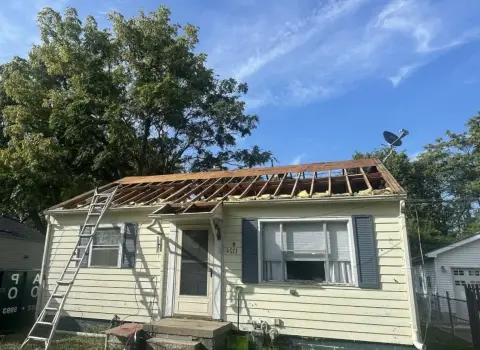

When something’s actively leaking or there’s a hole in your roof, you don’t need a quote, you need someone to stop the damage right now. Emergency repair is exactly that: tarp it up, document it for insurance, and schedule the permanent fix as soon as the dust settles. Don’t wait. Water damage compounds fast, a wet ceiling becomes mold within a week, soaked insulation needs replacement, and electrical fixtures inside the leak path become safety hazards.
What counts as a roofing emergency
We treat the following as same-day-call situations across Eau Claire and the surrounding valley whenever we have crews available. The range runs from a lifted shingle tab pouring water over a light fixture to a birch limb through the decking:
- Active leak inside the home. Water hitting a ceiling, dripping into a bathroom, or running down a wall.
- Tree or branch through the roof. Even a small puncture admits enough water to ruin the room below in a single rainstorm.
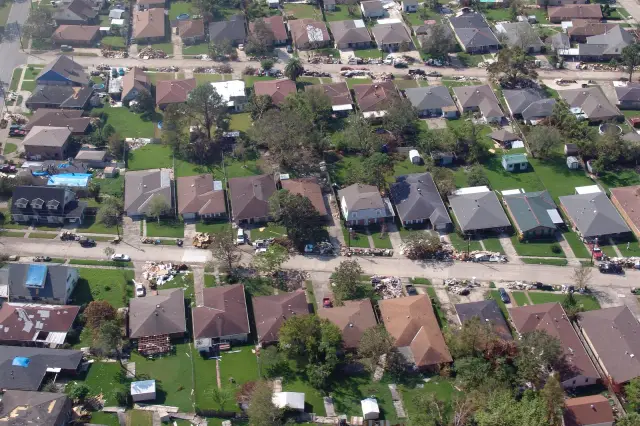
- Major wind damage with exposed underlayment or decking. A bare deck won’t survive the next storm; the felt or synthetic underlayment alone isn’t waterproof.
- An ice dam actively backing water up. Water already coming in at the eaves in February means damage is in progress, not a future risk. The longer it sits, the more drywall and insulation it destroys.
- Animal damage you’ve discovered. Squirrels can chew through soffits and shingles in hours; once they’re in the attic, the next problem is what they chew next.
- Failed flashing during an active storm. Water pouring around a chimney or skylight while it’s still raining means the damage is happening right now, not in some abstract future.
Things that aren’t emergencies, even though they feel urgent: a few missing shingles after a wind storm with no leak inside, slow drips in unfinished basements, or hail damage that hasn’t punctured the roof. Those can wait a few days for a scheduled roof repair appointment, and hail claims start on the storm damage page.
What we do on an emergency roof call
The sequence is straightforward:
- Phone triage. When you call, we ask a few questions: what’s actively leaking, where, how fast, are there electrical fixtures or finished ceilings involved. Sometimes the immediate action is on your end (move stuff, put a bucket, kill power to the affected circuit) before we drive over.
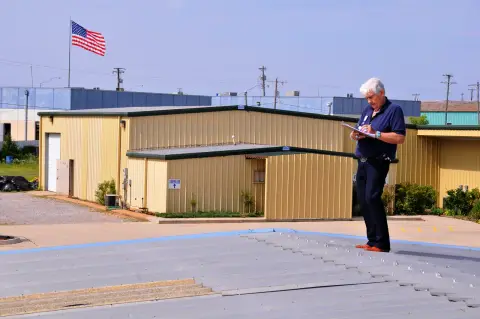
- On-site assessment. We arrive same-day during business hours when crews are available. The first job is figuring out the immediate risk: is this going to get worse in the next 24 hours, what’s the best temporary fix.
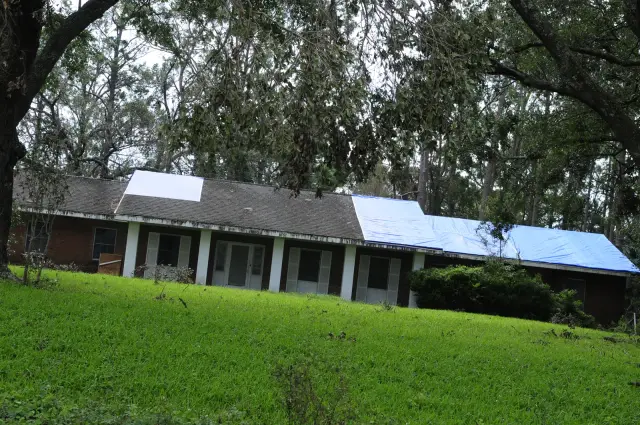
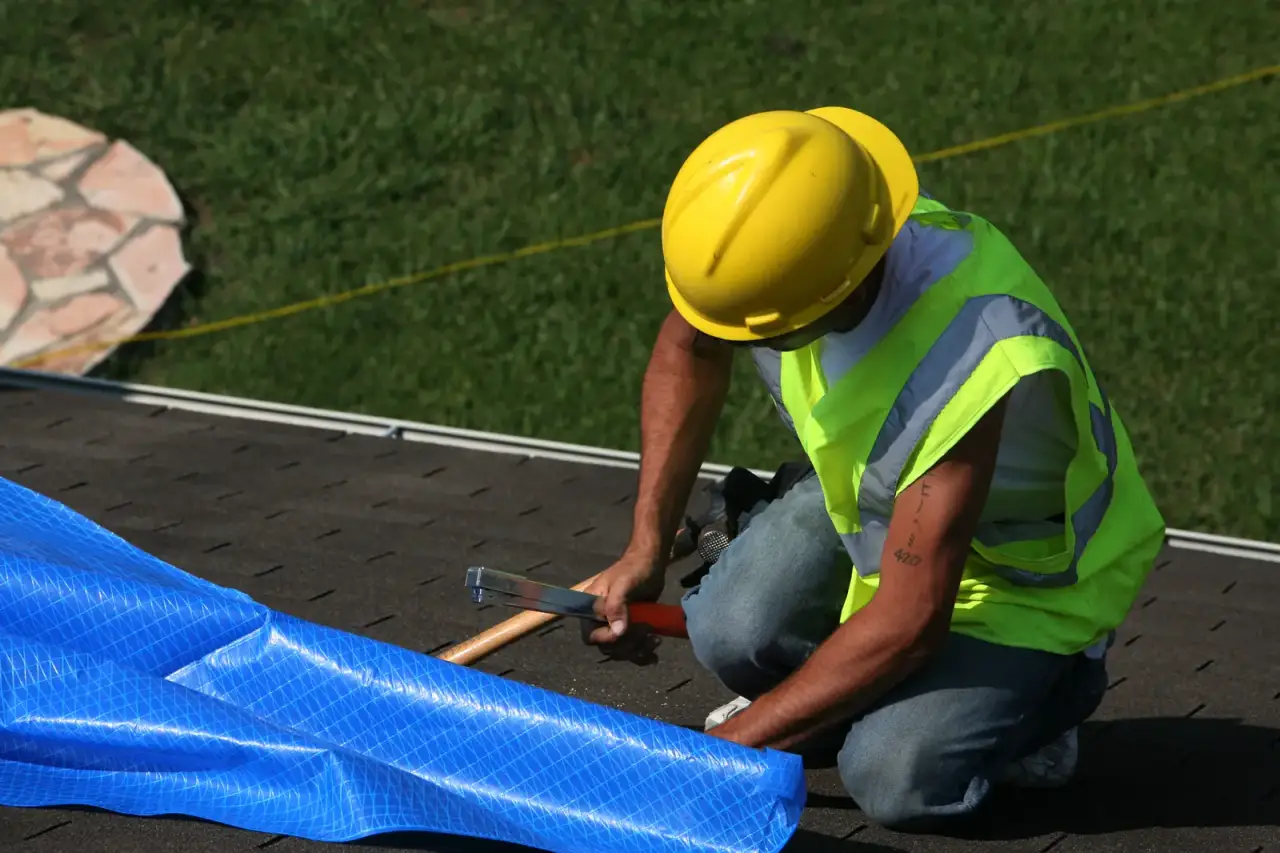
- Tarp or temporary patch. Most emergencies get resolved with a properly-installed tarp, large enough to cover the damage with overlap, secured with batten boards screwed into framing (not into field shingles). For smaller punctures, sometimes a temporary roofing-cement patch is the right call.
- Documentation. Photos of the damage, the cause if visible, and the temporary repair. If an insurance claim is involved, this feeds straight into the storm damage claim path, which covers adjusters, supplements, and the rest of that process.
- Schedule the permanent fix. Most emergency calls need a follow-up visit for the proper repair. The diagnosis-and-quote side of that lives on our roof repair page; we schedule it like any other repair once the tarp has the situation stable.
What you should do before we arrive
While we’re on the way, the most useful things you can do:
- Move furniture, electronics, and rugs out of the leak path. Plastic sheets if you have them; clear the area otherwise.
- Put a bucket under active drips. Stagger multiple buckets if water is hitting different points.
- Photograph the interior damage for your insurance. Wide shots and close-ups, with timestamps that prove when it started.
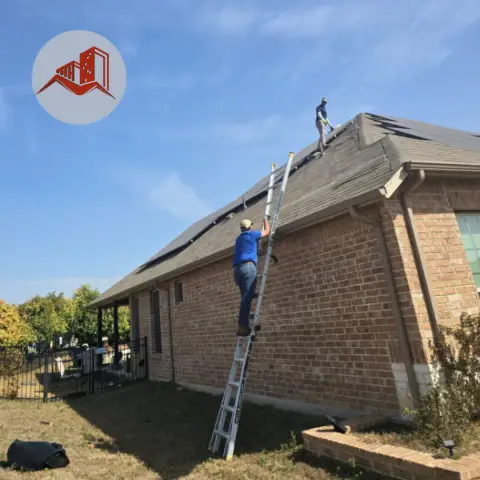
- Don’t go on the roof. Wet roofs are dangerous, especially during or after a storm. Even a stable roof becomes treacherous when there’s water, ice, or debris on it.
- Don’t push branches off the roof yourself. A branch you push might drag shingles and underlayment with it. Wait for us to assess the right way to remove it.
Emergency roof tarping costs
We try to keep emergency pricing transparent so you’re not facing a “ransom” quote when you’re already stressed. Approximate ranges:
- Phone consultation, no truck roll: Free.
- Tarp service, small area (under 200 sq ft tarped): $300–$500.
- Tarp service, larger area (full roof slope or significant damage): $500–$900.
- Tree branch removal + tarp: $700–$1,500 depending on tree size and damage.
The permanent repair is priced separately based on what the damage actually requires once we can see it without rain coming in; the roof repair page carries those cost ranges. Most of the time the emergency-service charge is significantly less than the avoided damage to your home, which is the whole point.
Why not tarp the roof yourself
It’s understandable to want to handle it. The risks of DIY emergency tarping:
- Wet roofs are slippery. Falls from residential roofs cause serious injuries every year.
- Improper anchoring fails fast. Tarps held down with bricks blow off in the next gust. Tarps screwed into field shingles create new leaks where the screws went in.
- Wrong size or placement extends the damage. A tarp that doesn’t overlap the damage by enough on all sides funnels water into the very gap you’re trying to cover.
- Insurance documentation matters. Adjusters notice DIY tarps; what they want is professional documentation of the cause and scope of damage.
For an active emergency, call (715) 245-5271. We’ll either talk you through immediate steps over the phone or get someone there as fast as we can.
Why a roof leak can’t wait until morning
Active leaks accelerate. Four hours of unattended water inside is not 4× the damage of 1 hour, it’s closer to 10× because the failure modes compound. Fast.
The first hour of a leak is mostly cosmetic, water hitting drywall, beading and running. Insulation starts absorbing immediately. By hour two or three, the drywall above the leak is saturated. Sagging happens at hour four to eight depending on volume. Failure (drywall coming down) at hour eight to twenty-four. Mold begins growing in soaked materials within 24-48 hours; once started, remediation is its own thousand-dollar problem on top of the structural repair.
Electrical risk doesn’t take long to become real. Water finds light fixtures, ceiling fans, and outlets in its path. Even a small leak directly above an electrical fixture is a fire and shock risk; you’ll want the breaker for that circuit off before the situation escalates.
Animals don’t waste time. Squirrels and raccoons can locate a fresh hole in a roof within hours. Once they’re inside the attic, the next problem is what they chew, wiring, insulation, ductwork. Sealing the entry hours later means trapping the animals inside, which becomes a wildlife-removal call instead of a roof call.
Wind works the edges of any opening larger than a fist. A foot-square hole in the morning becomes a yard-square hole by evening if the storm hasn’t ended. The longer the opening sits, the more material gets stripped from the surrounding roof.
While you’re waiting for us, a few things help: kill the breaker for any circuit running through the affected area; move electronics, paper, and anything irreplaceable out of the leak path; lay plastic over remaining furniture rather than just tarps (water seeps through tarps); place buckets that hold at least a couple gallons each, since storms outpace small containers fast. Photograph the interior every 20-30 minutes if the leak is active, a clear timeline helps both us and your insurance later.
A note on DIY tarps: a tarp held down with bricks isn’t a tarp, it’s a sail. Wind catches the loose edges and either rips the tarp off or pulls more shingles with it. Improperly anchored DIY tarps frequently void portions of insurance coverage too, adjusters note “homeowner attempt at temporary repair” and use it to dispute scope. Better to wait the few hours for a real tarp than make the situation worse.
The clean framing: an emergency tarp tonight is $300-700. A delayed call that lets a leak run overnight commonly turns into multi-thousand-dollar interior repairs, plus the same tarp the next morning. The math is stark.
If you’re calling at 5:30 PM, we’ll usually still get a crew out same-evening anywhere in Eau Claire proper. If you’re calling Sunday morning, leave a message, we’ll respond the same day. After-hours calls (we close at 6 PM) get returned first thing the next morning unless you’ve left an explicit emergency message.