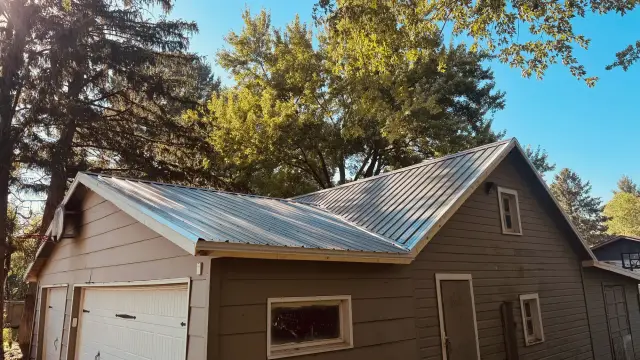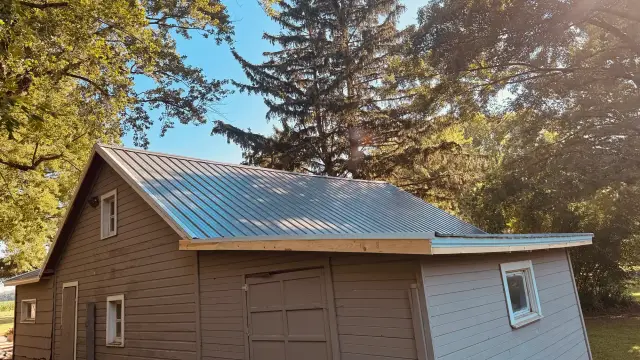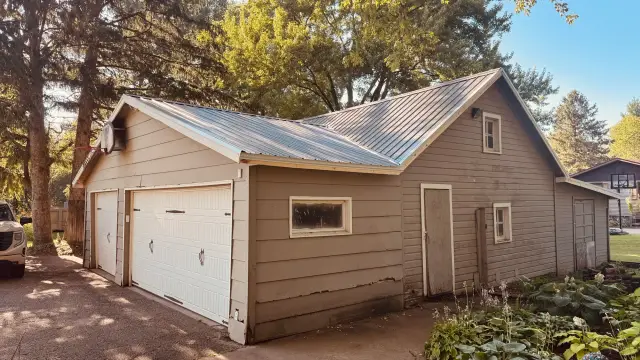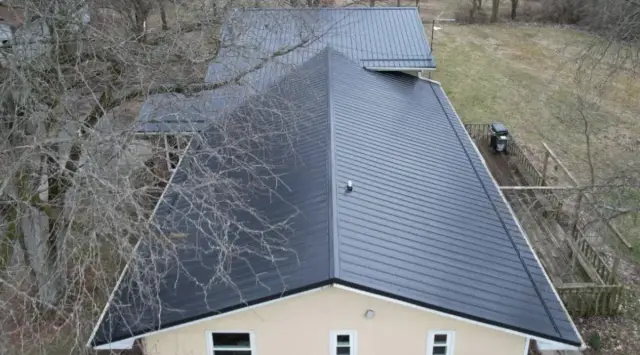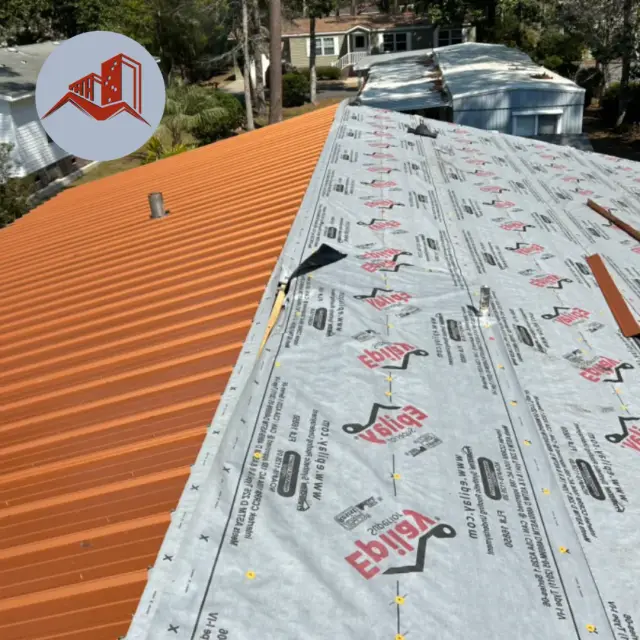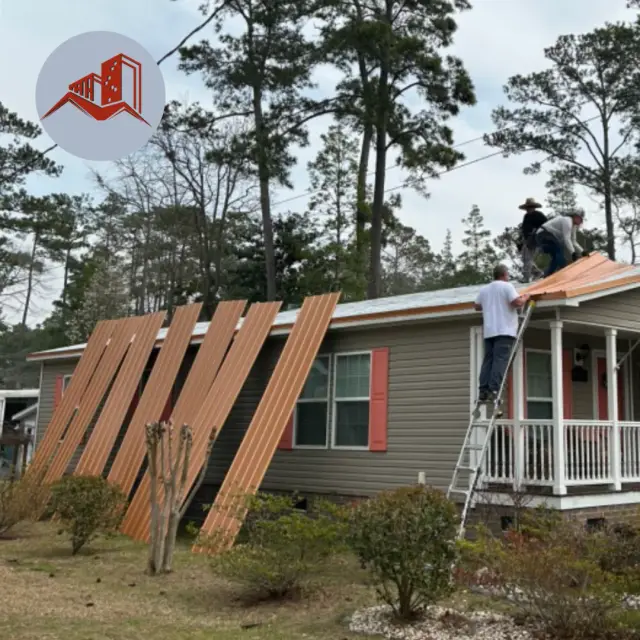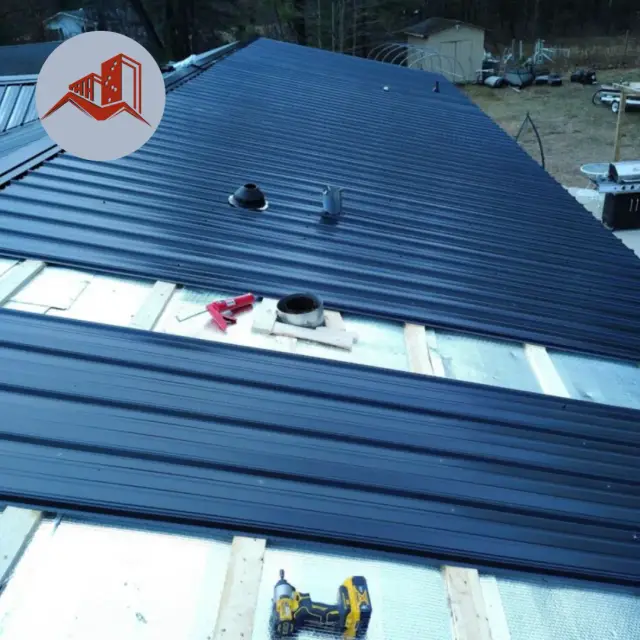

Metal roofing is a longer commitment than asphalt, higher upfront cost, but 2-3× the lifespan and dramatically better cold-climate performance. For homeowners staying in their home long-term, or for properties where the architecture suits metal (modern builds, country homes, barns, anything contemporary), it’s often the better long-term value despite the bigger initial check.
Types of metal roofing we install
Metal roofing is a category, not a single product. The main types:
Standing seam is the premium residential metal system. Vertical panels with raised seams that snap together (or get mechanically seamed). Hidden fasteners, there are no screw heads exposed to UV and weather, which is why standing seam lasts longer than the cheaper alternatives. Common profiles: 1.5” mechanical lock, 1” snap-lock. We install standing seam on most residential metal jobs.
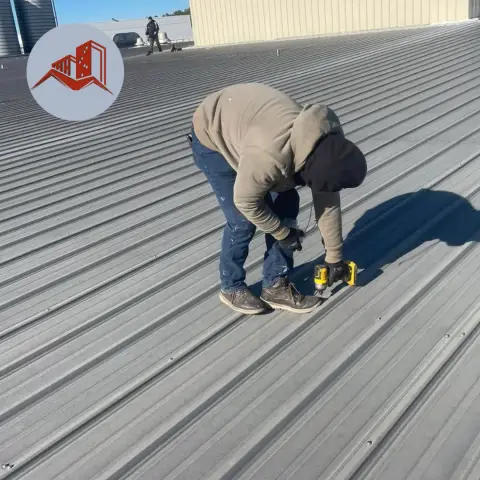
Exposed fastener (R-panel, AG panel, ribbed metal) is the budget-friendly option common on outbuildings, barns, and pole buildings. Screws penetrate the panel face into the underlying purlin or deck. Faster install, lower cost, but the screw gaskets eventually fail (15-25 years) and need replacement. Excellent for utility buildings; we’d encourage standing seam over exposed fastener for the main house.
Metal shingles and tiles look like dimensional asphalt or slate from a distance but are pressed metal. Niche product, they offer metal’s lifespan with a more traditional residential aesthetic. We install them when the architecture calls for it.
Stone-coated steel is a premium product with crushed-stone surfacing baked onto the metal panels. Looks like tile or shake from the curb. Long lifespan, high cost, less common in our area than the Sun Belt where it originated.
Why people choose metal in the Chippewa Valley
The reasons we hear most often, in rough order:
- Snow performance. Metal sheds snow cleanly. No ice dam buildup at the eaves, no compressed snow loads sitting on the roof through January and February. With proper snow guards, the snow releases gradually and predictably rather than dropping all at once.
- Lifespan. A metal roof installed correctly outlasts most homeowners’ tenure in the home. The 40-50 year lifespan turns “did I pay too much?” into “I never have to think about this again.”
- Energy reflection in summer. Light-colored metal roofs reflect solar heat rather than absorbing it like dark asphalt. The summer cooling-bill savings vary by home, but they’re measurable.
- Fire resistance. Class A fire rating, which matters for properties with wildfire exposure (rare in Eau Claire, common in some Wisconsin counties further north).
- Lightweight. Metal roofing weighs roughly half what asphalt weighs per square foot. Rarely needs structural upgrades to a home that previously had asphalt.
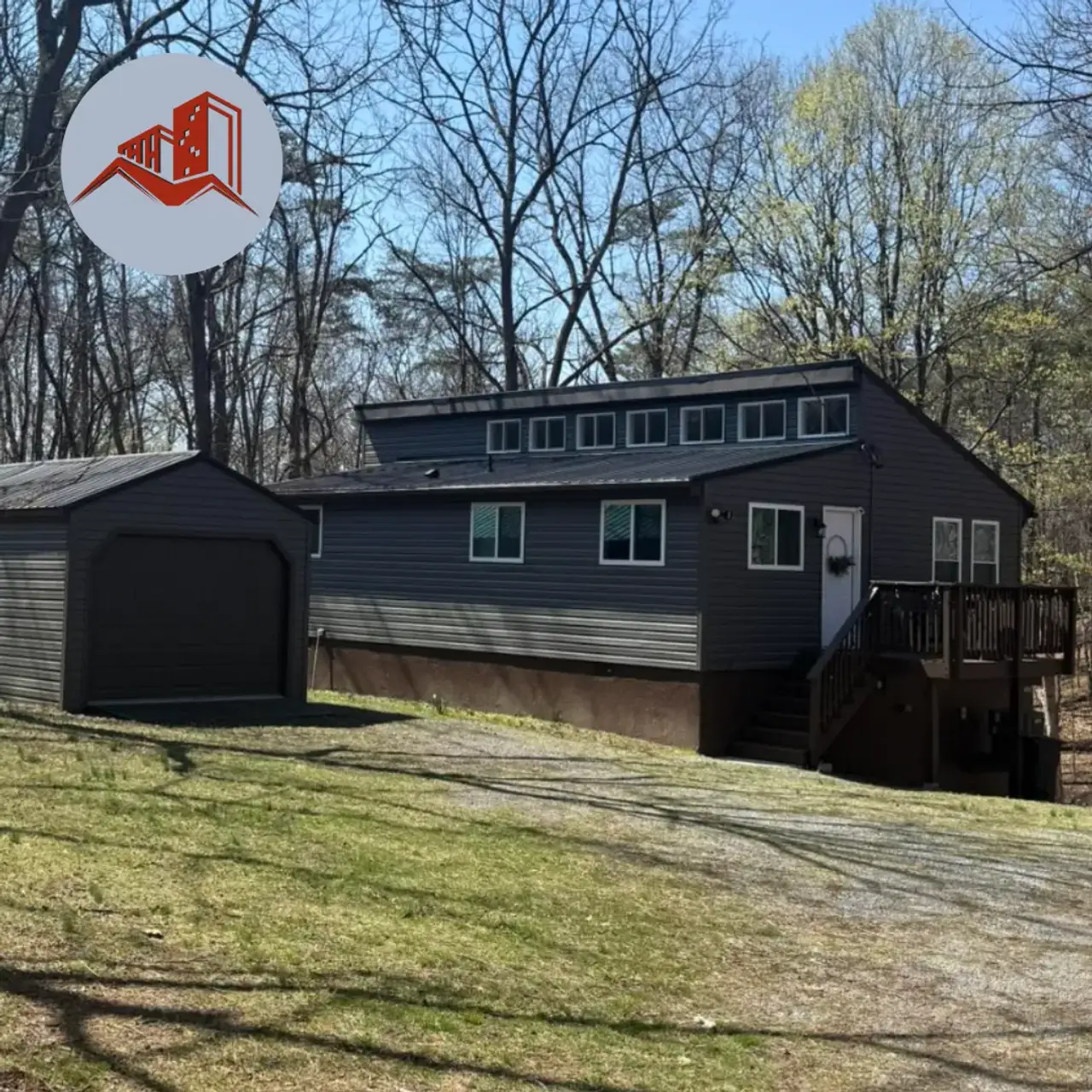
- The way it looks. Standing seam in a deep charcoal or dark green is the right look for a modern country home in a way asphalt never quite achieves.
Cost reality
Metal costs significantly more upfront than asphalt for the same home. Rough numbers:
- Standing seam, average residential home: $14,000–$24,000.
- Standing seam, larger or steeper roof: $20,000–$35,000.
- Exposed-fastener panels (outbuilding or budget residential): $9,000–$15,000.
- Stone-coated steel (premium): $25,000–$45,000.
That’s 1.5–2× what the same roof would cost in asphalt. The math works when you stay in the home long-term: if you’ll re-roof asphalt twice in the time metal lasts once, metal is cheaper per year of life. Doesn’t work as well if you’re selling in 5-10 years, the buyer rarely pays a premium for the metal roof equivalent to the upgrade cost.
Color and style
The most common standing seam colors we install in the Chippewa Valley:
- Charcoal gray: the most popular, works with most siding palettes.
- Hartford green: classic for country homes, looks great against farm-style architecture.
- Regal red: striking on white-sided farmhouses.
- Gallery blue / slate blue: for coastal-modern aesthetics.
- Burnished slate: premium colors with a subtle metallic sheen.
Profiles to choose from include the snap-lock systems (faster install, slightly lower price, fine for most residential) and mechanical seam systems (slower install, more weatherproof, used on lower-pitch roofs and high-end residential). Accessories like snow guards, ridge caps, and end-wall flashings have their own color matching considerations, we plan all that on the estimate.
Installation specifics
A bad metal install means leaks within years; a good install lasts decades. The details that matter:
- High-temperature ice and water shield. Standard ice-and-water-shield melts at the temperatures metal roofs can reach in summer. We use high-temp products specifically rated for under-metal applications.
- Proper underlayment over the entire deck. Synthetic underlayment, with the seams properly overlapped. Some metal systems require specific underlayment products for warranty.
- Expansion accommodations. Metal expands and contracts more than asphalt. The clip system has to allow that movement without telegraphing through to the panels. Locked-in panels eventually buckle.
- Snow retention systems. On any pitch above 4/12 with anything important below the eave, snow guards or rail-type retention systems prevent slab snow releases. Cheap installs skip these. Expensive cleanups come later.
- Flashing details. Where the metal meets walls, chimneys, skylights, and plumbing vents is where leaks happen. Each transition needs a specific flashing detail done right. There’s no shortcut here.
We’ve installed enough metal in the Chippewa Valley to know what holds up. If you’re considering metal for your home, the estimate visit is also a chance for us to show you photos of similar installs we’ve done locally so you can see the finished look on Wisconsin homes, not just stock photography.
When metal makes sense and when it doesn’t
Metal isn’t always the right answer. Plenty of homes do better with asphalt; a few specific situations actually benefit from metal. Counter-positioning to the “metal is always better” sales pitch:
Metal makes sense when:
- You’re staying in the home 20+ years and the longer lifespan amortizes the upfront premium across actual ownership.
- The architecture is modern, rural, or agricultural, standing seam looks right on contemporary builds, country properties, and outbuildings in a way it doesn’t on a traditional colonial.
- The roof has steep pitches that hold heavy snow loads. Metal sheds snow predictably; asphalt accumulates it.
- You’ve had repeated ice dam issues that ventilation alone hasn’t solved. Metal eliminates the dam-formation conditions at the eave.
- You’re insurance-conscious in a hail-active area; metal denting is usually cosmetic, where asphalt hail damage often triggers full replacement claims.
Metal doesn’t make sense when:
- You’re selling within 10 years. The upgrade premium rarely returns on resale; buyers will pay something for a metal roof but not enough to recover the cost difference.
- Your HOA has roof-material restrictions (some Eau Claire-area HOAs do, especially newer subdivisions).
- The roof has very low pitch (under 3/12). Metal panels have minimum slope requirements; below that, you want a membrane system.
- The house is traditional architecture. Victorian, colonial, period bungalows. Metal looks off on these styles, no matter how good the install is.
- The budget is genuinely tight and you’d be stretching to afford metal. Architectural asphalt for $13K is a better outcome than metal at $30K paid on a 7-year financing plan.
For metal panels in Wisconsin residential, ABC Seamless and Central States are the manufacturers we install most often, both have good cold-climate track records and color stability holds up to UV. For larger commercial work, McElroy Metal is the standard.
Snow guards on any metal roof above 4/12 pitch with anything below the eave (driveway, walkway, deck, AC unit) are non-negotiable. Cheap installs skip them; expensive cleanups follow.