
Commercial Roofing and Flat Roofing are one discipline in practice, which is why they share one page. Nearly every commercial building in the Eau Claire area carries a flat or low-slope roof, and the same membrane systems that protect a 20,000 sq ft retail center also protect a low-slope porch, addition, or modern-design home. Different decision-makers, same materials, same details.
The stakes are different from pitched residential work. A commercial roof leak shuts down a business in a way a residential leak doesn’t, and the decision-makers are often facility managers and property owners rather than homeowners.
We work commercial and flat roofing across the Chippewa Valley, from standalone retail through warehouses and light industrial. It’s the kind of work where a local crew’s accountability and response time matter more than a national contractor’s scale. The honest exception: hospital systems and buildings with complex multi-layer engineering requirements call for a firm with on-staff engineering, and we’ll refer you to one rather than learn on your roof.
Building types we work on
The buildings we typically work with in the Eau Claire area:
- Retail strip centers and standalone retail. Tenant-driven decisions, multi-bay roofs, sometimes with shared-but-separated systems.
- Small offices and professional buildings. Owner-occupied or tenanted, usually single-system roofs.
- Medical and dental offices. Higher uptime requirements; we coordinate carefully on dust, noise, and access.
- Light industrial. Manufacturing, warehousing, equipment-heavy interiors.
- Churches and community buildings. Often older buildings with mixed roof systems and tighter budget constraints.
- Restaurants. Heavy rooftop equipment (HVAC, exhaust, grease handling), strict hygiene during repair work.
- Auto dealerships and service centers. Often combinations of metal and flat roof sections.
Flat and low-slope roofs on homes
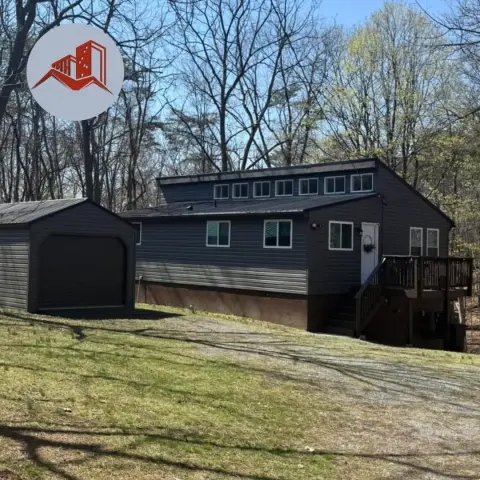
Most homes in Eau Claire don’t have a fully-flat roof, but plenty have flat or low-slope sections: a porch or portico, a sunroom addition’s connecting section, a mudroom, a wing between two pitched volumes. Mid-century homes with shed-like profiles and boxy contemporary builds that use the flat roof as architectural language show up across the Chippewa Valley too. Those sections need a membrane system, not the asphalt shingles on the rest of the home.
In our climate, “flat” usually means low-slope: anything pitched below 2/12 is membrane territory, because shingles can’t shed water reliably at that pitch. True dead-flat roofs are uncommon (water doesn’t drain off them well, which is bad for any membrane), but properly-designed flat roofs still slope at least 1/4 inch per foot toward drains.
For a typical residential flat-roof porch or addition, our default spec is fully-adhered EPDM rubber with proper edge metal and a clean termination at the wall transition. EPDM is a good fit for residential because the black color complements most home aesthetics and the system is forgiving of varied substrate conditions. For modern homes using flat roofs as a design element, TPO in standard or off-white delivers the energy benefits without the dirt-collecting issues of pure white over time. A 200 sq ft residential porch reroof typically lands $1,500-$3,000.
Free roof asset assessment
Before we quote any work, we do a comprehensive roof asset assessment: free, no obligation, with a written report you can use for capital planning whether or not you hire us for the eventual work. The assessment covers:
- System identification. What’s currently up there, when it was probably installed, what condition it’s in.
- Remaining useful life estimate. Based on observed condition, expected to be within 2-3 years rather than a precise number.
- Drainage analysis. Slopes, drains, scuppers, gutters. Standing water (ponding) is a major lifespan-shortener and we flag it.
- Penetration condition. Every vent, drain, skylight, HVAC curb, and flashing point inspected and documented.
- Recommendation. Repair, maintenance plan, recover, or replacement, with rough budget ranges for each option.
The written report is yours regardless of whether you contract with us. For property owners with multiple buildings, this is also useful for portfolio-level capital planning.
Membrane and metal systems we install
- TPO (Thermoplastic Polyolefin) is the most-installed flat roof membrane today and the dominant choice for new commercial work. White, reflective, energy-efficient in summer, with heat-welded seams that effectively become a single piece of membrane. Good chemical resistance. Lifespan 20-30 years on properly-installed systems. Mechanically attached or fully adhered depending on substrate. Our default commercial spec.
- EPDM (Ethylene Propylene Diene Monomer) is rubber roofing: black sheet membrane with seams adhered with tape and adhesive, and a proven track record going back to the 1970s. Excellent chemical resistance, handles UV well over decades, and stays more flexible than TPO in cold weather, which matters in a Wisconsin January. Lifespan 25-30+ years. We install it where customers prefer rubber, on residential porches where black suits the architecture, and on commercial work with chemical exposure.
- Modified bitumen is asphalt-based membrane, the modern replacement for built-up tar roofs. Two- or three-layer systems fused via heat (torch-down) or self-adhered. Good for foot-traffic areas and roofs with rooftop equipment that sees frequent service work. Lifespan 15-25 years.
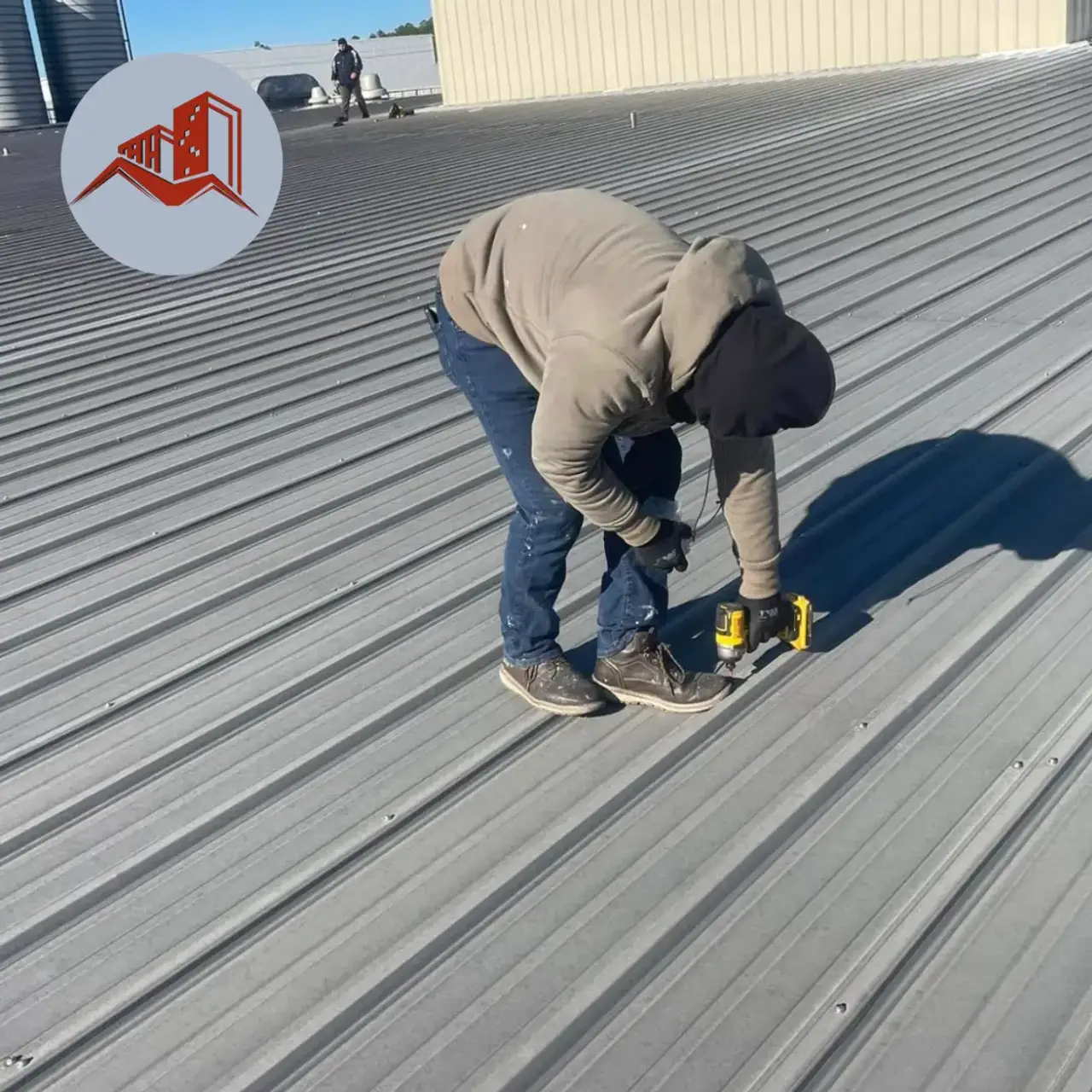
- Standing seam metal covers commercial-grade metal systems on industrial buildings, agricultural facilities, and architectural-feature commercial. Long lifespan (30-40+ years), lower maintenance than membrane systems.
- Built-up tar and gravel is the older system most people picture when they hear “flat roof.” We don’t install new built-up; modern membranes outlast and outperform it. We do maintain, repair, and recover existing built-up roofs, and eventually tear off and replace them.
TPO roofing: what it is and when it’s the right call
TPO is thermoplastic polyolefin, a single-ply membrane that comes off the roll in wide sheets and gets welded together on the roof. Over the last two decades it has become the most-installed membrane on new commercial flat roofs in the country, and the position is earned: its seams are the strongest part of the system rather than the weakest.
That last point is the one worth understanding. TPO seams are joined with hot air, not glue: the welder melts the two sheets into each other, and the cooled seam is effectively one continuous piece of membrane. Taped and adhesive seams, the way rubber systems join, depend on bond chemistry holding up for decades, and aging seams are the classic failure mode on 20-year-old flat roofs. A welded seam doesn’t have that clock running. In a climate that freeze-thaws a roof a hundred-plus times each winter, seam integrity is most of the ballgame.
The white surface gets the marketing attention, and the cooling effect is real. But honestly, reflectivity matters less in Wisconsin than it does in the South. What earns TPO its place here is the welded seams and how the membrane handles snow load and melt cycles, not the color.
Thickness is the spec decision. TPO comes in 45, 60, and 80 mil (thousandths of an inch): thicker means better puncture resistance against hail and foot traffic, and more years of service. We spec 60 mil on most jobs, stepping up to 80 where rooftop traffic or hail exposure justifies it.
Attachment is the other choice. Mechanically attached (plates and fasteners under the welded laps) installs faster and costs less, and suits most decks. Fully adhered (glued across the entire field) costs more but resists wind uplift better and lays flatter.
As the comparison above lays out, EPDM still wins where cold-weather flexibility, chemical exposure, or a black roof suits the building, and modified bitumen where constant foot traffic rules. For most new commercial installations, TPO is the default for a reason. On cost it typically lands mid-range within the figures at the bottom of this page.
Recover vs replacement
On commercial flat roofs, recover (installing a new membrane over the existing without tearing off) is sometimes a viable option that saves significant money and time. Whether it’s the right choice depends on:
- Existing membrane condition. Recover is fine over a sound, dry roof. Recover over wet insulation or a saturated existing system traps moisture and accelerates failure.
- Number of existing layers. Most building codes allow up to two membrane layers; if you already have two, the next install has to be a tear-off.
- Insulation condition. If the existing insulation is wet or compressed, no recover is going to perform well. The insulation has to come off.
- Building structural capacity. Recover adds weight; tear-off doesn’t. For older buildings with marginal structural capacity, tear-off is the safer choice.
- Long-term economics. Recover often gets you another 15-20 years for less money. Full tear-off-and-replace gets you 25-30 years on a known-quantity system. The math depends on how long you’ll own the building.
We’ll tell you honestly which option makes sense. Recover is genuinely cheaper when conditions support it; it isn’t worth the savings when conditions don’t.
Where flat roofs actually fail
Flat roofs rarely fail in the field membrane. Where they fail:
- Penetrations. Vent stacks, drains, skylights, HVAC curbs. The flashing detail at every penetration has to be done right and re-checked over time. These are the most common leak source on otherwise-sound flat roofs.
- Seams on older systems where the original adhesive or tape has aged. Modern heat-welded TPO seams don’t have this issue; older EPDM with tape seams can develop failures after 20+ years.
- Edge metal. The perimeter detail where the membrane terminates and meets the building’s wall or fascia. UV exposure and thermal cycling work this joint hard.
- Ponding water from poor drainage. Water sitting in low spots accelerates membrane degradation.
- Mechanical damage from foot traffic, fallen branches, or solar or HVAC installs done without membrane protection.
The failure signals arrive in a readable order. Ponding that doesn’t drain within 48 hours after rain is the earliest warning: often a one-day drain cleanout, sometimes a sign the substrate is sagging. Bubbles or blisters in the membrane mean trapped moisture or air; a few are repairable, widespread bubbling means the system is delaminating. Cracking or alligatoring on older modified bitumen and EPDM is UV degradation telling you the polymer is breaking down, and puts replacement on the radar within 1-3 years. Seam separation on systems older than 15 years is the classic end-of-life mode. Interior signs count too: ceiling stains directly below a flat section, a mildew smell after rain, paint bubbling on the walls beneath.
In our climate, the high-risk inspection moments are spring (after freeze-thaw and snow load) and fall (before the next freeze cycle starts). Many older Eau Claire homes have small flat sections that quietly fail for months before anyone notices. A five-minute visual look every six months is worth it.
Maintenance plans
Most commercial roofs benefit from semi-annual inspections, typically spring and fall in our area. The goal is catching small issues before they become leaks or major repairs:
- Failed sealant at penetrations.
- Membrane that’s pulling away from edge metal or wall transitions.
- Debris in drains and scuppers.
- Storm-damage assessment after major weather events.
- Equipment-related impacts (HVAC service damaging surrounding membrane).
A maintenance contract typically runs $400-1,500 annually for a typical commercial building, depending on roof area and complexity. The math usually pencils out to less-than-one-leak-per-decade in saved repair and business-disruption costs.
Working around your business
We coordinate scheduling with facility managers based on the business’s operational rhythm. The variables we discuss before mobilizing:
- Hours of operation. Some businesses prefer the noisiest phases scheduled during off-hours, others prefer continuity during business hours.
- Customer-facing entrances. We route ourselves and the dumpster away from public areas where possible.
- HVAC service. If we’re working around rooftop units, we coordinate with HVAC service to ensure the systems remain functional during the work.
- Hygiene/safety-critical operations (medical, food service, retail with sensitive inventory). Containment, dust suppression, and access protocols configured to your operational requirements.
- After-hours and weekend access. We can work weekends or after hours when the business needs continuity; cost is typically 15-25% higher than standard scheduling.
Repair, recover, or replace
Most commercial roofs reach end-of-life through neglect rather than age. A 20-year roof gets to 28-30 years with proper maintenance; the same roof gets to 17 if no one looks at it between major leaks.
Annual visual inspection runs about $300-500 for a typical commercial building, and two inspections per year is the better cadence. The issues caught at $400 inspections are the same issues that become $5,000-15,000 reactive repairs when missed: clogged drains, failed sealant at penetrations, lifting flashing, small membrane punctures from foot traffic, equipment-related impacts. A single backed-up drain holds water on a roof through a whole storm, then a whole season.
For localized damage (a single failed penetration, a puncture, an isolated seam tear), repair is the answer. Widespread small issues (multiple penetrations failing, edge metal pulling away in several spots, surface alligatoring) mean the system is showing its age: repair keeps it going, but a replacement budget belongs on the radar within 2-5 years.
Replacement triggers, in order of certainty:
- 25%+ of the membrane has failed. Repair becomes patchwork that eventually overwhelms the budget; replace once and reset the lifespan clock.
- Repeated leaks in different locations. Single-spot leaks are repairs; geographically scattered leaks signal systemic membrane breakdown.
- Structural decking degradation. Soft spots, sagging, visible damage from the underside. Decking issues turn replacement into a more expensive project the longer they sit.
- Insurance carrier flagging the roof. Some carriers refuse renewal on roofs over 20 years without recent inspection or replacement; that’s a hard signal to budget the work.
Recover saves 30-40% of replacement cost when the existing substrate is dry and structurally sound. Tear-off is required when two membrane layers are already stacked, when moisture is trapped in the existing system, or when the building structure can’t take the additional weight.
Tax framing worth raising with your accountant: full replacement is typically a capital expense (depreciated over 39 years for nonresidential property); maintenance is operating expense (deductible in the year incurred). Energy efficiency upgrades, like switching to white TPO at replacement, can cut summer cooling costs 5-15% and may qualify for additional incentives.
Commercial replacement work typically runs $8-$18 per square foot depending on system, complexity, accessibility, and tear-off scope; a 5,000 sq ft commercial reroof typically lands $35,000-$75,000. Residential flat sections run $7-$16 per square foot. Free written estimates and asset assessments: call or use the form below to schedule.