
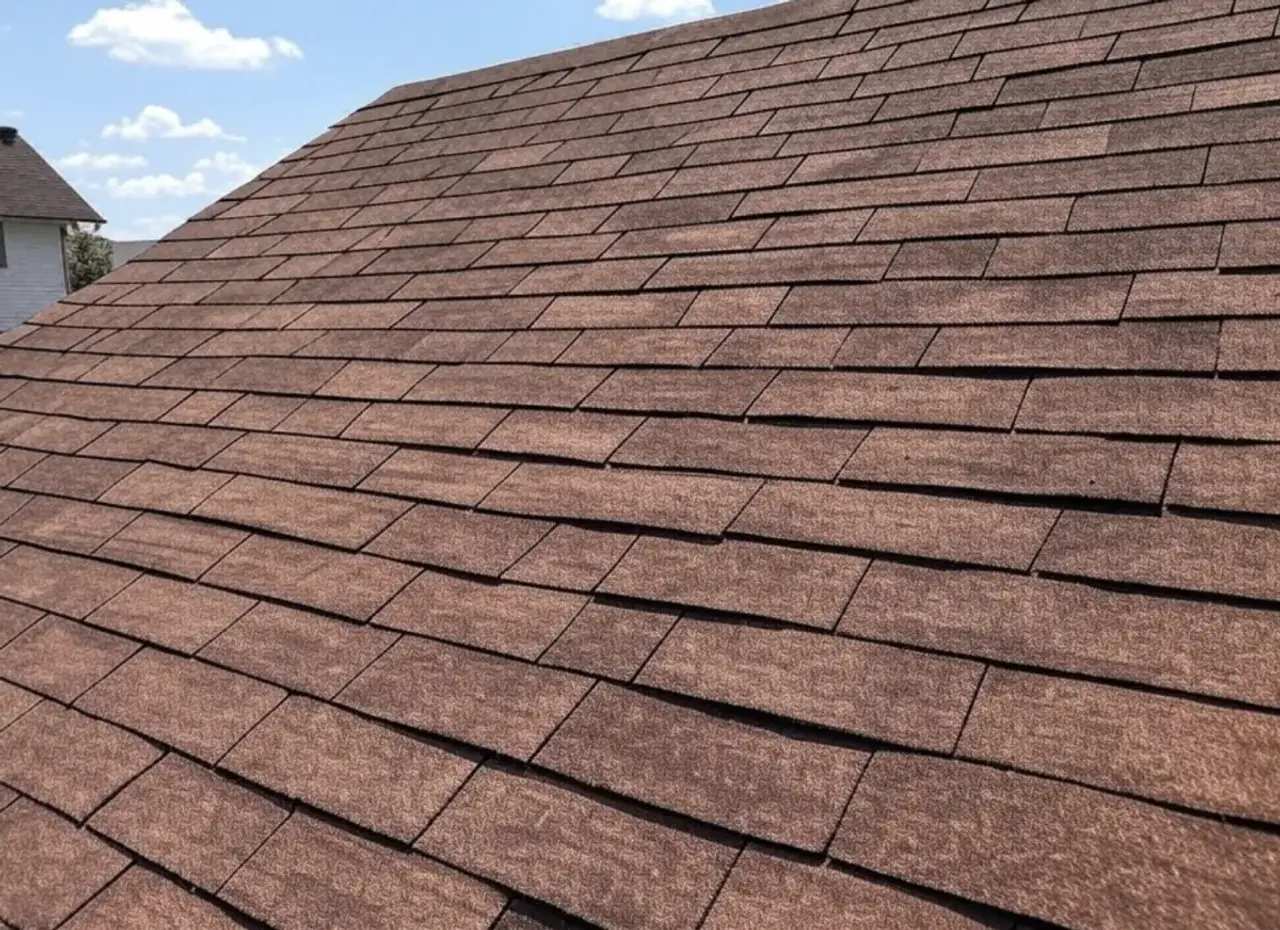
Asphalt shingle is the dominant residential roofing material in Eau Claire and most of America, and there’s good reason for that. It’s affordable per square foot, the manufacturers have figured out how to make it last 25-30 years on a properly-vented roof, and it looks right on the styles of homes that fill our area, ranches, two-stories, split levels, the occasional bungalow or farmhouse.
The choice on most residential replacements isn’t whether asphalt, it’s which asphalt, what color, what warranty tier, and what install details matter for your specific roof.
Architectural vs 3-tab
The first decision: architectural (also called “dimensional” or “laminate”) shingles, or basic 3-tab.
Architectural shingles are thicker, multi-layered, and look more visually interesting on the roof. They have a depth to them, you can see the shadow lines and texture from the curb. Lifespan is typically 25-30 years with proper installation. Wind ratings run 110-130 mph. Manufacturer warranties are usually “limited lifetime” with prorating after 10 years.
3-tab shingles are flatter, lighter, and cheaper, about 20-25% less expensive than architectural. Lifespan is 15-20 years. Wind ratings are usually 60-80 mph. They’re fine for budget jobs and outbuildings; they’re rarely the right choice for a home you plan to live in long-term.
Almost every replacement we do in the Chippewa Valley uses architectural shingles. The cost difference is small and the lifespan difference is large.
What we look for in a shingle
Beyond architectural-vs-3-tab, the next layer of choice is brand and warranty tier. The brands we install most often:
- CertainTeed Landmark: solid mid-tier architectural shingle, good warranty, common in our area. Landmark Pro and Landmark Premium upgrade thickness and warranty terms.
- GAF Timberline HDZ: most-installed shingle in North America. Solid product, lots of color options, “WindProven” warranty option for wind-prone installs.
- Owens Corning Duration: good wind resistance via the SureNail strip, decent color depth, comparable warranty tiers.
All three are fine choices. Color availability and current pricing usually decide which one ends up on the roof. We’ll show you sample boards from whichever brand fits your budget on the estimate visit so you can see real shingle in your sunlight before committing.
For homes in hail-active areas, we also offer Class 4 impact-rated shingles, the same product lines but with a thicker, more impact-resistant mat. They cost more upfront and qualify for insurance discounts on some carriers. The math works for some homeowners and not others; we’ll lay out both options.
Wisconsin-specific considerations
A few things that matter more here than in milder climates:
- Snow load. Wisconsin homes need to handle 30-60 lbs/sq ft of accumulated snow on the roof. The shingle itself isn’t the limiter (the structure is) but wind-rated shingles handle the freeze-thaw cycle better than budget products.
- Ice and water shield. Code requires ice-and-water-shield underlayment from the eave 24 inches inward past the warm wall (typically the first 6 feet of roof). We install it in valleys, around chimneys and skylights, and around plumbing vents, anywhere ice damming or driven rain might back up under the shingles.
- Ventilation. Under-vented attics are the #1 cause of premature shingle failure in our area. Wisconsin code requires 1 sq ft of ventilation per 300 sq ft of attic space, balanced between intake (soffit) and exhaust (ridge or static vents). Many older Eau Claire homes don’t meet this standard. We address it during replacement.
Installation specifics
What separates a good asphalt install from a cheap one isn’t visible from the curb. The install details that matter:
- Ice and water shield placement. Eaves, valleys, around penetrations. Skipping this saves the contractor money and costs the homeowner an interior leak in winter.
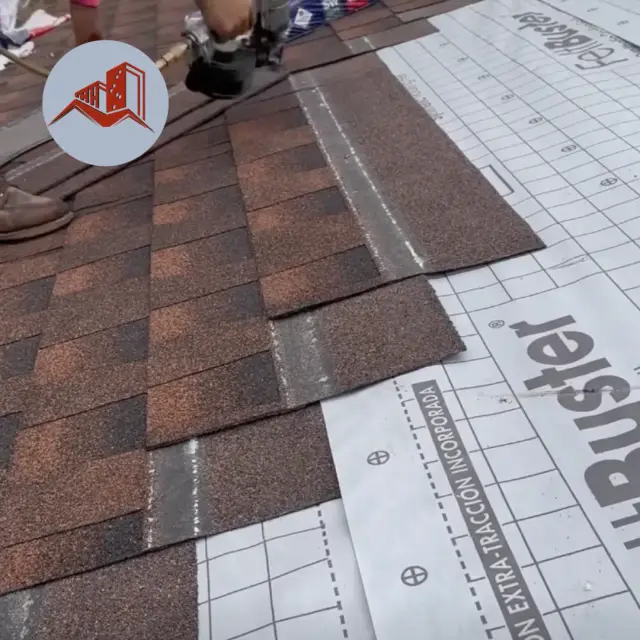
- Proper underlayment across the entire deck. Synthetic underlayment is now standard; old felt paper underlayment is acceptable but slower-installing and less durable.
- Drip edge along all roof edges. Both eaves and rakes. It’s a cheap material, there’s no excuse for skipping it, but cut-rate installs sometimes do.
- Starter strip course. A factory-made starter strip (or properly cut shingle) along the bottom edge so the first row seals correctly. We don’t reverse field shingles for starter; that creates leak gaps.
- Six nails per shingle on high-wind installations. Most of Wisconsin qualifies for high-wind. Four nails is the manufacturer minimum; six is what holds up to a 90+ mph gust.
- Hip and ridge cap shingles. Matching cap shingles along all hips and ridges, with proper venting integrated where applicable. Cut-up field shingles for caps is cheap and fails faster.
Color and style choices
Most popular colors in our area, in rough order:
- Weathered wood / driftwood: neutral browns and grays, work with most siding colors.
- Pewter / charcoal: darker grays, popular on more modern homes and white siding.
- Slate / chateau gray: mid-gray with subtle blue undertones.
- Hickory / brown blends: warm browns with multi-color depth.
- Black: for modern designs or high-contrast looks.
The right color depends on your siding, trim, and personal preference. We’ll bring physical sample boards to the estimate visit. They’ll look different in your sunlight than they do in a brochure or under our truck’s interior lights, always look at samples in real conditions before deciding.
The pricing for asphalt shingle replacement on a typical Eau Claire home runs $9,000–$18,000. Material grade and roof complexity drive the variation. A free estimate gets you the actual number for your specific roof.
What kind of shingle to actually pick
Three real choice axes drive shingle selection: warranty length, wind rating, and look. Everything else is marketing.
Default recommendation for most Eau Claire homes is GAF Timberline HDZ in a color matched to siding. It’s the most-installed shingle in North America for legitimate reasons, solid wind rating, broad color selection, the LayerLock construction handles freeze-thaw well, insurance carriers recognize it. It’s also priced in the middle of the range, so you’re not overpaying for a name.
Pick CertainTeed Landmark when you want a slightly longer warranty (Landmark Pro upgrades from limited lifetime to 50-year non-prorated) or when the roof has very steep pitches where the higher wind rating helps. Landmark’s color depth tends to read slightly richer than GAF; some homeowners prefer the look. Pricing is comparable.
Pick Owens Corning Duration when the StreakGuard algae resistance matters, north-facing roof slopes that don’t dry quickly tend to develop the dark streaking that’s actually a moss-like algae growth. StreakGuard delays that for 10-15 years. Worth the upgrade if half your roof faces north.
Architectural vs designer-grade is mostly an aesthetic call. Designer shingles run $30-50 per square more and look noticeably more dimensional from the curb. They’re worth it on Tudor, Victorian, and high-end traditional homes where the roof is a visual feature; they’re not worth it on most ranches and split-levels where the look difference doesn’t show.
Color choice: weathered wood, charcoal black, and driftwood are the most popular and resale-friendly in our area. They work with most siding palettes and don’t date the way trendier colors do (a color that looks current in 2026 may look dated in 2034 when the next buyer is shopping). Avoid the loud reds and greens unless the home architecture demands them.
Skip 3-tab unless it’s a barn, shed, or outbuilding. Architectural is the standard now; 3-tab’s lower lifespan and worse wind rating doesn’t justify the small cost savings on a home you’ll live in.