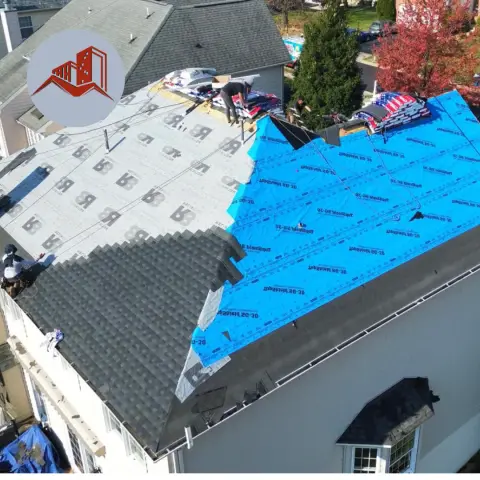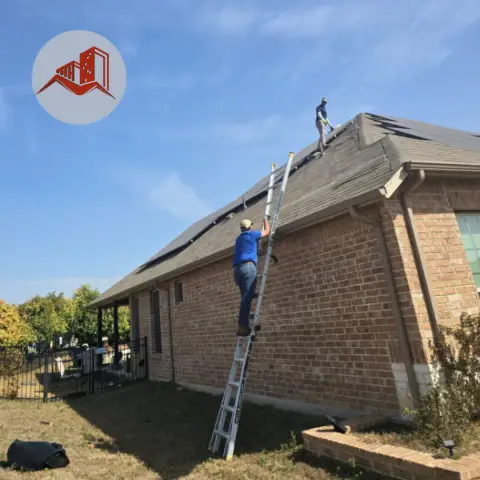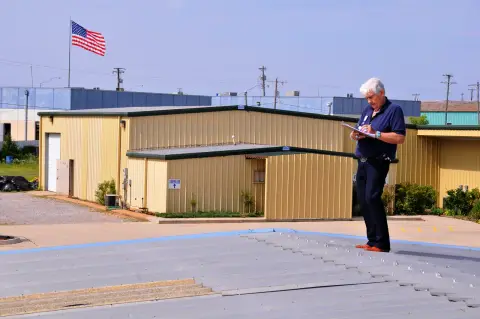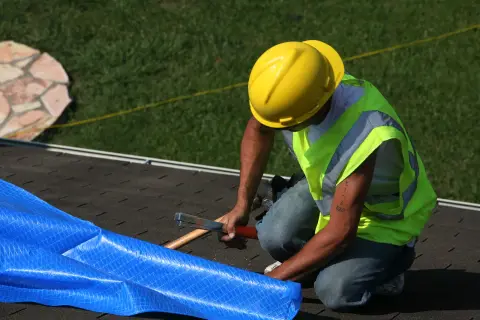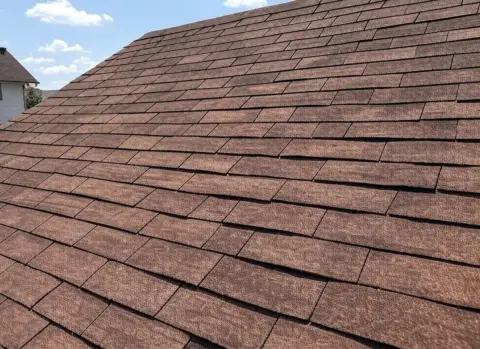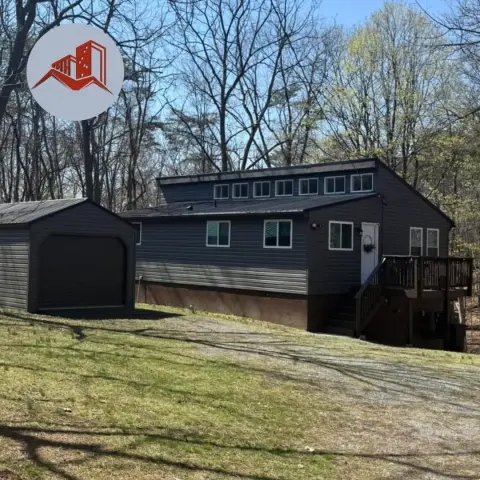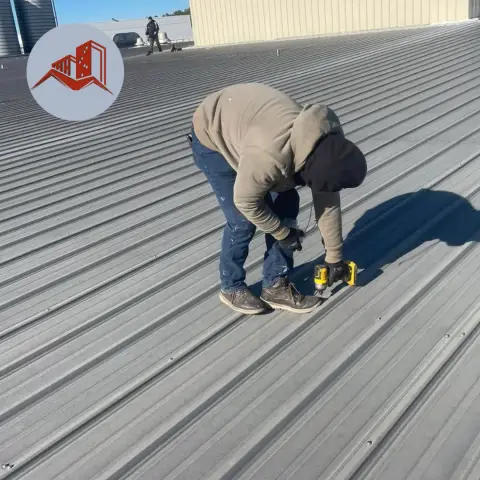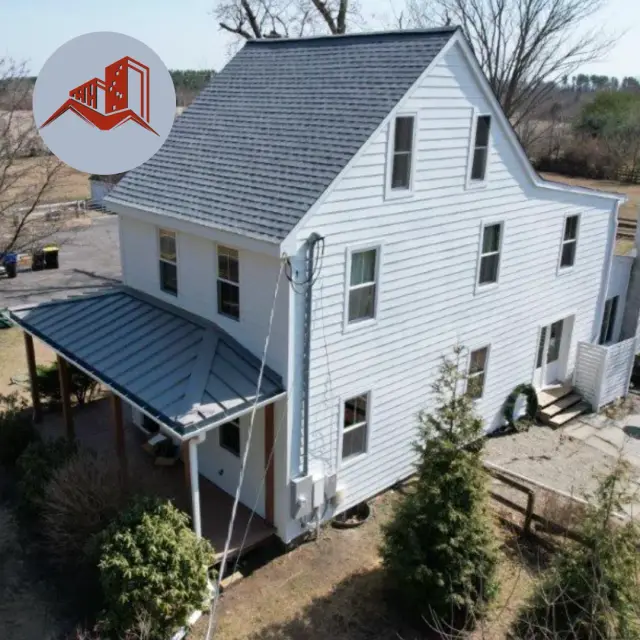

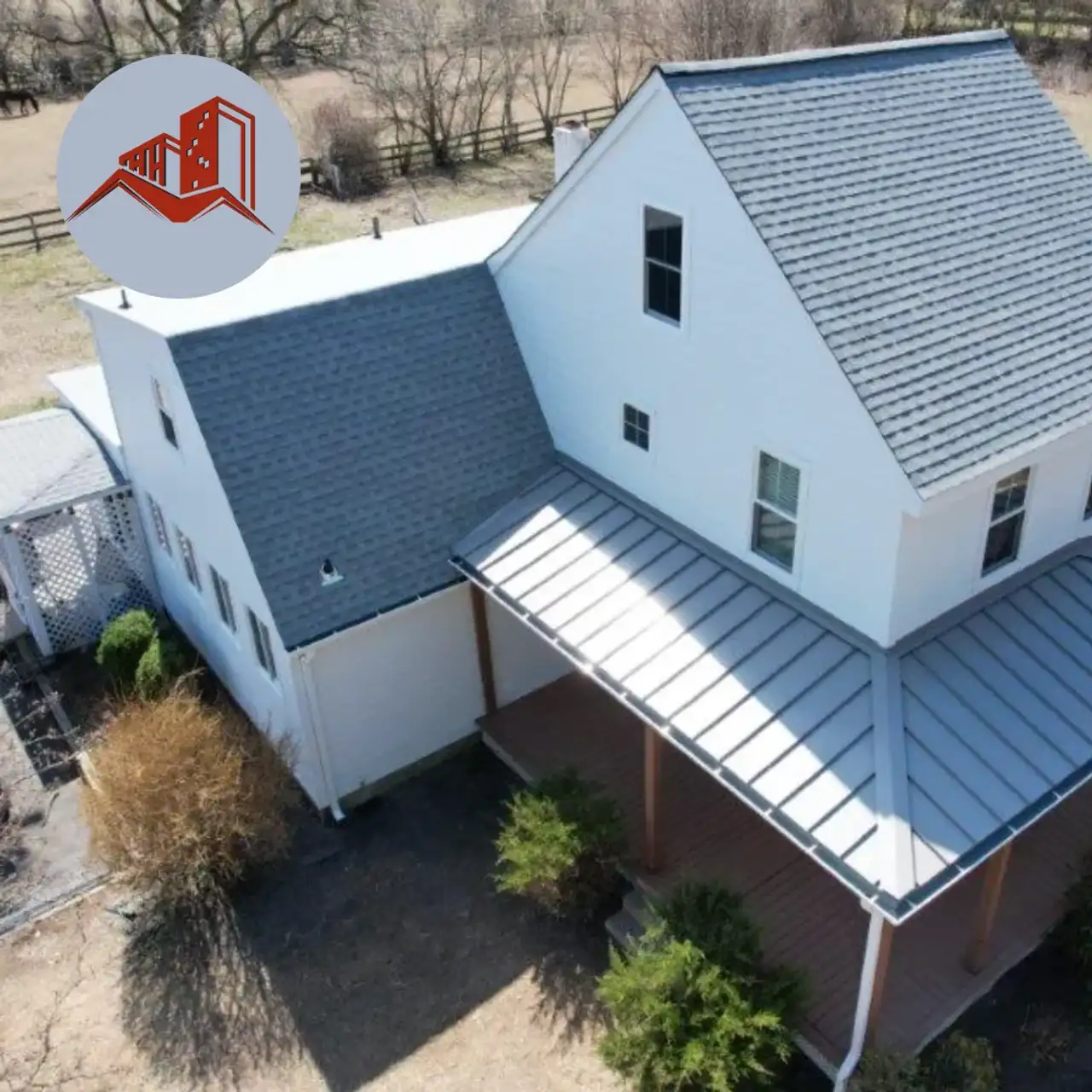
Lake Hallie is the village between Eau Claire and Chippewa Falls, about seven miles from our Eau Claire shop, twelve minutes via Highway 53 or County Road OO, and when weather crosses the valley, it’s often the first place our phones light up. The village’s ~7,300 residents live in a mix that runs from older cottages near the oxbow lake to newer subdivisions east of Highway 53, much of it on open, low-shelter ground that takes hail and straight-line wind at full force. We pass through Lake Hallie daily en route to Chippewa Falls, so storm damage documentation visits and emergency tarps slot in fast, and the replacements, repairs, and corridor commercial work carry the rest of the year.
Roofing in Lake Hallie
Lake Hallie’s roofing mix reflects the village’s geography and history. The original village wrapped around the small oxbow lake; growth has come on both sides of Highway 53 over the last several decades.
Older homes around the lake itself (original cottages, modest single-families, mid-century stock) have the standard older-home considerations. Asphalt-shingle stock at end-of-life, occasional ventilation issues, ice-damming on the older roofs that haven’t been retrofitted. Lake-facing slopes face direct wind exposure that ages the windward elevations faster than landlocked homes.
Newer subdivisions east of Highway 53: homes built from the 1980s through the 2010s, on streets that fill in toward the east-side village edge. Code-compliant ventilation, plywood decking, architectural shingles. Most replacement decisions on these homes are coming up in the next decade as the original asphalt ages out.
Older residential off County Road OO: the original County Road OO neighborhoods predate most of the eastside expansion. Mid-century homes, simpler footprints, the same Eau Claire-style approach to roofing.
Highway 53 commercial corridor: a steady run of retail, restaurants, automotive service, light commercial. Most of the original commercial buildings here have low-slope or flat roof systems that follow the same maintenance and replacement curves as Altoona’s Highway 53 stretch.
Lake Hallie Golf Course area: homes near the 18-hole course, generally newer construction with newer roofs. The fairway-adjacent homes face mostly inland wind rather than open-water exposure, so the wind-zone considerations for lakefront homes don’t apply here.
Chippewa River frontage: properties along the river itself, including the stretches that loop around the oxbow lake the village takes its name from. River-adjacent homes face their own micro-environment: humid summer mornings, frequent fog along the water, and the wear pattern that comes with sustained moisture exposure. Replacement here often warrants algae-resistant shingle products. AR shingles include copper or zinc granules that suppress the dark streaking caused by gloeocapsa magma, and slightly more robust ventilation than a typical inland home. We recommend AR shingles by default on river-facing slopes; on lakefront properties facing prevailing wind they’re close to a must-have.
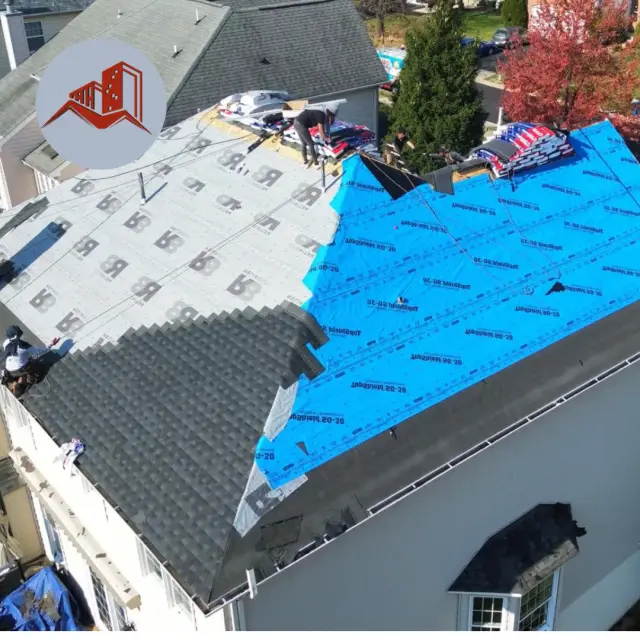
The mix is more uniform than Chippewa Falls (less century-plus historic stock) and skews newer than older Eau Claire neighborhoods. Most roofing work we do here is straightforward, architectural asphalt replacement, repair work on flashing failures and storm damage, metal upgrades for owners staying long-term.
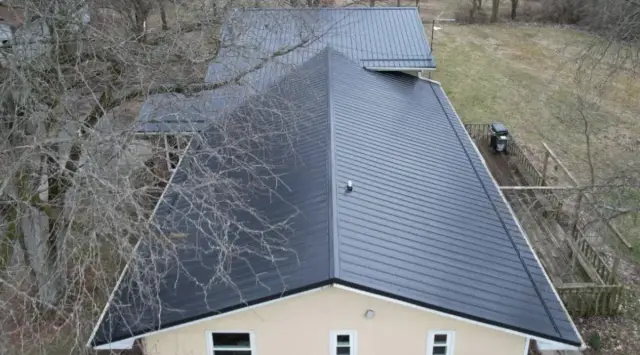
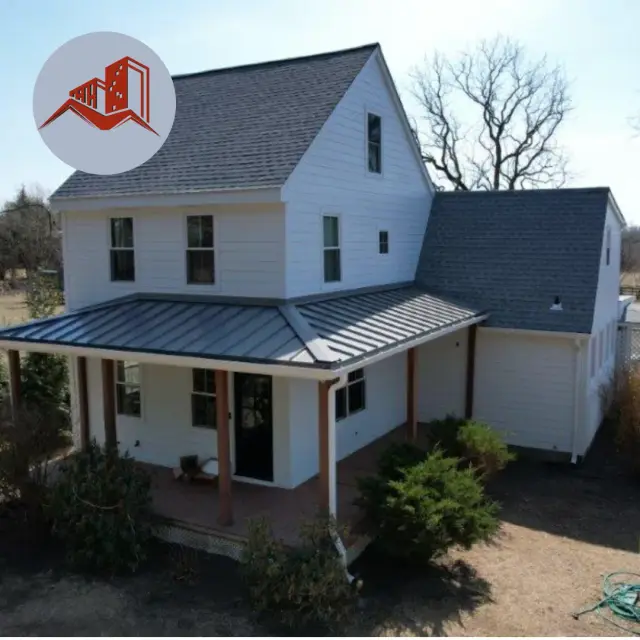
Metal roofing on lakefront homes is a real conversation in Lake Hallie. Standing seam metal handles the wind exposure on lakeside slopes considerably better than asphalt, no granules to lose to wind-driven rain, no shingle-edge sealant to fail, and the panels move as a coordinated assembly rather than as hundreds of individual shingles. The trade-off is upfront cost (roughly 50-80% more than architectural asphalt for equivalent square footage) and a slightly different sound profile during heavy rain. Owners staying long-term (fifteen-plus years) usually come out ahead on metal; owners planning to sell within seven to ten years often come out ahead on premium asphalt. We walk you through that math during the estimate visit so the decision is based on your specific timeline rather than a generic recommendation.
Neighborhoods we serve in Lake Hallie
Lake Hallie covers a relatively compact footprint. We work the village in its entirety:
Around Lake Hallie itself: the original village core, with cottages and modest residential properties facing or near the lake. Lakefront homes have the wind-exposure considerations called out below; properties slightly inland from the lake are standard residential roofing work.
Highway 53 corridor: retail and commercial running through the village. Strip retail, restaurants, automotive, occasional small office. Commercial roofing is steady work along this stretch. TPO and EPDM membrane systems, modified bitumen, the standard commercial mix.
Older residential off County Road OO: established neighborhoods with mid-century housing stock, smaller lot sizes, mature trees. Standard Eau Claire-style residential roofing.
Newer subdivisions east of Highway 53: homes from the 1980s through the 2010s, code-compliant systems, simpler replacement profiles when the time comes.
Lake Hallie Golf Course area: homes adjacent to the 18-hole course, generally newer single-family construction. Architectural asphalt on most; we’ve installed metal on a handful where the architecture supports it.
Borders with Chippewa Falls and Eau Claire: the village’s northern edge transitions into Chippewa Falls; the southern edge runs into the Town of Seymour and Eau Claire’s northern neighborhoods. We service across these boundaries the same way we service the village itself.
Common roofing issues in Lake Hallie
Lake Hallie’s housing stock is younger than Chippewa Falls’ on average, so the issue mix tilts toward storm damage and standard end-of-life replacement rather than the older-home considerations (decking, century-plus framing, severe ventilation deficits) that dominate older Chippewa Falls neighborhoods.
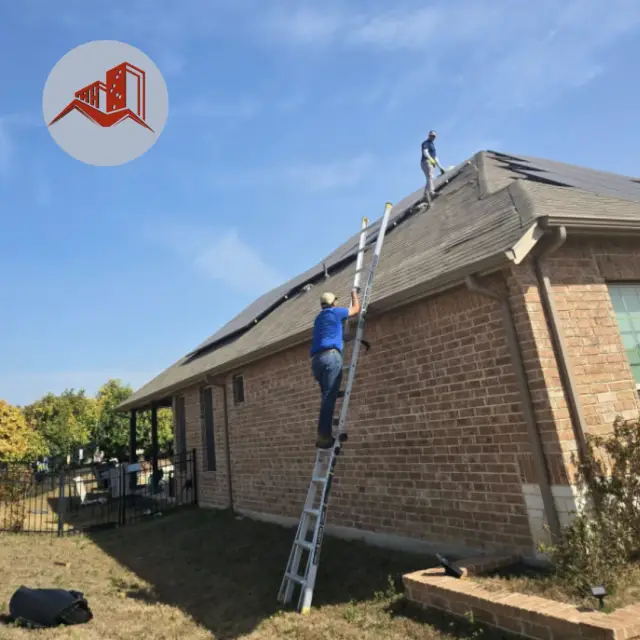
Hail damage from the 2025 spring storm season is the most active issue on Lake Hallie roofs right now. Both documented 2025 events tracked through or near the village: the April 28 tornado outbreak and the May 15 hail storm whose largest stones fell just south in Altoona. We’ve inspected Lake Hallie roofs from those events repeatedly through the back half of 2025 and into 2026, the granule loss isn’t always visible from the ground, and a lot of homeowners only realize they have damage when shingles start lifting later.
Wind-lifted shingles on lakefront homes. Small as it is, the oxbow lake gives wind a running start at lakeside slopes, a pocket-sized version of what Wissota-shore homeowners deal with up north. Lakefront replacements get wind-rated shingles or metal on the water-facing planes; inland slopes do fine on standard architectural.
Ice damming on older homes: less endemic than in older Chippewa Falls stock, but real on the original cottages around the lake and on some County Road OO houses. Usually a ventilation correction rather than a full replacement.
Flashing failures at chimneys, vent stacks, and skylights are the most common repair call across the village’s residential stock. Standard repair scope, usually a half-day job, $400-$1,200 depending on the specific failure.
Commercial flat-roof maintenance along Highway 53, the mid-2000s membrane systems are reaching the 15-20 year mark and showing the standard maintenance issues: failed sealant at penetrations, edge metal pulling, occasional ponding water. Most are still functional with proper maintenance.
Tree damage is intermittent. Lake Hallie has more newer-subdivision tree planting than mature canopy, so summer storm tree-damage calls are less frequent here than in Chippewa Falls’ older neighborhoods.
Lake Hallie roof pricing
Seven miles changes nothing on a quote; Lake Hallie prices off the same sheet as our home market.
A standard 1,800-2,500 sq ft Lake Hallie home prices at $9,000-$16,000 in architectural asphalt and $14,000-$25,000 in standing seam. Modern decking dominates here, so older-stock contingencies rarely appear on Lake Hallie quotes.
Lakefront homes (properties directly on or facing Lake Hallie) usually run a wind-rated material spec, which adds 5-10% to the asphalt price for the same square footage. $10,000-$18,000 for typical lakefront residential asphalt. Worth it for the longevity on a wind-exposed slope.
Smaller cottages and original lake-area homes (often 900-1,500 sq ft with simpler roof footprints) run $5,500-$10,000 for asphalt replacement.
Repairs: wind-lifted single shingles (the highest-volume Lake Hallie call since the 2025 storm season) run $300-$600, chimney flashing $400-$1,200, valley rebuilds $1,200-$2,500, and ice-dam interior damage on older homes $2,000-$4,000.
Highway 53 commercial membrane replacement runs $8-$18 per square foot, with written roof asset assessments at no charge for corridor property owners.
Every one of those bands narrows to a single real number once we’ve walked your roof; the written estimate is free.
Storm season in Lake Hallie
Lake Hallie sits in the same severe-weather corridor as the rest of the Chippewa Valley. Storms typically approach from the southwest, hitting Eau Claire and then crossing into Lake Hallie within minutes.
Spring (April-June) is peak season. The 2025 spring storm season was exceptional, the April 28 tornado outbreak in Eau Claire County and the May 15 hail event both produced documentation-worthy damage on Lake Hallie roofs. We’re still inspecting hail damage from May 2025 because the granule loss takes months to become obvious to homeowners, and the 12-month insurance-claim window doesn’t close until May 2026.
Summer brings isolated severe thunderstorms, high winds, occasional hail, tree damage. Lake Hallie’s mix of mature trees in older neighborhoods and younger plantings in newer subdivisions means damage patterns vary significantly between streets.
Fall and winter trade severe weather for the slow kind: ice dams on the older lake-area homes, while newer construction mostly shrugs it off.
Inspection timing: post-storm inspections are free and belong in spring or early summer. Older homes around the lake earn a second look each fall, flashing and ventilation checked before November locks the freeze-thaw cycle in.
Working in Lake Hallie specifically
Logistics for Lake Hallie jobs:
Drive time: 12-15 minutes via Highway 53 or County Road OO. Lake Hallie sits on our regular route to Chippewa Falls, which makes service routing here particularly efficient.
Permitting: full replacements in the village take a Lake Hallie building permit, which is ours to handle, while ordinary repairs skip the permit desk unless structural decking enters the scope.
Lakefront access: some properties around Lake Hallie itself have narrow access tracks better suited to smaller trucks. We adapt where needed to avoid damage to landscaping or driveways.
Highway 53 commercial coordination: business hours and customer access shape commercial scheduling. We coordinate around the operating rhythm of each business.
HOA considerations: newer subdivisions and golf-course-area developments occasionally have material restrictions. We pull guidelines before the estimate.
Timing: Lake Hallie is part of our standard Eau Claire / Chippewa Falls routing. Lead times match the rest of the metro: 4-8 weeks during peak summer and fall, 1-3 weeks in shoulder seasons. Storm-damage and emergency work jumps the queue.
Storm on the radar or damage already on the roof, the number is (715) 245-5271, or use the form below. Estimates land within a few days; active emergencies get same-day attention during business hours.