
A new roof is the kind of purchase most homeowners make once or twice in a lifetime, and it shows. Pricing varies wildly between contractors, the timelines you see online don’t always match reality, and there’s a thicket of materials choices most folks never think about until they’re staring down an estimate. Our goal on every replacement is to make it less weird, give you a written estimate that spells out the scope, install to a standard that holds up to Wisconsin weather, and clean up like we were never there.
When replacement makes sense
In the Chippewa Valley, asphalt shingle roofs reach end-of-life at 18-25 years depending on shingle quality, ventilation, and exposure. Metal roofs run 35-50+ years. Once an asphalt roof starts losing granules in noticeable amounts, curling at the edges, or showing multiple leak points, repairs become a losing game: you fix one valley and the next one fails six months later. A roof at that stage usually costs less to replace once than to keep patching across the next five years, because the string of repairs only postpones the inevitable. That’s the moment for replacement.
Replacement is also the right answer after major storm damage when an insurance adjuster has agreed the roof is totaled. We’ve documented enough Eau Claire hail and wind events to know what reads as “fully replace” vs “patch and move on”. If you’re not sure which side you’re on, get an inspection before you call your insurance company.
What’s involved in a full replacement
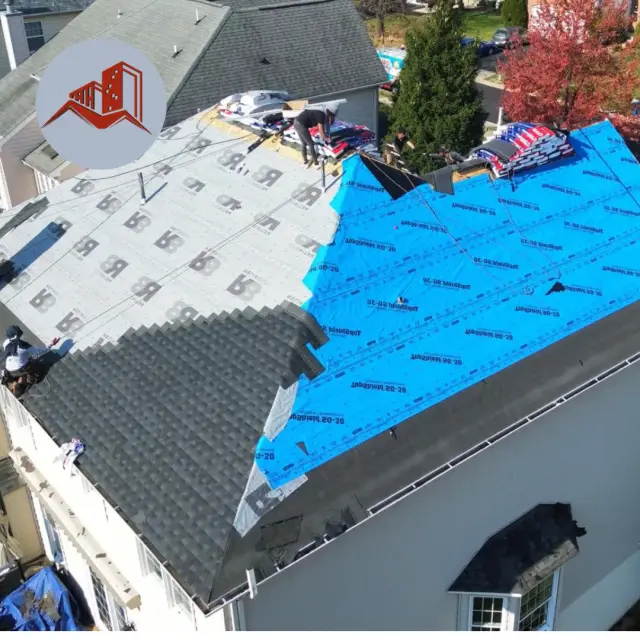
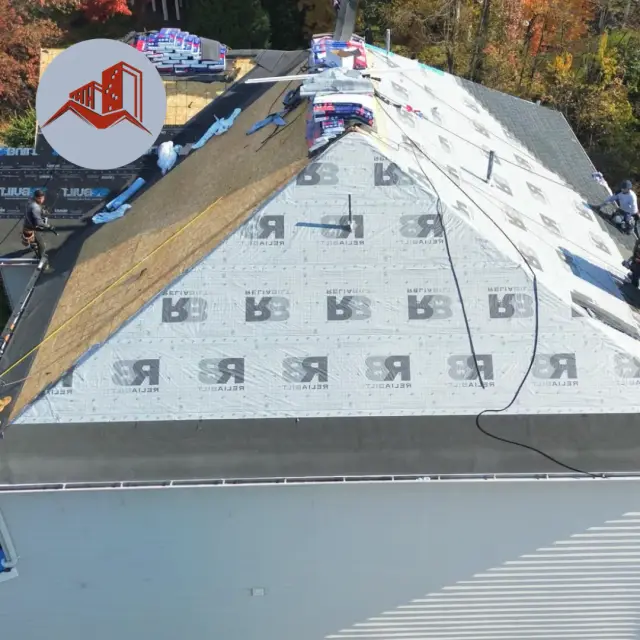
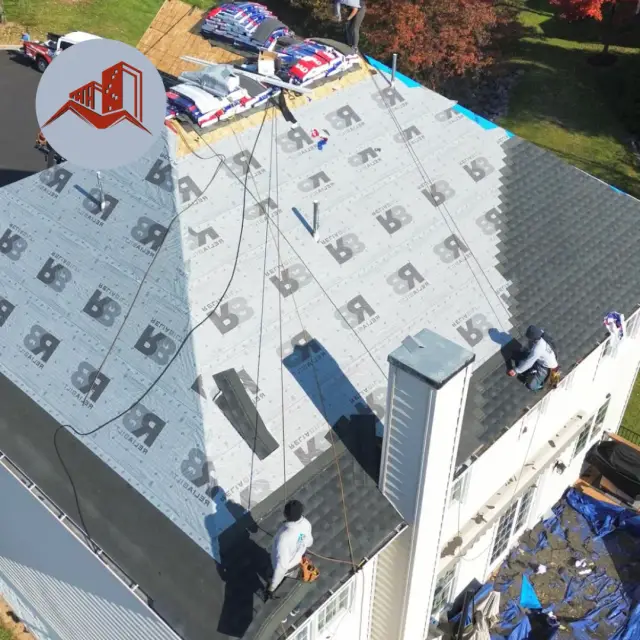
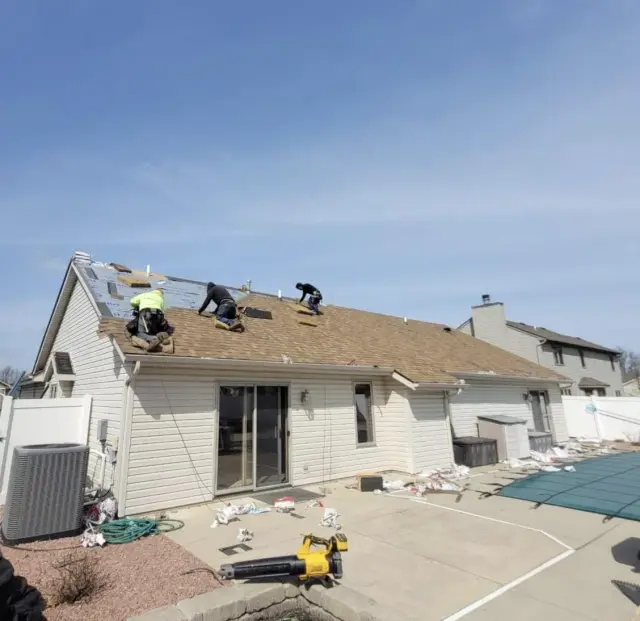
A typical residential asphalt re-roof in Eau Claire follows the same eight-step sequence:
- Setup and protection. Dumpster placed, landscaping tarped where needed, vehicle access mapped, plywood walking paths laid down for any sections of yard that’ll see heavy traffic.
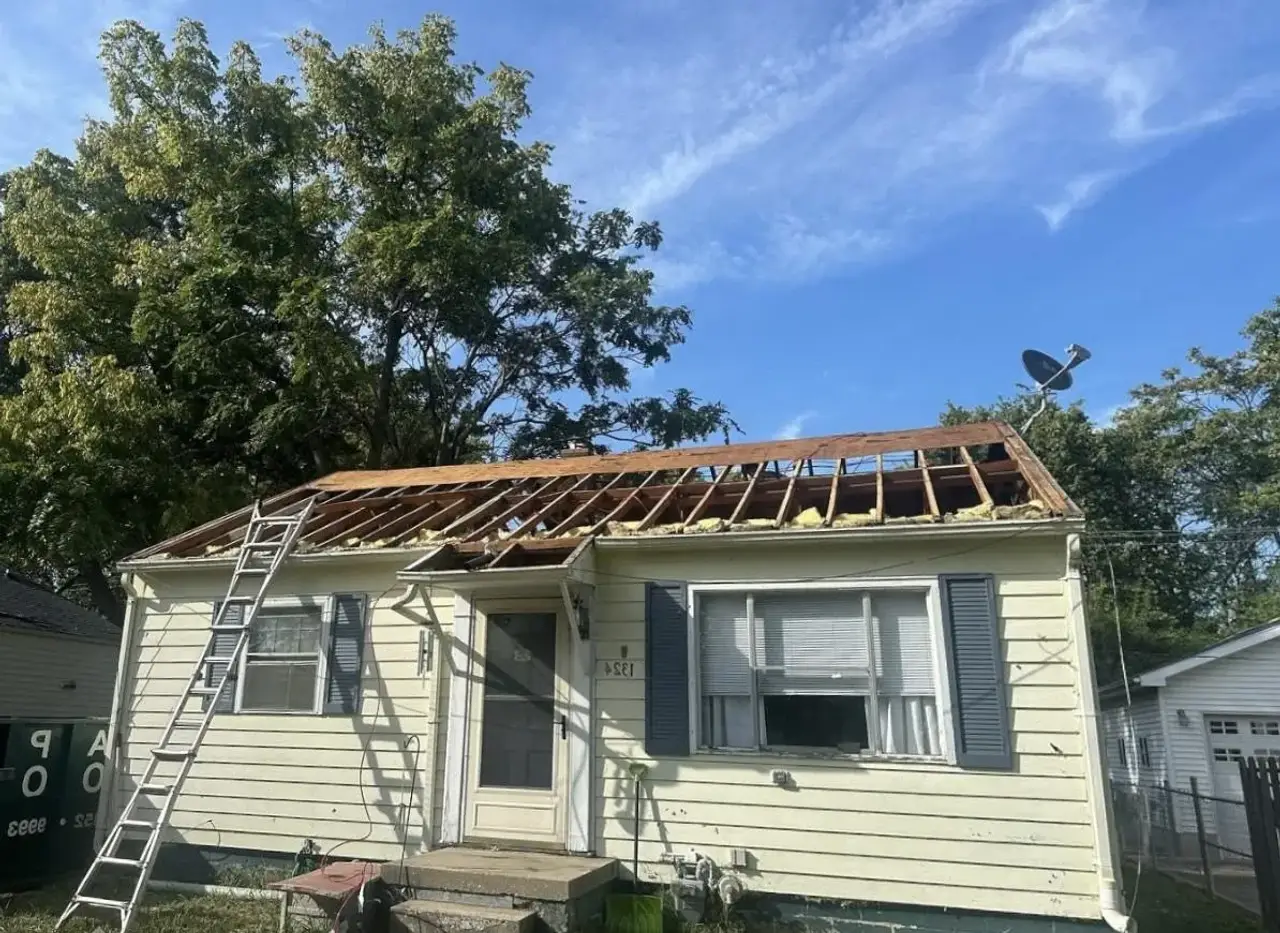
- Tear-off. Old shingles, underlayment, and any failed flashing come off down to the wood decking. We don’t roof over existing material on residential work.
- Decking inspection. Every square foot of the deck is checked for soft spots, rot, or delamination. Bad sheets are replaced before any new material goes down, quietly leaving rotten decking under new shingles is a common shortcut we don’t take.
- Underlayment. A synthetic underlayment goes over the entire deck. Ice and water shield runs at the eaves (six feet up from the wall in our climate, per code), in every valley, and around all penetrations.
- Drip edge and starter strip. Drip edge along the rakes and eaves, then a starter strip course along the bottom edge so the first row of shingles seals properly.
- Field shingles. Shingles laid course by course, nailed per manufacturer spec (six nails per shingle in high-wind zones, that’s most of Wisconsin).
- Flashing and ventilation. Step flashing where the roof meets walls, counter-flashing at chimneys, new boots on plumbing vents. Ridge vent runs along the peak; if the existing soffit intake isn’t sufficient, we adjust.
- Cleanup. Magnetic sweeper across the lawn and driveway to pick up nails, dumpster hauled away, final walkthrough so you can see what you paid for.
How long it takes
Most asphalt replacements on a typical Eau Claire residential home take 1-2 working days from tear-off to final cleanup. A 2,500 sq ft single-story ranch with one valley is a one-day job for a competent crew. A 3,500 sq ft two-story with multiple valleys, dormers, and difficult access can run 2-3 days. Metal roof installs typically run 2-4 days because the panels go on slower.
Weather matters more than you’d think. We won’t install shingles on wet decking, in temperatures below 50°F (the asphalt sealant strip won’t activate properly), or with rain in the forecast within the next 24 hours. Wisconsin springs can be unpredictable; we plan for a buffer day on every job.
What it costs
Honest cost ranges for asphalt shingle replacement in the Chippewa Valley, based on a 2,000–2,500 sq ft home:
- Simple, single-story roof, basic shingle: $9,000–$12,000
- Average two-story home, architectural shingle: $11,000–$16,000
- Larger / steeper / multi-level / premium shingle: $16,000–$22,000
- Complex roofs with significant valleys, dormers, or accessibility issues: $18,000–$28,000+
Metal roofing on the same home runs roughly 1.5–2× the asphalt price for the same complexity. The big drivers of variation: square footage (the basic geometry), pitch (steeper = slower = more expensive), complexity (every valley, dormer, and skylight adds work), material grade, and whether decking needs replacement. The written estimate accounts for all of it.
Materials we install
For asphalt: we work with major manufacturers, CertainTeed Landmark, GAF Timberline HDZ, and Owens Corning Duration are the lines we install most often. They’re all architectural shingles with similar warranty structures (limited lifetime, with prorating after 10 years). Color and budget usually decide which one ends up on the roof.
For metal: standing seam systems for high-end residential, exposed-fastener (R-panel/ag-panel) for outbuildings and barns. We install snow guards on any metal roof with significant pitch and high traffic areas below, sliding snow off a 12/12 metal roof can wreck a deck or hurt someone.
For low-slope and flat sections (porches, additions): TPO membrane is our default; EPDM rubber when the customer specifically wants it. Modified bitumen on commercial work that sees foot traffic.
What to expect on the day
The day starts with the crew arriving between 7:00 and 8:00 AM (earlier if it’s August and we’re trying to beat afternoon heat). The dumpster gets dropped within the first 30 minutes. Tear-off is the loudest part, expect noise from 8 AM to roughly noon, then quieter installation work through the afternoon.
You don’t need to be home, but it helps to be there for the first 30 minutes so we can confirm the shingle color you picked actually matches what’s on the roof in sunlight (sample shingles look different against your siding than in our truck). After that, you can leave; we’ll lock the side gate if needed and call when we’re wrapping up.
End of every workday: the work area gets cleaned and tarped if the roof isn’t fully buttoned up. Last day: dumpster goes, magnetic sweeper across the whole work area to catch nails before they end up in your tires or your kid’s foot, and we walk the property with you to confirm everything’s right.
Signs your roof actually needs replacing
Replacement is a big check. Before you write it, the question worth asking is: am I being upsold, or does this roof actually need to come off? A few honest signals.
Granule loss is the first to show up. If your gutters are full of black sand-like material after every rain, the asphalt shingles are shedding their protective coating. Some loss is normal; cups full of granules every storm means the shingles are losing UV protection and end-of-life is close.
Curling and cupping are next. Look at the field shingles from the ground or with binoculars, if the corners are turning up like potato chips, or the centers are sinking in, the asphalt mat has lost flexibility. That’s not repairable; it’s a system showing its age.
Bald spots (areas where the granule layer is gone and the underlying mat shows through) mean the shingle is no longer waterproof in those spots. A single bald spot is sometimes a manufacturing defect; multiple bald spots across the roof is wear-out.
Repeated repairs in 12 months is its own signal. If you’ve had three different leaks in three different places this year, you’re past patch territory. Single, localized issues are repairs; systemic failure is replacement.
Walking the roof, sponginess underfoot or visible sagging means decking has gone soft. That’s not a shingle problem; it’s a structural problem and replacement is usually the only path forward.
A few caveats. A single leak doesn’t mean replacement, most leaks are flashing failures and repairs handle them fine. Ice dam interior staining looks dramatic but is often a ventilation problem, not a roof problem; we address that with intake/exhaust correction rather than tearing off the whole roof. The honest test is whether the failure is one isolated spot or a whole roof’s worth of small failures adding up.
Permit requirements for a roof replacement
A full re-roof almost always requires a building permit. The exact rules vary by municipality across the Chippewa Valley, but as a general matter a tear-off and re-roof is permitted work while a small repair usually isn’t. On the jobs we do, we pull the permit as part of the project, it’s our name on the paperwork, and handling it is part of what you’re paying a contractor for. You shouldn’t have to stand in line at a municipal office for a roof you hired out.
A permit also means the work may be inspected. An inspector can verify that the ice and water shield, fastening, and ventilation meet current code, an independent check that the roof over your head was installed to standard.
Permitting matters beyond the install itself. Unpermitted work can surface at resale, when a buyer’s inspector or title search turns up a re-roof with no permit on file, and it can complicate a future insurance claim if a carrier questions whether the work met code. A permitted, inspected roof avoids both problems. If a contractor suggests skipping the permit to save a few days, treat it as a warning sign about how they work.
Manufacturer warranty vs. workmanship warranty
A new roof comes with two separate warranties, and they cover completely different things. Homeowners often assume one number protects everything. It doesn’t.
The manufacturer warranty covers the shingles themselves, material defects like premature granule loss or a flaw that causes early failure. Architectural asphalt shingles usually carry a limited-lifetime warranty, but the fine print matters: coverage is typically prorated after the first ten years or so, so the dollar value drops the longer you own the roof. Many of these warranties are transferable once to a new owner, which can help at resale, but only if the paperwork was registered correctly at install.
The workmanship warranty covers installation. If a roof leaks because flashing was set wrong or shingles were nailed off-pattern, that’s a labor problem, not a material defect, and the manufacturer won’t cover it. The workmanship warranty is set by the contractor, commonly in the five-to-ten-year range. It’s the one that depends entirely on who installs your roof.
Both matter because most roof problems in the first decade trace back to installation, not material defects. A good shingle installed poorly still leaks. Ask any contractor what their workmanship warranty covers and how long it runs, and get the answer in writing before you sign.
Paying for a roof replacement
A new roof is a large, often unplanned expense, and most homeowners cover it one of a few ways.
When the work is driven by storm damage, insurance proceeds are usually the first source, a covered hail or wind claim pays for the job less your deductible. Our storm damage page walks through how that process works. Wear-and-tear roofs aren’t covered, so this path only applies to genuine storm claims.
For out-of-pocket work, home equity loans and HELOCs are common, since the rates are usually lower than unsecured borrowing and the roof is part of the home. Personal loans are faster to arrange but tend to carry higher rates. Many manufacturers and contractors also participate in financing programs run through third-party lenders, these exist across the industry, with terms that vary widely, so read what you’re signing before you commit.
The thing to ask any contractor is what payment options they accept and what’s required up front. A reasonable deposit is normal; a demand for the full amount before work starts is not. We’re glad to talk through what fits your situation without pushing you toward any one option.