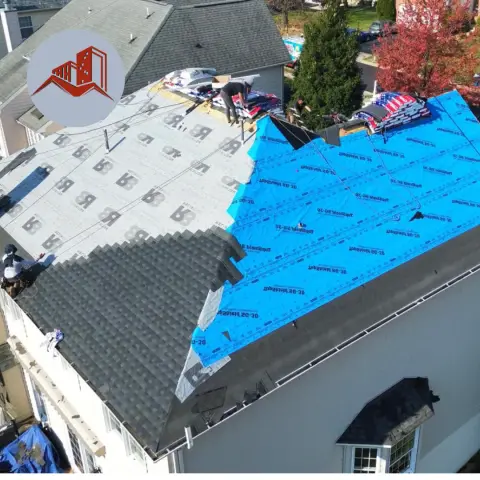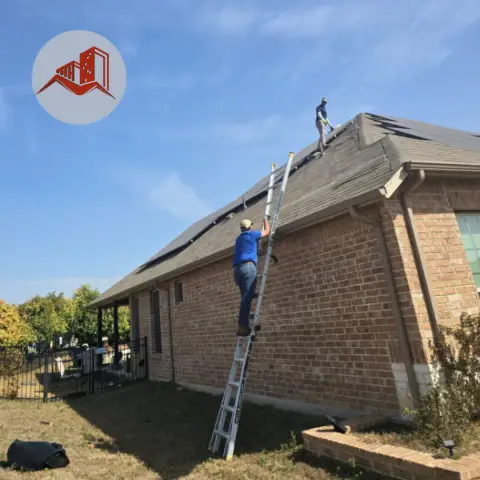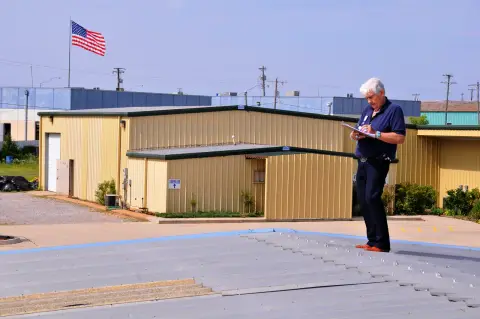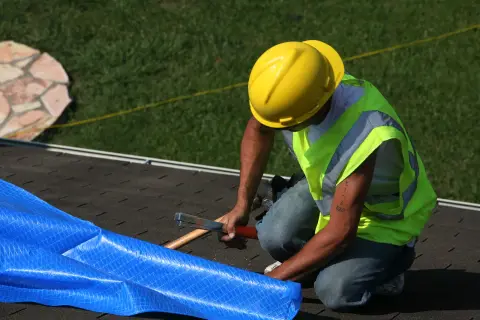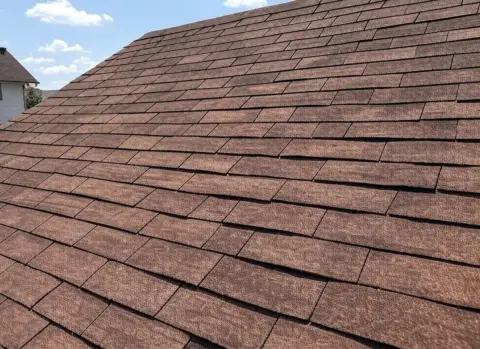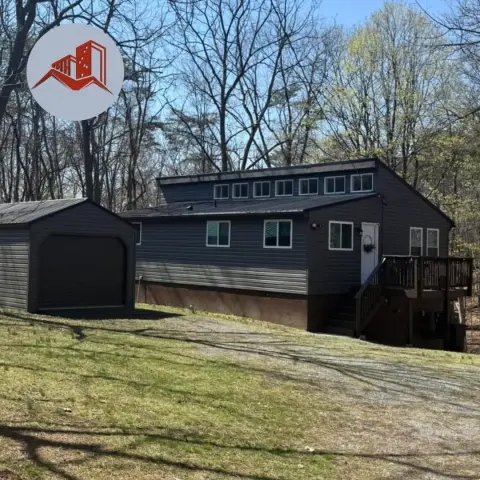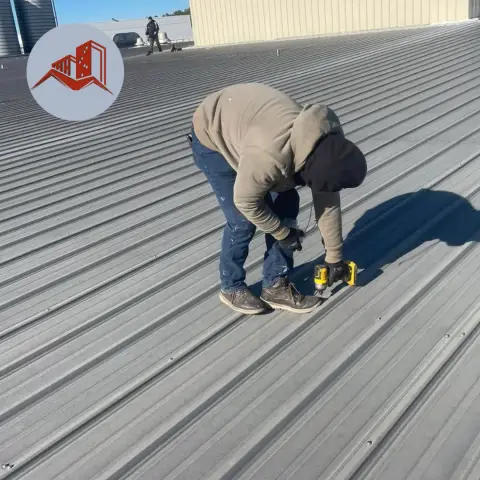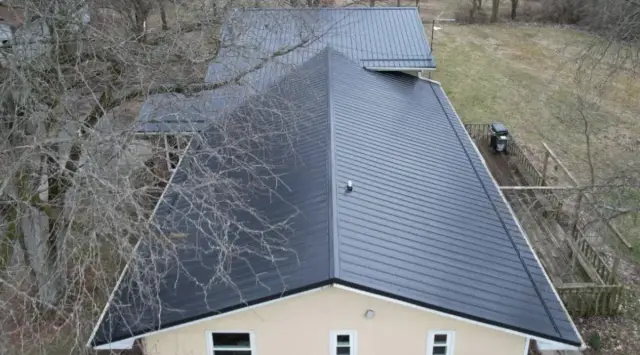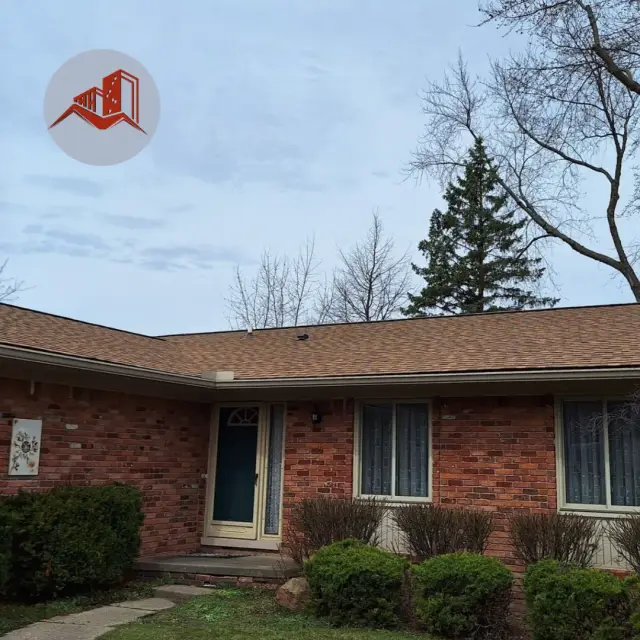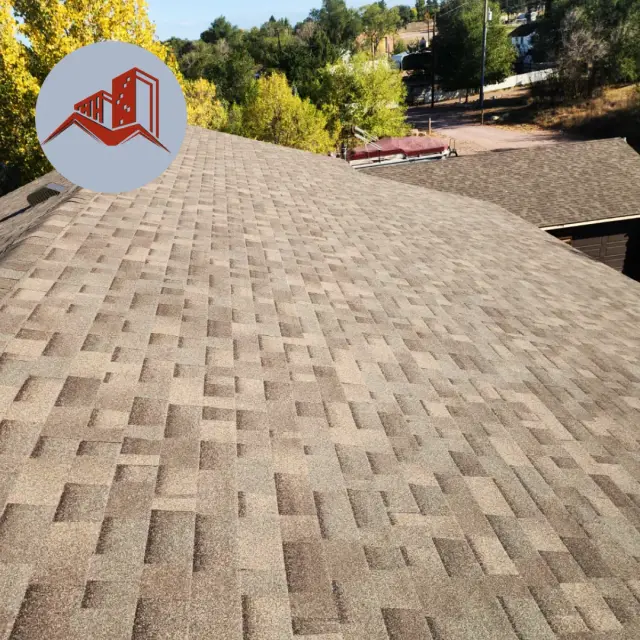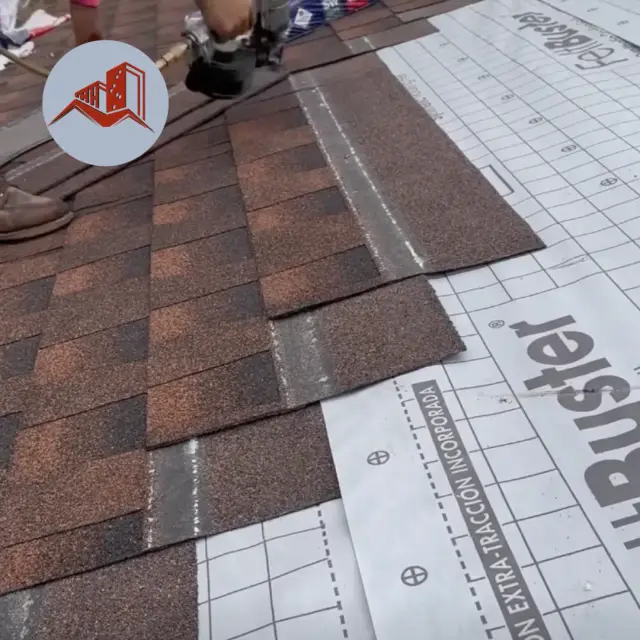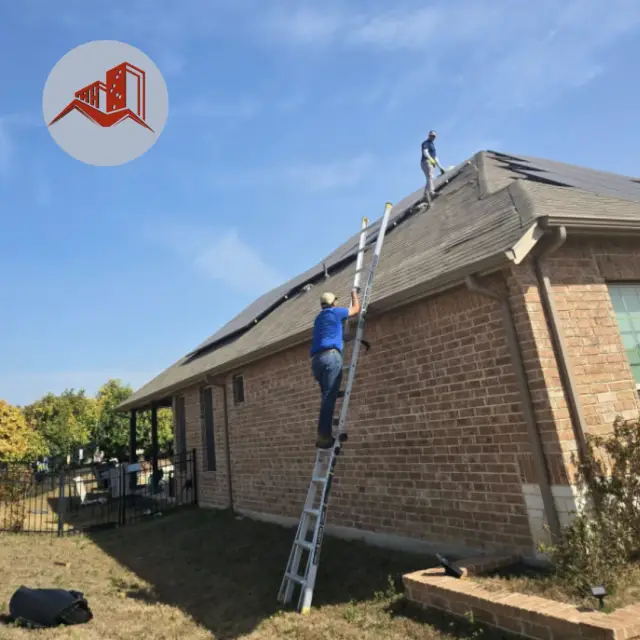

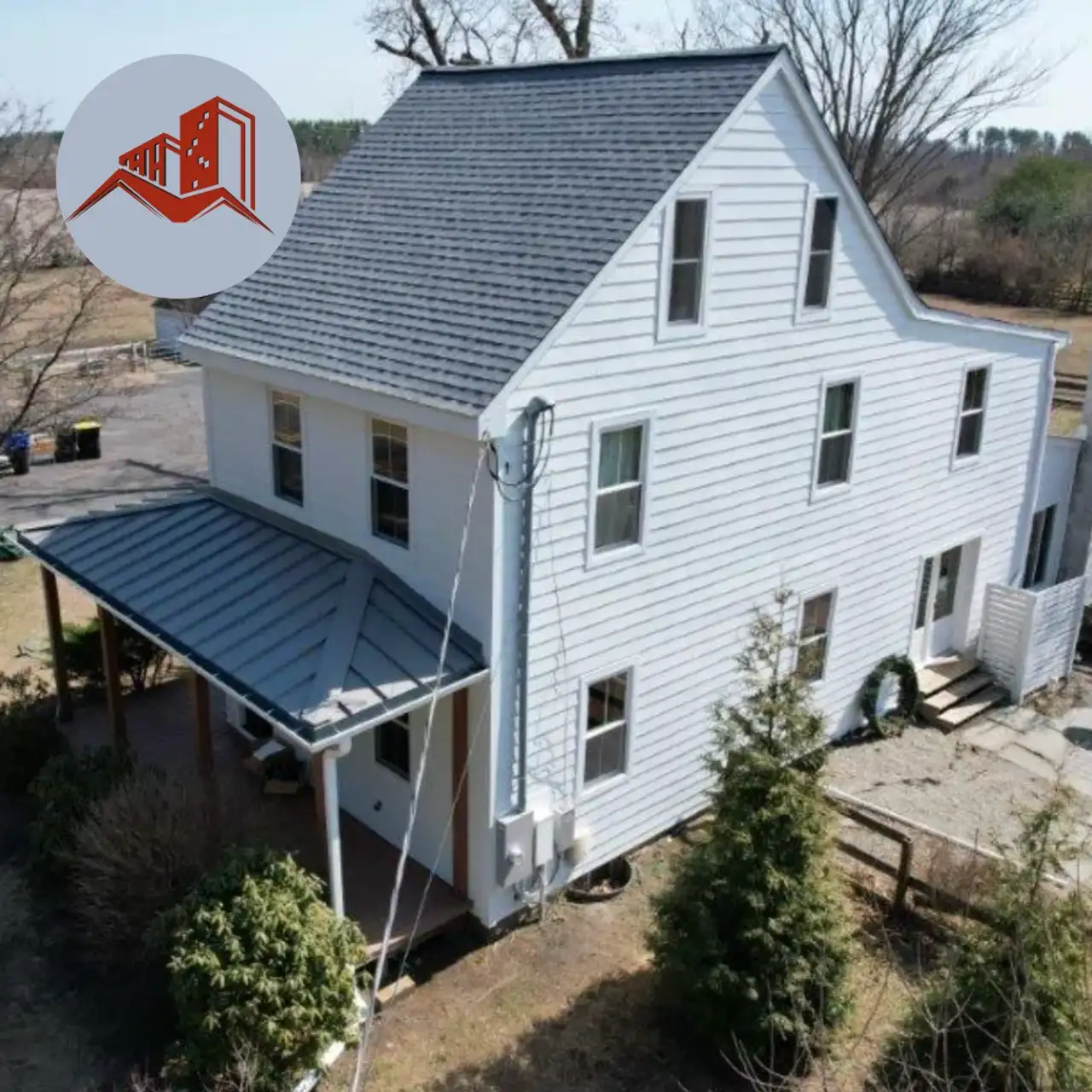
We work Chippewa Falls weekly, and more of that work is full roof replacement than anywhere else we go. The reason is the housing stock. Downtown was built starting in the 1860s, and the century-plus homes ringing it carry plank decking, layered old shingles, and framing quirks that make a tear-off the only honest way to know what’s up there. Meanwhile the newer subdivisions stretching toward Lake Wissota are aging into their first replacements on schedule. Our base is 11 miles south, about 15 minutes via Highway 53, close enough that this is a standing route, and the scope runs from asphalt tear-offs to standing seam metal upgrades, with repairs and storm documentation filling the weeks between.
Roofing in Chippewa Falls
Chippewa Falls’ roofing landscape splits into three rough categories, and what we recommend depends on which one your home lives in.
Old-stock homes around the downtown historic district and the West Riverside / Eastside Hill / Randall Park / Third Ward neighborhoods date from the late 1800s through the 1940s. Many have original or near-original rafter framing, plank decking instead of plywood sheathing, and steep pitches that handled snow load before insulation was a serious thing. Replacements on these homes routinely uncover decking that needs partial replacement, sometimes structural details that need addressing. We flag what we find rather than folding it silently into the price; the photos come with it, so you see exactly what’s being added and why.
Mid-century stock: the post-war ranches and split-levels through the 1950s-1970s, common across much of the city, are simpler. Standard 4/12 to 8/12 pitches, plywood decking, the same asphalt-shingle replacement approach that fits most of Eau Claire works fine. Ventilation is the variable here: many of these homes were built before modern intake/exhaust balance was required, and replacement is the right time to fix it.
Newer subdivisions east of downtown and out toward Lake Wissota (1990s through current) are well-built, code-compliant homes with proper attic ventilation already in place. The roofing question on those is usually just “what’s the right material when this 25-year shingle reaches end-of-life,” and the answer for most homes is architectural asphalt with a manufacturer warranty matching the home’s expected ownership horizon.
The mix matters because we don’t push the same shingle on every house. Walk-throughs on Chippewa Falls homes typically take longer than the average Eau Claire estimate just because there’s more variation in framing condition. We’d rather spend an extra fifteen minutes on the roof than miss something that becomes a problem after the install.
Neighborhoods we serve in Chippewa Falls
We work the full city footprint, plus the surrounding townships:
Downtown and the Historic District: older single-families along streets like Bridge, Bay, and Pearl. Beautiful homes; significant decking and ventilation considerations on replacements. Some streets have narrow access for larger trucks and dumpsters, which we plan around in advance.
Eastside Hill and West Riverside: established residential neighborhoods on either side of the Chippewa River. Mature trees, mid-century to historic stock, real character. These are some of the most architecturally varied roofs we see. Tudor accents, original gables, dormers that need their own flashing details.
Randall Park and Third Ward: more compact single-family blocks, often the rental market for the city. Roofs here see more deferred maintenance than owner-occupied stock, which means a higher proportion of repair work and emergency calls.
Wissota Shores and the Lake Wissota corridor: newer, larger homes near the lake, several with views and direct waterfront. Different exposure: open-water wind from the lake hits these roofs harder than inland homes, especially on lakeside elevations.
East-side subdivisions approaching Highway 29, newer construction, code-compliant ventilation, simpler replacement profiles. Lots of asphalt approaching its 20-25-year mark right now.
Anson and Lafayette townships along the southern and eastern borders, hybrid residential and rural, often with outbuildings or pole barns as part of the project. (The former Town of Hallie incorporated as the Village of Lake Hallie in 2002, see our dedicated Lake Hallie page.) We handle the metal roofing on outbuildings as part of the same job when it makes sense.
We also work Chippewa Falls’ commercial corridors, light commercial along Bridge Street, the Highway 53 / Highway 29 retail clusters, and smaller commercial along Lake Wissota.
Bridge Street’s mix of restored 1800s commercial buildings and post-war infill creates one of the more varied small-commercial roofing landscapes in the area, older flat-roof systems with parapet walls, modified bitumen on second-story porches, and occasional standing-seam metal installed during downtown restoration projects. The Leinenkugel’s brewery district along the Chippewa River sits within the older industrial core; we coordinate around traffic and access constraints where roofing projects neighbor active operations. Smaller retail along the Highway 53 corridor toward Lake Hallie runs the standard mix of TPO and EPDM low-slope membrane, with maintenance and recover work increasingly common as systems pass the 15-year mark.
Common roofing issues in Chippewa Falls
The freeze-thaw grind hits Chippewa Falls like everywhere in the valley, but the local terrain and stock add wrinkles of their own.
Ice dams are the headline winter problem on older Chippewa Falls homes. Many century-plus houses have inadequate attic insulation by modern standards and unbalanced ventilation, too much warm air making it to the roof deck, melting snow at the peak, and refreezing at the colder eaves. The water then backs up under the lower courses of shingles and shows up inside as ceiling stains near exterior walls. The fix is rarely “tear off the roof”; it’s usually adding intake ventilation in the soffit and increasing exhaust at the ridge. We handle ventilation correction as a standalone service for repair calls and as part of any replacement on older homes.
Hail damage from spring storms. The April 28, 2025 tornado outbreak that hit Eau Claire County extended into Chippewa County, and the May 15, 2025 storm system put 4-inch hail on Altoona. Chippewa Falls is in the same active corridor. We’ve been on more Chippewa Falls roofs documenting hail damage in 2025 alone than in many prior years combined. Hail damage is often invisible from the ground; the granule loss and shingle bruising require an actual roof walk to find.
Wind damage on lakefront homes. Lake Wissota isn’t large by Great Lakes standards, but it’s an open-water surface that creates direct wind exposure to lakeside roofs. Wind-lifted shingles on Wissota Shores homes are a recurring repair call, often the leeward sections of older 3-tab roofs where the sealant strips have aged out. Replacement on lakefront homes warrants wind-rated shingles or metal panels rather than budget products.
Tree damage. Chippewa Falls has more old-growth trees in residential neighborhoods than newer suburbs do. Falling branches in summer storms account for a meaningful share of emergency calls, anything from a small puncture above a porch to large branches across main roof sections requiring same-day tarp service.
Decking deterioration on older homes. Plank-decked roofs from before plywood was standard often have gapping or splitting individual boards beneath what looks like a sound shingle layer. Replacement projects regularly require partial decking replacement that wasn’t apparent from the visible roof. We assume a small contingency for older stock and price it transparently.
What it costs to roof a home in Chippewa Falls
Pricing in Chippewa Falls tracks closely with our Eau Claire pricing, the 11-mile distance doesn’t add a meaningful fuel/time premium for most jobs.
Typical residential replacement on a 1,800-2,500 sq ft home runs $9,000-$16,000 for asphalt shingle, $14,000-$25,000 for standing seam metal. Older homes with decking issues add $1,500-$4,000 to the asphalt range; the variation depends on how many sheets of decking need replacement.
Larger Lake Wissota lakefront homes (multi-story, complex rooflines, sometimes wraparound porches) run $18,000-$32,000 for asphalt, $25,000-$45,000 for metal. Wind-zone considerations sometimes push us to specifically wind-rated products on these jobs, which adds cost but pays off in lifespan.
Smaller historic-district homes with simpler footprints (often 1,200-1,800 sq ft) run $7,000-$13,000 for asphalt, assuming the decking is sound. Always assume a small decking contingency on anything pre-1960; we document it with photos so you see exactly what’s added and why.
Targeted repairs in Chippewa Falls: $300-$600 for a single-shingle wind repair, $400-$1,200 for failed flashing on a chimney (the most common Chippewa Falls repair call by volume), $1,200-$2,500 for valley work, $2,000-$4,000 for ice-dam-driven damage that includes both roof and interior repair.
What drives variation: roof complexity (older homes often have more valleys, dormers, and interesting geometry), pitch (steeper roofs on historic homes), decking condition (the wildcard on anything pre-1960), and accessibility (some homes have driveways or yards that make dumpster placement awkward). The free written estimate gives you the actual number for your specific roof, with the scope spelled out so you can see what’s driving the price.
Storm season in Chippewa Falls
Spring is the active storm season in this part of Wisconsin. Most severe weather tracks come from the southwest, storms approaching from the Eau Claire-to-Menomonie axis hit Chippewa Falls within an hour or two, often with hail or high wind.
April through June is peak hail and tornado season. The April 2025 outbreak that produced multiple tornadoes in Eau Claire County extended the active period that year well into May. The May 15, 2025 storm produced 4-inch hail in Altoona. Chippewa Falls saw smaller stones from the same system but enough to cause widespread granule loss on older shingles. Several Chippewa Falls neighborhoods filed insurance claims that month.
Summer brings isolated severe storms, high-wind events more often than hail, plus the inevitable tree-damage incidents. Tree damage spikes during summer thunderstorms because Chippewa Falls’ mature canopy means more branches to lose. Late afternoon and evening are the highest-risk windows.
Fall and winter are quieter for severe weather but bring the season-long ice-damming risk. The freeze-thaw cycle starts in November and runs through March in most years; ice dams on insufficiently-vented older Chippewa Falls homes form most aggressively in February and cause interior damage that sometimes shows up months later when summer humidity finishes the work.
Practical timing for inspection: if you’ve had any storm pass through the area between April and August, schedule a free inspection before the next event hits the same roof. Hail damage on existing weakness compounds; it’s much easier to file an insurance claim for a single documented event than for “general wear since last spring.” We schedule storm-damage inspections same-day or next-day during active claim seasons.
Working in Chippewa Falls specifically
Logistics for Chippewa Falls jobs from our Eau Claire base:
Drive time: 15-20 minutes via Highway 53 or via the County Road OO route through Lake Hallie, depending on traffic. Same-day emergency tarp service is realistic for active leaks during business hours.
Permitting: Chippewa Falls requires building permits for full roof replacements; we pull these as part of the job. Targeted repairs typically don’t require permits unless structural decking work is involved.
Dumpster placement on historic-district homes is sometimes the trickiest part of the job, narrow streets, mature trees, parked-car density. We coordinate with you ahead of time on driveway access, and we’ve worked enough of these neighborhoods to know which streets handle a 20-yard roll-off and which need a smaller dumpster placed creatively.
HOA considerations: Wissota Shores and some newer subdivisions have HOA roofing-material restrictions. We can pull HOA color and material guidelines before the estimate so you don’t pick a shingle that gets rejected at submittal.
Lake Wissota lakefront access: some lakefront properties have narrow access tracks better suited to smaller trucks. We adapt where needed to avoid damaging landscaping or the access road itself.
Timing: because Chippewa Falls is an established secondary market for us, we slot work into our regular Eau Claire schedule rather than treating it as a remote job. That means typical lead times match Eau Claire’s: 4-8 weeks during peak summer/fall, 1-3 weeks in winter and early spring. Storm-damage and emergency repair work jumps the line.
When the patching stops penciling out and the tear-off conversation starts, we’re 15 minutes away: (715) 245-5271, or use the form below for a written replacement estimate.